Bus electric feedback: With the right knowledge of subsidies to an e-fleet

3,500 e-buses have already been subsidized – when will you electrify your fleet? Rising diesel prices, strict EU regulations, and complex applications require a clear strategy. The federal call for funding ended on July 21, 2026.
The topic briefly and concisely
The application deadline for the 70% funding for e-buses and retrofits ended on July 21, 2026.
The EU Clean Vehicles Directive already mandates a quota of 45% for clean buses in public procurement by the end of 2025.
The conversion from diesel to electric (DTE) is a sustainable alternative to buying a new vehicle, which reduces the Total Cost of Ownership (TCO) and was recently eligible for subsidies.
Switching to electromobility is no longer an option for fleet operators, but a commercial and regulatory necessity. The EU's Clean Vehicles Directive (CVD) already mandates clear quotas for the procurement of emission-free buses, which were tightened further in 2026. At the same time, high operating costs and CO₂ levies are burdening budgets. The 2026 funding call from the Federal Ministry for Digital and Transport (BMDV) offered cost coverage of up to 70% for vehicles and conversions; it ended on July 21, 2026. This guide pragmatically shows you how to assess the funding situation, reduce the Total Cost of Ownership (TCO) of your fleet, and set the course for future-proof passenger transport.
Your starting point: Three facts that now necessitate action
The electrification of your bus fleet is driven by three key factors: funding availability, clear legislation, and economic pressure. The federal funding call 2026 for buses ended on July 21, 2026, and a follow-up call has not been announced. The financial feasibility of your projects is therefore more dependent on your own calculations.
Here is an overview of the key drivers:
Funding Call 2026: The call by the BMDV ended on July 21, 2026. Up to 70% of the additional costs for e-buses or a conversion were covered.
Clean Vehicles Directive (CVD): Already by the end of 2025, 45% of newly procured buses in the public sector had to be "clean," with half of those being completely emission-free.
Economic Efficiency: The Total Cost of Ownership (TCO) for e-buses is often already lower than that of diesel vehicles today due to lower maintenance and energy costs.
Regulatory pressure and economic efficiency thus provide a clear framework for a strategic decision.
Your 4-point action plan for e-bus funding
The path to a funded e-bus fleet requires a structured approach to prepare robust applications. Careful planning ensures that all documents are submitted completely and correctly. This is how you maximize your chances of success in the competitive process.
Follow this checklist in four steps:
Needs Analysis and TCO Forecast: Determine your exact vehicle requirements and analyze the route profiles. A detailed Total Cost of Ownership calculation compares the life cycle costs of an e-bus with a diesel counterpart and forms the basis for your investment decision.
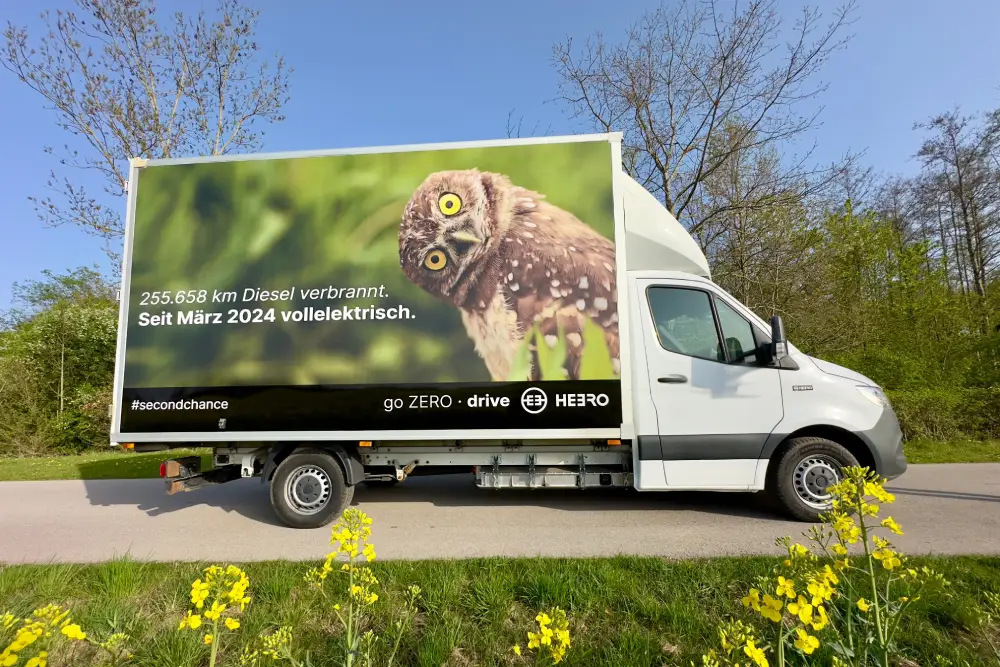
Define Solution (New vs. Retrofit): Check whether a new vehicle or a retrofit is the better solution. Retrofitting existing vehicles conserves resources and was also subsidized with up to 70%, which is particularly useful for special bodies. Discover suitable retrofitting solutions for your fleet.
Plan Charging Infrastructure: Design the necessary charging infrastructure at your depot. The funding covered 40% of the costs for non-public charging and maintenance infrastructure.
Apply fully for funding: Collect all documents and submit your project outline via the easy-Online portal. A formally correct e-bus funding application was crucial for the approval.
With this plan, you create a solid foundation for a successful funding application and the sustainable modernization of your fleet.
Funding pools in detail: Which subsidies most recently applied to e-buses
The funding program "Alternative Drives for Buses in Passenger Transport" of the BMDV was recently the central instrument for fleet electrification. It aimed to compensate for the additional investment expenditures compared to a conventional diesel bus. Not only municipalities but also private transport and commercial enterprises with a business location in Germany were eligible to apply.
The funding rates were clearly defined: up to 70% of the additional costs for purchasing new vehicles or retrofitting existing vehicles were subsidized. For the associated, non-public charging infrastructure on the depot, there was a subsidy of 40%. This financial support made the transition economically viable even for smaller enterprises. The allocation was competitive, with criteria such as CO₂ avoidance playing an important role. The call ended on July 21, 2026; the transition to an electric bus remains strategically plannable.
Cost Comparison: Why the TCO Favors the E-Bus
The Total Cost of Ownership (TCO) is the decisive key figure for economical fleet planning. It takes into account all costs over the entire service life of a vehicle, not just the purchase price. While electric buses are more expensive to purchase, they score with significantly lower operating costs.
A direct comparison shows the advantages:
Energy costs: The costs per kilometer for electricity are significantly lower and more stable than for diesel.
Maintenance costs: An electric motor has fewer moving parts than an internal combustion engine. This reduces maintenance costs by up to 70%.
Taxes and duties: Electric vehicles benefit from tax relief and avoid rising CO₂ taxes.
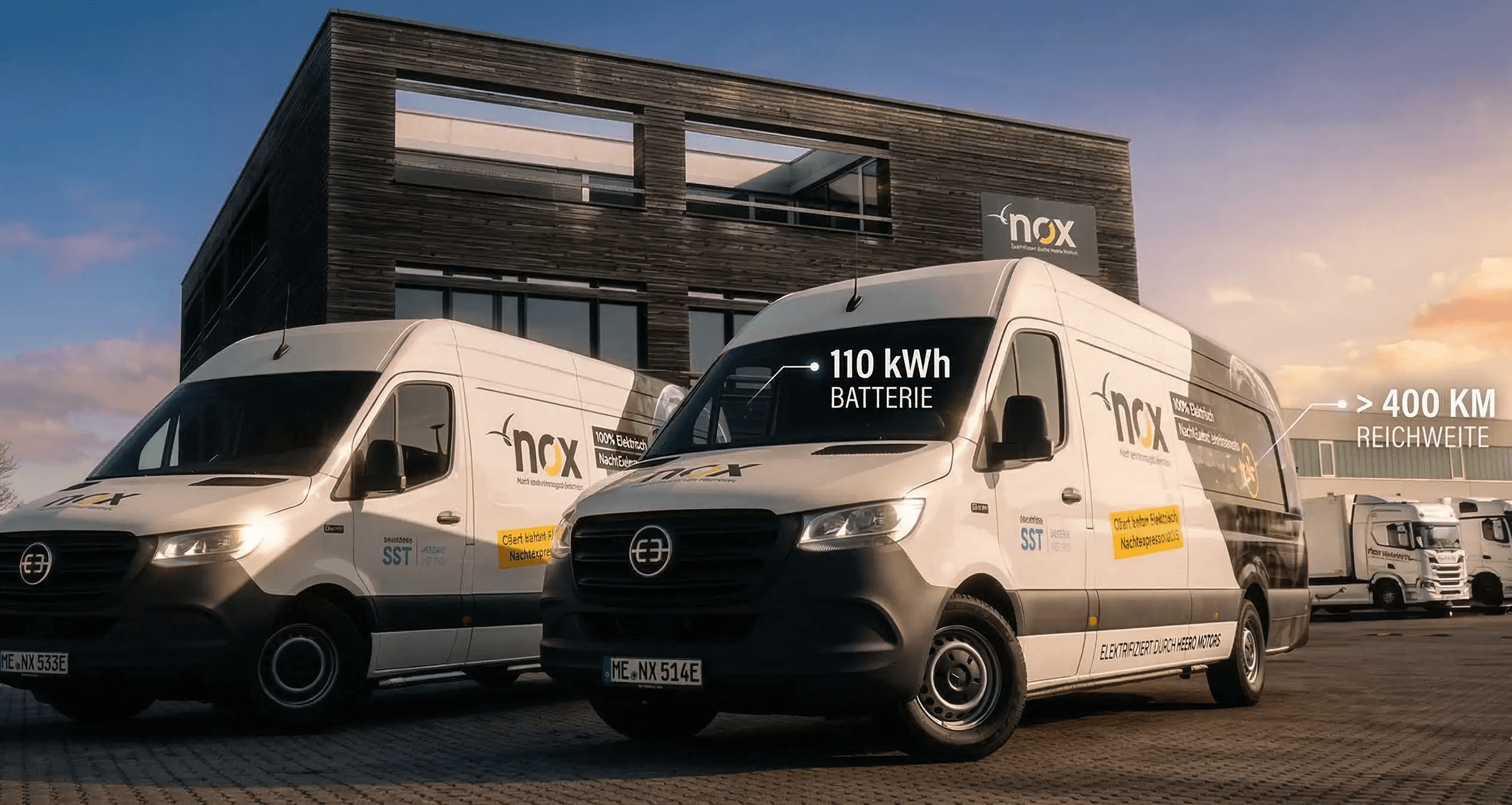
Particularly retrofitting optimizes the TCO. It preserves the value of an existing vehicle chassis and reduces investment costs significantly compared to a new purchase. A HEERO Sprinter, for example, achieves a range of up to 425 kilometers and makes existing fleets future-proof. This strategy is a prime example of a functioning circular economy.
Focus on Technology: Range, Charging, and Lifespan
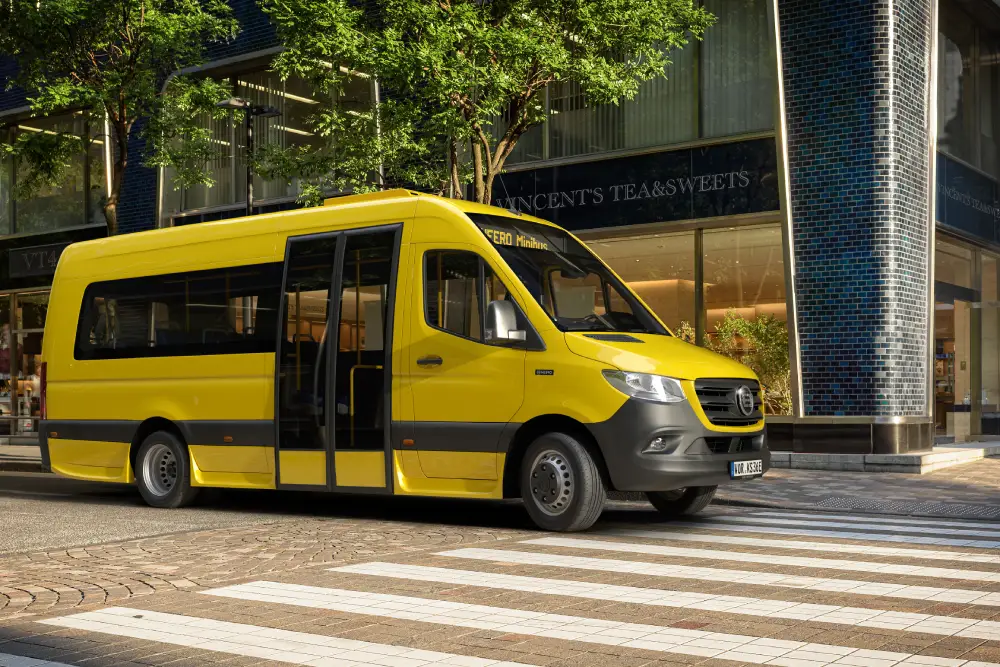
Modern electric buses are perfectly equipped for demanding daily operations in scheduled and travel services. The ranges are practice-oriented and cover most daily assignments. The HEERO Tourer minibus (9 seats), for example, manages up to 400 kilometers on a single charge. The mid-low-floor bus reaches up to 300 kilometers.
The charging infrastructure is key to operational readiness. With DC fast charging, idle times are used efficiently. The HEERO mid-low-floor bus charges at up to 165 kW, which means the 115 kWh net battery capacity is charged to 80% in about 30 minutes. The standard charging power for other models, such as the low-entry bus, is 135 kW. A thorough analysis of your routes during a test drive provides valuable data for planning. The lifespan of modern lithium iron phosphate batteries is designed for long-term operation and often exceeds ten years.
Next step: Start your free subsidy analysis
The 2026 funding call for buses ended on July 21, 2026. Bureaucratic hurdles and technical planning require lead time, regardless of the respective program. A professional analysis of your funding opportunities is the fastest way to get clarity on your subsidy roadmap and set the course for a locally emission-free fleet.
Start your funding analysis: Answer three questions and receive your subsidy roadmap, including the classification of the most recently applicable funding rates of 70 and 55 percent, respectively.
Button: "To the free analysis"
free of charge · non-binding · factual
More useful links
The Federal Government provides information on the promotion of electric buses by the Federal Ministry for the Environment, Nature Conservation and Nuclear Safety (BMU).
The Federal Ministry for Economic Affairs and Energy provides a final report of an accompanying study on electric buses in public transport.
The Federal Ministry of Transport provides information in a press release about the milestone of 1,000 funded electric buses.
Agora Verkehrswende offers a factsheet on municipal electric fleets.
Wikipedia offers a comprehensive article on the topic of electromobility.
The KfW Bankengruppe provides information on funding electromobility for companies.
The Federal Environment Agency publishes an analysis on the environmental balance of motor vehicles.
The National Centre for Charging Infrastructure provides information on the topic of commercial vehicles.
The Association of German Transport Companies (VDV) provides information on e-mobility.
The German Energy Agency (dena) provides a dossier on the expansion of charging infrastructure for e-trucks.