Electric Bus Test: An overview of the funding situation following the 2026 call

More than 3,500 electric buses have already been subsidized. The federal funding call ended on July 21, 2026, yet the strategic transition of your fleet remains the decisive lever for an economically viable future.
The topic briefly and concisely
The federal funding guideline offered up to 70% subsidies for the additional costs of e-buses and DTE conversions; the application deadline ended on July 21, 2026.
A Total Cost of Ownership (TCO) analysis shows that E-Buses are more economical in the long term than diesel buses, due to up to 40% lower operating and maintenance costs.
The Diesel-to-Electric conversion (DTE) conserves resources, secures investments in specialised bodies, and offers a sustainable alternative to purchasing new vehicles.
The electrification of bus fleets is no longer a distant vision of the future, but a business necessity. Rising diesel prices, strict climate requirements from the EU's Clean Vehicles Directive (CVD), and growing pressure to reduce emissions present public transport operators and municipalities with major challenges. A professional electric bus test and strategic planning are essential. The funding directive of the Federal Ministry for Digital and Transport (BMDV) recently offered to cover up to 70% of costs for vehicles and conversions; the call ended on July 21, 2026. This article shows you how to pragmatically assess the situation, overcome bureaucratic hurdles, and make your fleet future-proof.
Your 4-point checklist for electrification
The transition to electromobility requires a clear strategy, especially after the end of the funding call on July 21, 2026. Systematic preparation ensures that you realistically evaluate the possibilities of the funding framework. The transition is more than just a vehicle replacement; it is an investment in the future viability of your business.
Here are the four decisive steps for your successful transition:
Conduct a needs analysis: Analyze your current routes, circulation schedules, and operating costs. A Total Cost of Ownership (TCO) analysis shows that electric buses are often 15% cheaper over their lifespan than diesel equivalents.
Evaluate vehicle solutions: Decide between a new vehicle and conversion. A conversion not only conserves resources but also secures your investments in expensive special bodies.
Apply for funding: Applications under the BMDV funding guideline were possible until July 21, 2026. The funding rate was up to 70% of the additional costs for the vehicle and 40% for the charging infrastructure.
Plan charging infrastructure: Dimension your charging infrastructure to match the fleet size and operational procedures. Modern DC fast charging systems with up to 165 kW of power reduce charging times to under 45 minutes.
This structured approach minimizes risks and maximizes the cost-effectiveness of your fleet transition. The next step is to understand the underlying funding framework.
Understanding funding pots: How to maximize your grants
The funding landscape in Germany has significantly supported transport companies over the years. The Federal Ministry for Digital and Transport (BMDV) is driving the transport transition with a clear goal: the decarbonization of public transport. The "Guideline on Funding Alternative Drives for Buses in Passenger Transport" was the central instrument for this.
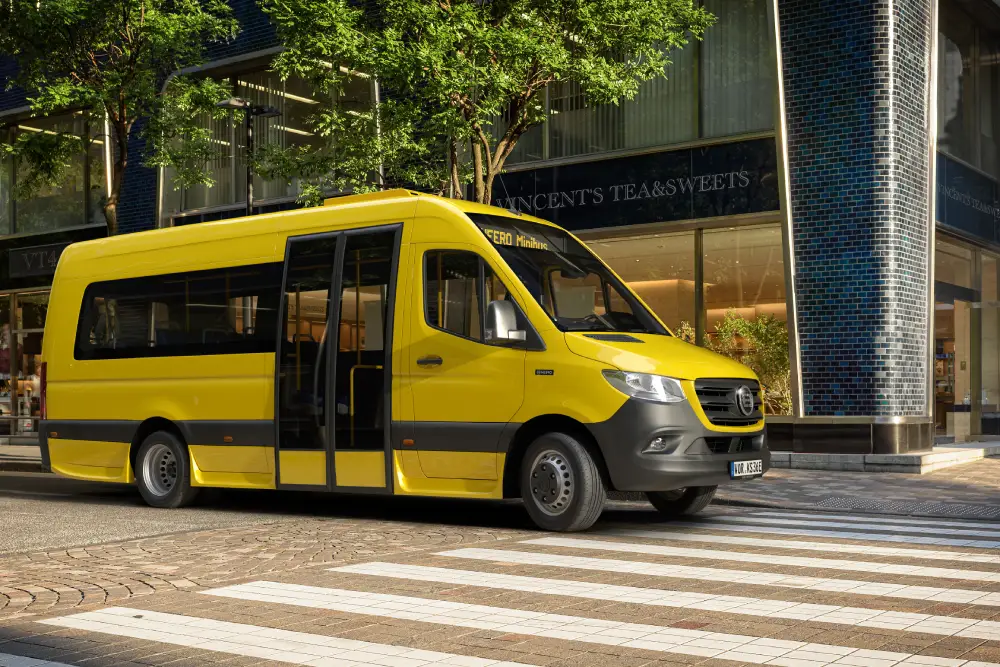
It covered up to 70% of the additional investment costs in the case of a low level of electrification, otherwise 55%, for the procurement of battery-electric buses or the conversion of existing diesel vehicles. In addition, up to 40% of the costs for the necessary charging and workshop infrastructure were subsidized. This funding was crucial to offset the higher acquisition costs of electric vehicles compared to diesel buses. A HEERO Tourer minibus can thus achieve its cost-effectiveness much faster. To classify the e-bus funding for 2025 and its successor programs, it is worth taking a close look at the conditions. The most recent call for funding ran from May 26 to July 21, 2026 and has expired. The right cost analysis is the key to success.
TCO Analysis: Why the Electric Bus Overtakes Diesel
The acquisition costs are only part of the equation. The Total Cost of Ownership (TCO) provides the complete picture. An electric bus is more expensive to purchase, but stands out with significantly lower operating and maintenance costs, which can be up to 40% lower.
A comparison of the key cost factors shows the advantages:
Energy costs: The costs per kilometer for electricity are significantly lower and more stable than those for diesel. With an annual mileage of 60,000 km, the savings can amount to several thousand euros.
Maintenance and repair: Electric drives have fewer moving parts than internal combustion engines. Oil changes, exhaust system maintenance, and clutch wear are completely eliminated, reducing workshop costs by over 30%.
Taxes and duties: Electric vehicles benefit from tax relief and are exempt from CO₂ duties, which further reduces fixed costs.
An example calculation shows that an electric bus often amortizes its higher acquisition costs after just five to seven years. Our experts will help you create a detailed Total Cost of Ownership analysis for your specific requirements. This analysis is also an important basis for choosing the right vehicle technology.
Conversion Instead of New Purchase: The Benefits of DTE Retrofitting
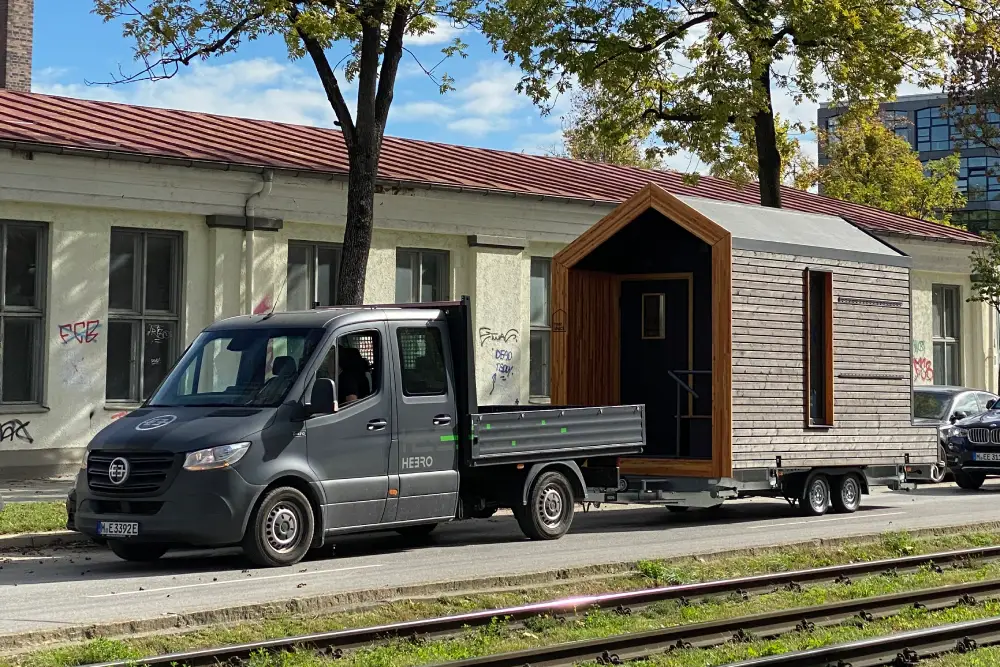
Not every electrification has to start with a new vehicle. Retrofitting is a highly economical and sustainable alternative. It is an ideal solution particularly for operators of vehicles with expensive special bodies, as are common on Sprinter models. Instead of decommissioning a proven vehicle, its life cycle is extended.
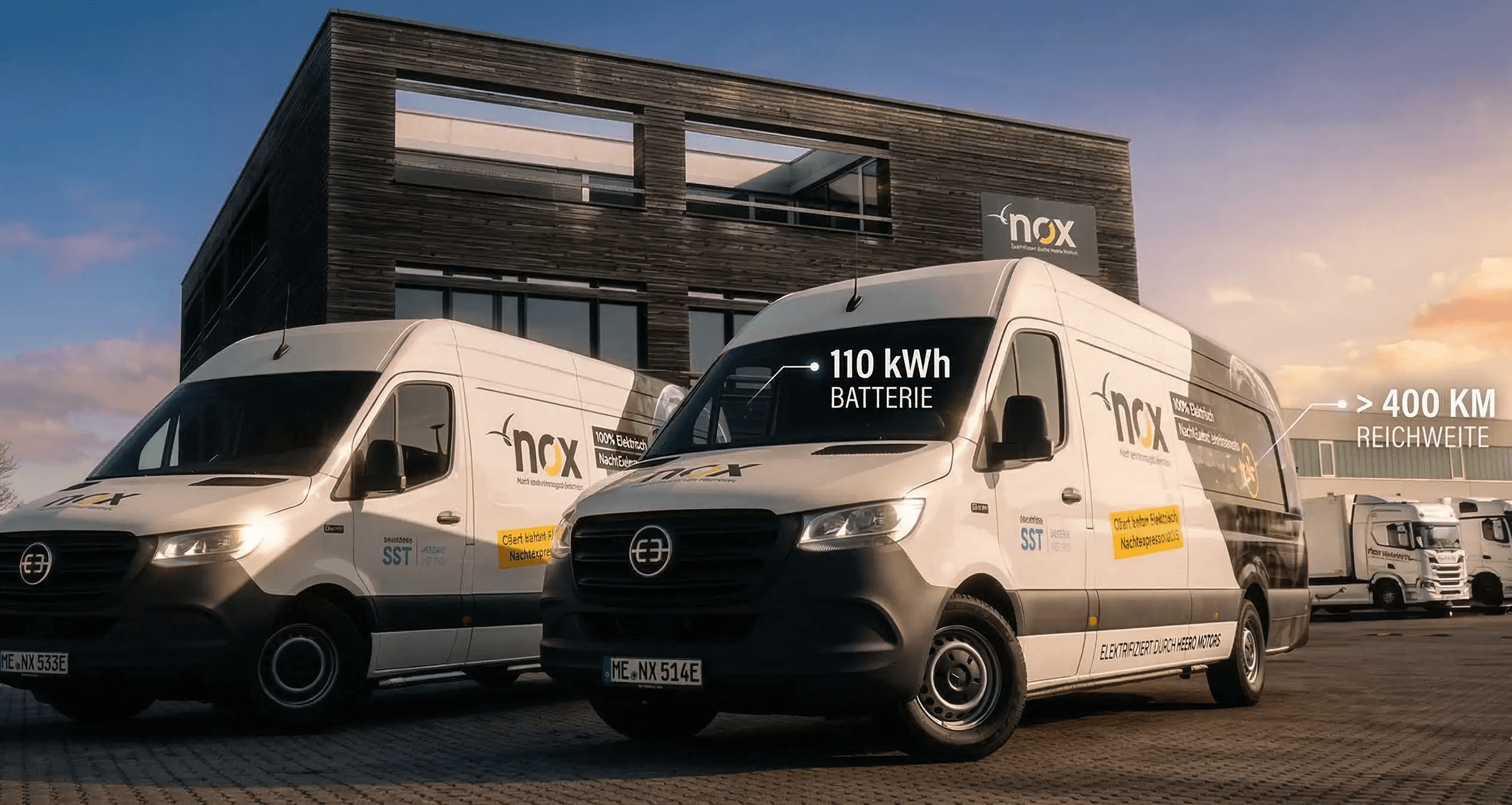
This approach is in line with the principles of the circular economy and significantly reduces the CO₂ footprint. After retrofitting, a HEERO Sprinter achieves a practical range of up to 425 kilometers. The investment in the existing vehicle body remains fully preserved. Discover our innovative retrofitting solutions that combine performance and sustainability. The technological basis for this is a powerful battery and charging infrastructure.
Performance in Detail: Battery, Range and Charging Infrastructure
The practicality of an electric bus is determined by three key figures: battery capacity, range, and charging capacity. Modern electric buses are well-equipped for the demanding everyday routine in regular and travel services. A HEERO rear low-floor bus, with its 96 kWh net battery capacity, offers a range of up to 300 kilometers.
The HEERO Tourer for nine people even achieves up to 400 kilometers with a single charge. Crucial for operational efficiency is the charging capacity. Our vehicles support DC fast charging with up to 135 kW, and the medium low-floor bus even with up to 165 kW. This means that charging to 80% is possible in around 30 to 40 minutes. These performance values ensure high vehicle availability and seamless integration into existing vehicle schedules. The right charging infrastructure is the foundation for smooth operations.
Act in compliance with the law: Fulfil the Clean Vehicles Directive (CVD)
The Clean Vehicles Directive (CVD) is an EU directive that has been transposed into German law since 2021 and mandates binding minimum quotas for the public procurement of clean vehicles. For Class M3 buses, a quota of 45% applied until the end of 2025 for "clean" vehicles, of which half, meaning 22.5%, had to be completely emission-free.
Since 2026, these quotas have risen to 65% and 32.5% respectively. Failure to meet these quotas can lead to legal consequences. Investing in electric buses is therefore not only an ecological and economic decision, but also a legally necessary one. By acquiring or retrofitting electric buses, you ensure the compliance of your fleet for the coming years. A strategic bus electric test helps you find the right models for your requirements and exceed the regulations. Start your transformation now.
More useful links
The Bundesministerium für Digitales und Verkehr (BMDV) reports on the milestone of 1,000 subsidized e-buses.
The Projektträger Jülich (PTJ) provides information on funding the procurement of buses.
Statista provides statistics and data on the subject of electromobility in Germany.
The Nationale Plattform Zukunft der Mobilität (NPM) publishes a workshop report on the subject of commercial vehicles.
The Umweltbundesamt offers an analysis of the environmental performance of motor vehicles.
The Verband Deutscher Verkehrsunternehmen (VDV) provides information about its e-bus project.
Agora Verkehrswende reports on how Europe is switching to electric buses.
The Deutscher Städte- und Gemeindebund (DSTGB) presents a position paper on strengthening electromobility in rural areas.
Wikipedia offers an article about electric buses.