Funding for electric vans: What the 80% subsidy covered until its expiration in 2024

Up to 425 km range after an upgrade – and get a significant portion of the additional costs subsidized? The federal funding round covered up to 80% of the additional costs until 2024. The KsNI directive has been discontinued since August 2024; rising diesel prices and stricter EU regulations remain unaffected by this.
The topic briefly and concisely
The deadline for applying for the 80% subsidy for electric vans and conversions ended on August 31, 2025.
The BMDV subsidy (KsNI guideline) covered 80% of the additional costs for electric vehicles and 40% of the costs for charging infrastructure; it ran until 2024.
The conversion from diesel to electric was also subsidized with up to 80% of the additional costs and is a sustainable alternative to buying a new vehicle, which preserves existing special bodies.
Rising diesel prices, imminent inner-city driving bans, and pressure from the EU's Clean Vehicles Directive present fleet operators with enormous challenges. The electrification of your fleet is no longer an option, but a business necessity. The KsNI funding round for promoting electric vans by the Federal Ministry for Digital and Transport (BMDV) set the framework: with up to 80% subsidy on the additional costs of a conversion or the purchase of electric commercial vehicles and 40% on the charging infrastructure, the transition was particularly cost-effective. This guide pragmatically classifies what the directive covered up to 2024 and what that means for your company today.
The funding deadline has expired: What this means for your fleet planning
The electrification of your commercial vehicle fleet remains a strategic decision. The KsNI funding round with a rate of up to 80% for vehicles and conversions ran until 2024. Since August 2024, no new funding calls are planned; already approved projects will be fully funded. At the same time, the Clean Vehicles Directive (CVD) tightens the legal requirements for public and many private fleet operators. Those who postpone the transition risk, above all, future competitive disadvantages. The transition to an efficient electric transporter is therefore a direct response to these challenges. This dual dynamic of funding history and regulation shapes the economic framework of a sensible transition.
4-point roadmap: The 80% funding in retrospect
The path to funding for your electric transporter is straightforward with the right strategy. Follow these four steps to make the process efficient and properly evaluate your funding options:
Analyze requirements precisely: Determine the exact requirements of your fleet. How many kilometers do your vehicles cover daily? What payload is required? For example, a HEERO eTransporter offers up to 500 km of range.
Evaluate cost-effectiveness (TCO): Consider the Total Cost of Ownership (TCO). In addition to the acquisition, these include maintenance, insurance, taxes, and energy costs. Our TCO analysis often shows savings compared to a diesel after just three years.
Make the right choice of technology: Decide between a new vehicle and a conversion. A conversion saves resources and is ideal for expensive special bodies that you want to preserve. You can find more details under Umrüsten oder Neukaufen.
Prepare the application properly: Gather all necessary documents and submit the application through the official portals as soon as a program is open. We support you in meeting all formal requirements of the respective funding guidelines.
This structured approach minimizes the bureaucratic effort and maximizes your chances of success.
Understanding funding pots: What was subsidized?
The KsNI funding guideline of the BMDV (Climate-friendly Commercial Vehicles and Infrastructure) was broadly positioned. It aimed to decisively accelerate the market ramp-up of electric commercial vehicles. Two core areas were subsidized:
Vehicles and conversions (80% subsidy): This included both the purchase of new electric commercial vehicles and the conversion of existing diesel vehicles. Particularly the funding of conversion up to 80% supported the principle of the circular economy. A HEERO Sprinter achieves a range of up to 425 km.
Charging infrastructure (40% subsidy): Funding was provided for the necessary, non-public charging infrastructure on your company premises. This includes the wallboxes and fast charging stations (DC) with up to 165 kW charging power for our electric buses.
This combination ensured that not only the vehicles, but the entire ecosystem was funded for a successful transition. The guideline ran until 2024; we have prepared an overview of the 80 percent funding for you.
Cost Comparison: TCO of an E-Transporter vs. Diesel
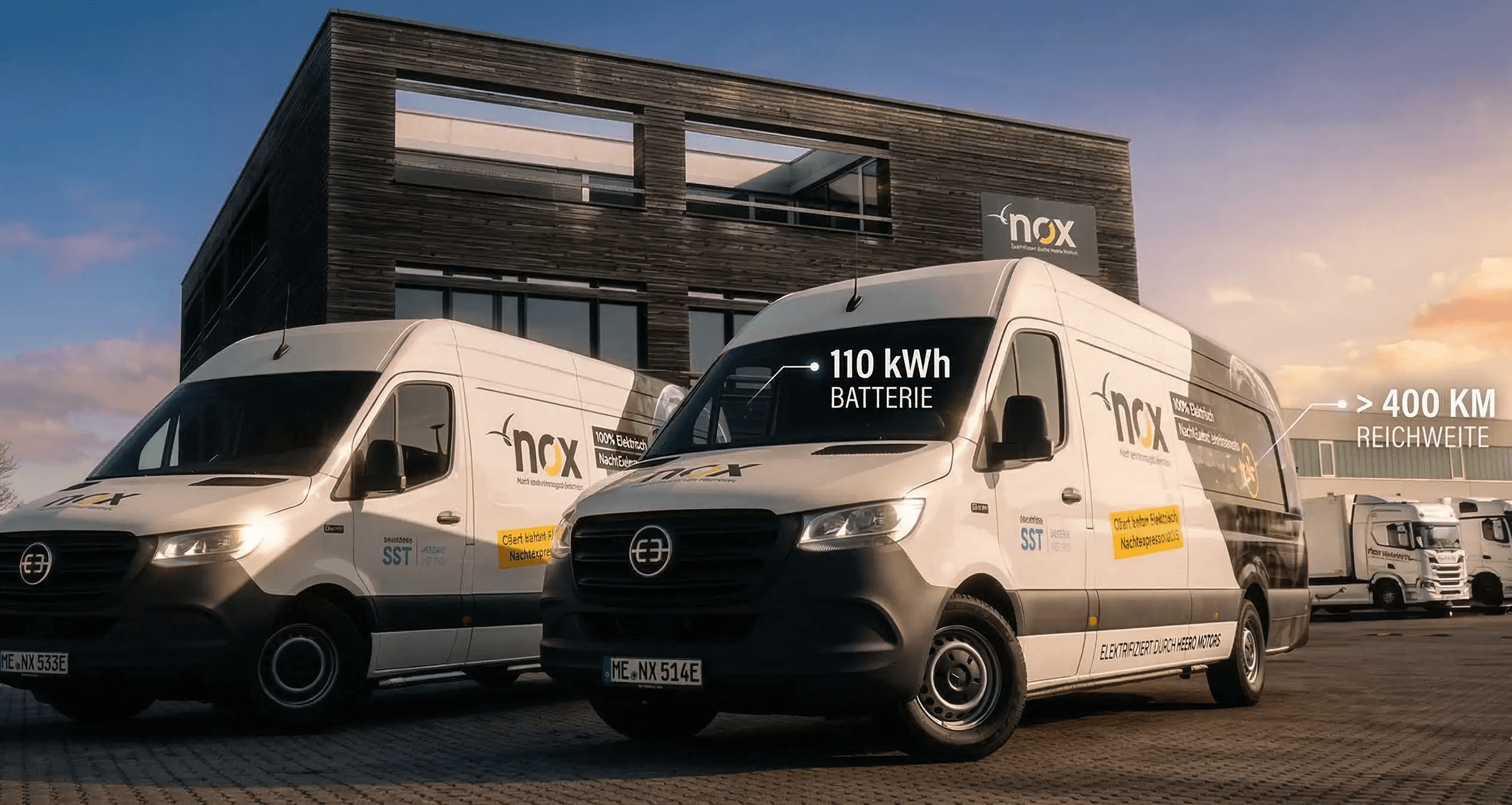
The acquisition costs of an electric van are higher, but the Total Cost of Ownership tells a different story. Thanks to the KsNI funding for electric vans, which ran until 2024, the calculation shifted massively. A calculation example: A HEERO eTransporter with a 110 kWh battery (96 kWh net) has significantly lower "fueling" and maintenance costs. Vehicle tax is completely waived for ten years. With an annual mileage of 40,000 km, the savings in operating costs can amount to up to 5,000 euros per year. If one took into account the 80% subsidy on the additional acquisition costs, the electric van was often the more cost-effective alternative from day one. Find out in detail about the BMDV grant at the time and its impact.
Technology in Focus: Range and Charging Performance in Practice
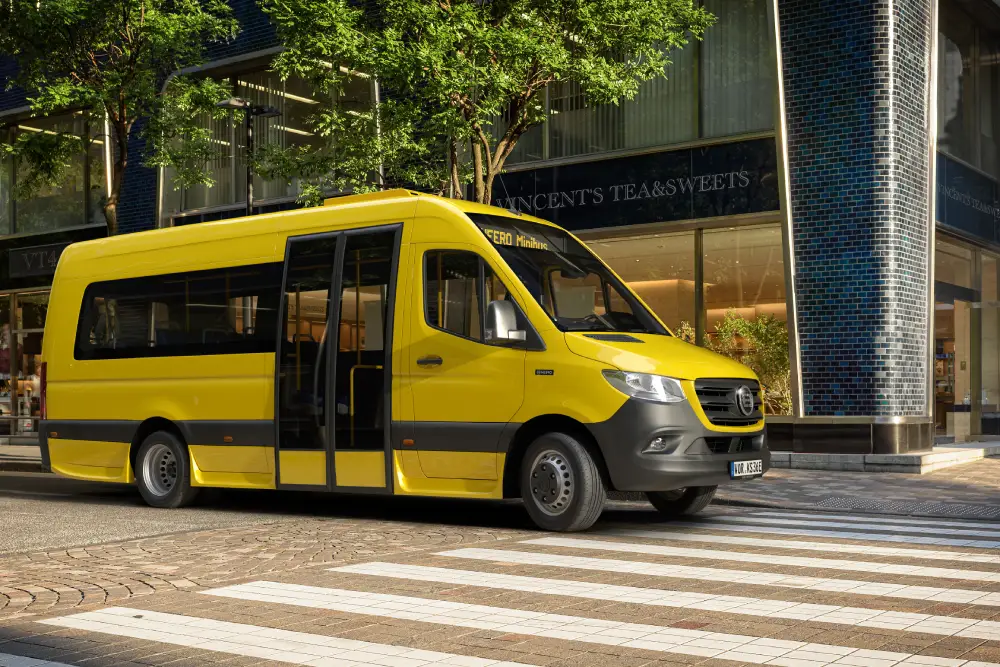
Modern electric vans are built for the demanding daily work routine. Our vehicles are based on the proven Mercedes-Benz Sprinter and are uncompromisingly designed for performance. With its 110 kWh battery, the HEERO eTransporter achieves a range of up to 500 kilometers. Even the HEERO low-floor rear bus achieves up to 300 kilometers. On a DC fast charging station, most of our models charge with up to 135 kW. This means that in just about 30 minutes of charging time, 80% of the range is available again. These values prove that electric commercial vehicles are more than up to the demands of logistics, trade, and municipalities. Our electric commercial vehicles are ready for action.
Sustainability through circular economy: renovation instead of new purchase
Funding for a diesel-to-electric conversion was a clear commitment to the circular economy. Instead of scrapping a fully functional vehicle with an expensive specialized body, its service life is extended by many years. This approach not only saves a significant portion of the CO₂ emissions that would be generated during the production of a new vehicle, but also protects your capital. An existing Sprinter is transformed into a powerful electric vehicle with a range of up to 425 km within about ten days. You keep your proven vehicle and your expensive bodies, while simultaneously reducing operating costs and achieving sustainability goals. Learn more about our checklist for funding.
More useful links
The Federal Office for Logistics and Mobility (BALM) provides detailed information on the Climate Protection and Mobility (KsNI) funding program.
The German Bundestag provides information on current developments in the field of electromobility in a brief report.
The ADAC provides comprehensive information on funding for electric cars.
Enercity offers insights into the various funding opportunities for e-mobility.
The Federal Environment Agency provides detailed information on the topic of electromobility in the transport sector.