BMDV funding for electric vans: What the 80% grant covered until 2024

Up to 425 km range after an upgrade – without the costs of a new vehicle. The BMDV funding for electric vans (KsNI) covered up to 80% of the additional costs until 2024, making the transition economically viable. Since August 2024, no new funding calls are planned.
The topic briefly and concisely
The BMDV funding (KsNI) offered an 80% grant for the conversion or purchase of e-transporters and 40% for charging infrastructure; it ran until 2024.
The application deadline for the last KsNI funding period has expired; the guideline ran until 2024.
The conversion from diesel to electric preserves resources, protects investments in specialized bodies, and has been highly subsidized.
Rising diesel prices, looming city driving bans, and the requirements of the Clean Vehicles Directive present fleet operators with enormous challenges. Electrification is inevitable, but investment costs are high. This is precisely where the "Climate-friendly Commercial Vehicles and Infrastructure" (KsNI) funding guideline of the Federal Ministry for Digital and Transport (BMDV) came in. It offered up to an 80% subsidy on the additional costs of a vehicle conversion and 40% for the charging infrastructure; it ran until 2024. This article explains what the BMDV's funding for electric vans covered and how you can sustainably reduce your operating costs.
Your Funding Benefits at a Glance
The transition is worthwhile where the conditions are clearly defined. The federal KsNI guideline covered up to 80% of the additional investment costs until 2024. Here are the most important facts about the past funding round:
80% subsidy: The funding covered up to 80% of the additional costs for purchasing an electric transporter or a diesel-to-electric conversion (DTE).
Charging infrastructure included: In parallel, setting up the necessary charging infrastructure at your company location was part of the funding guideline; the rate resulted from the funding call.
Application deadline expired: The guideline ran until 2024; new funding calls are not planned, already approved projects will be fully funded.
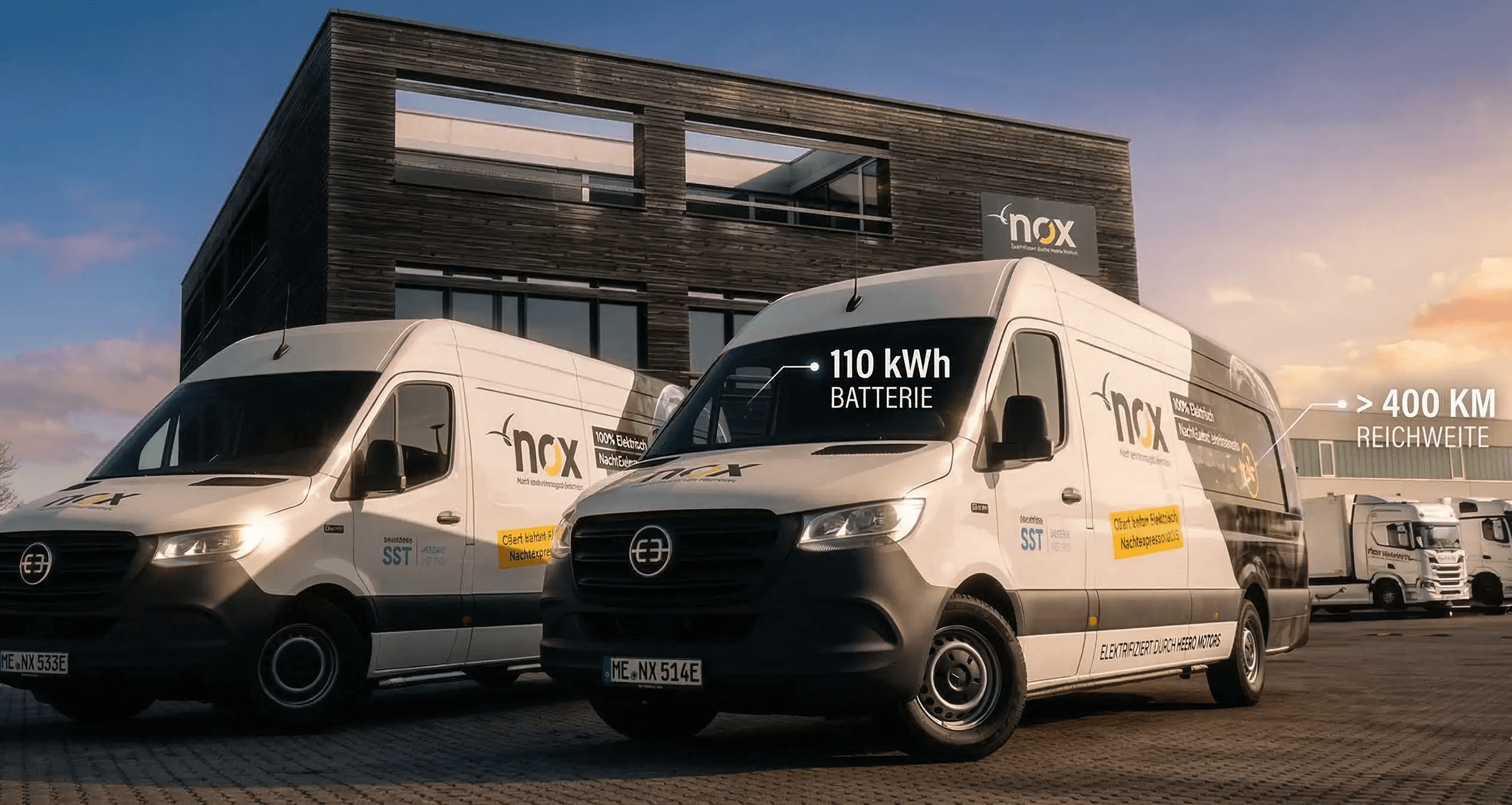
Technology openness: Battery-electric vehicles such as the HEERO eTransporter with up to 500 km range were funded.
This funding was a decisive lever for the economic viability of fleets; today, it is primarily the TCO calculation that drives the decision.
Legal pressure and rising costs as drivers
Companies and municipalities are under double pressure: rising operating costs and strict environmental regulations. The European Clean Vehicles Directive (CVD) has prescribed binding quotas for clean vehicles to public contracting authorities since 2021. By the end of 2025, 38.5 percent of the light commercial vehicles procured had to be low-emission. At the same time, volatile diesel prices and the CO₂ toll place a significant burden on the Total Cost of Ownership (TCO) of conventional fleets. The retrofitting to electric drives is therefore no longer an option, but a business necessity. A well-thought-out vehicle electrification is the direct answer to these challenges. The BMDV funding for electric vans massively reduced the initial investment barrier and accelerated the transition.
4-point plan for classifying the funding
The path to funding is clearly structured and straightforward with the right preparation. With over 1,000 companies already supported, the process has proven its worth. Follow this checklist to properly clarify your eligibility for funding:
Carry out a needs analysis: Determine the exact number of vehicles to be converted and the demand for charging infrastructure. A HEERO eTransporter, for example, offers a range of up to 500 km.
Check economic efficiency (TCO): Calculate the Total Cost of Ownership. Take into account the savings in energy, maintenance, taxes and tolls, which can be up to 50% for electric vehicles.
Obtain a quote: Request a detailed quote for the conversion of your existing vehicles or for new electric commercial vehicles.
Check funding status: The federal government's KsNI funding ran until 2024; new calls for funding are not planned. It is best to use professional funding advice for this.
Careful planning is the key to proving economic viability and setting the course for a profitable future.
Funding pots in retrospect: vehicle and infrastructure
The BMDV's KsNI program was designed to accelerate the market ramp-up in a targeted manner. It supported not only the purchase, but explicitly also the conversion of existing vehicles. This is a clear commitment to the circular economy – a key advantage of the HEERO conversion solution. Up to 80% of the additional costs of a conversion were funded, meaning that expensive special superstructures are preserved. In addition, 40% of the expenses for the installation of DC fast chargers with a capacity of up to 165 kW were funded. This combination secured not only the financing, but also the full operational readiness of your modernized fleet. The directive ran until 2024. The right funding checklist helps to optimally combine applications.
Focus on Economic Efficiency: Total Cost of Ownership (TCO)
The higher acquisition costs of an electric van are often seen as a hurdle. However, a TCO analysis shows a different picture. The term Total Cost of Ownership (TCO) refers to the total operating costs of a vehicle over its entire service life. While the acquisition costs for electric vehicles are higher, the operating costs are significantly lower. Studies show that maintenance costs for electric vans are up to 50% lower than for diesel vehicles. Energy costs are also more stable and predictable than diesel prices. In Germany, thanks to the subsidies available until 2024 and lower operating costs, electric vans reach TCO parity with diesel vehicles after just a short time. The 80 percent subsidy drastically shortened this period until 2024.
Technology that convinces: Range and sustainability
Modern e-transporters are designed for demanding daily work. The HEERO eTransporter achieves a range of up to 500 km with its 110 kWh battery. Even the converted HEERO DTE-Sprinter manages up to 425 km. At a DC fast-charging station with 135 kW, the 96 kWh net battery is recharged to 80% in around 30 minutes. The decisive advantage of the conversion lies in sustainability. Instead of scrapping a functioning vehicle, its life cycle is extended. This conserves valuable resources, saves up to 25 tons of CO₂ per vehicle, and secures your investment in expensive bodies. Discover suitable conversion solutions for your fleet.
More useful links
The Federal Office for Logistics and Mobility (BALM) provides detailed information on the Climate Protection and Mobility (KSNI) funding program.
The Federal Ministry for Digital and Transport (BMDV) provides an overview of funding programs in the field of freight transport and logistics.
The Federal Ministry for Digital and Transport (BMDV) provides comprehensive information on electromobility in Germany.
The Plattform Zukunft Mobilität offers current reports and analyses on the future of mobility.
The Nationale Plattform Zukunft der Mobilität (NPM) publishes a report by WG 5 on charging infrastructure for battery-electric trucks.
The Federal Motor Transport Authority (KBA) provides statistical information on new vehicle registrations.