E-Bus funding: What the 70% grant via the easy-Online application covered until July 2026

The federal government had launched a funding call for e-buses and conversions with a rate of up to 70%. Applications were processed via the easy-Online portal; the deadline ended on July 21, 2026, and a subsequent call has not been announced. We show you what the funding covered.
The topic briefly and concisely
The federal funding call subsidized e-buses and conversions with up to 80% of the additional costs and ended in 2026.
Project outlines had to be submitted via the official funding portal "easy-Online" by the deadline on July 21, 2026.
The retrofitting of existing vehicles was explicitly eligible for funding and is an economical alternative to buying new.
The electrification of commercial vehicle fleets presents municipalities and companies with significant investment decisions. With the funding call from the Federal Ministry of Transport (BMV), this transition became more economical than ever; the 2026 call ended on July 21, 2026. Up to 80% of the additional costs for purchasing electric buses or converting existing diesel vehicles were subsidized. This guide leads you through the key aspects of the easy-Online 2025 e-bus funding and shows how you can categorize the funding funds available at that time with the D2E conversion from HEERO and preserve your existing vehicle values in terms of the circular economy.
2026 funding call: What the 70% subsidy covered
The Federal Ministry of Transport (BMV) has launched several funding calls for climate-friendly buses, most recently from May 26 to July 21, 2026. Transport companies received a funding rate of up to 70 percent of the additional costs compared to a conventional diesel bus, and 55 percent for higher levels of electrification. This significantly reduced the acquisition costs for a new electric bus or a conversion. The deadline for submitting project outlines via the federal funding portal has expired. The program supported battery buses, fuel cell buses, and explicitly also the conversion of diesel vehicles. This measure was a central building block for achieving climate targets and making public transport in Germany fit for the future. The funding was awarded through a competitive process, paving the way for broad market acceptance. A follow-up call has not been announced; we clarify which programs are currently open for fleet operators on a case-by-case basis.
The application process: Step by step through the easy online portal
The funding application had to be submitted via the electronic form system "easy-Online". This digital process was designed to simplify the application process for over 360 transport companies and users. Early preparation was crucial; the latest funding call for buses ended on July 21, 2026. The submitted project outlines were evaluated based on several criteria. These included the expected CO₂ avoidance, the planned electrification rate of the fleet, and the general need for funding. Companies with few or no electric buses were given priority in the allocation. Careful documentation and a clear presentation of the electrification concept were therefore critical to success. To ensure a smooth process, the ministry also offered an online seminar on July 15, 2025. The checklist for the funding application helps to keep track of all requirements in case a new call is issued.
What was funded? Vehicle types and infrastructure in detail
The funding guideline was broadly structured to meet the diverse requirements of fleet operators. It did not only cover the procurement of new vehicles, but also created incentives for sustainable existing fleets. The funding included the following points:
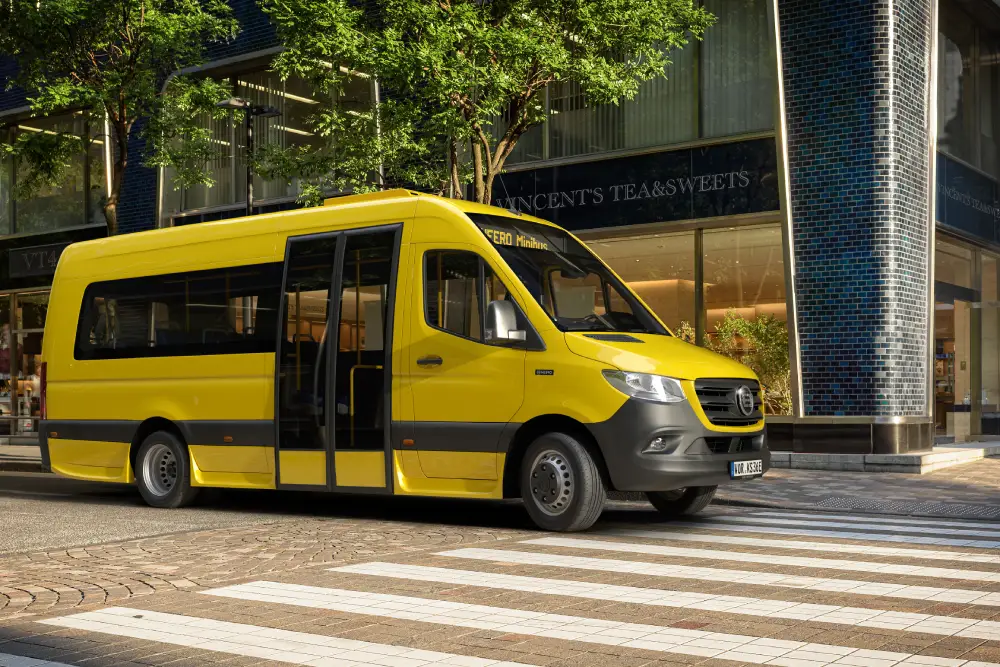
Battery buses: Including trolleybuses suitable for urban scheduled services.
Fuel cell buses: Including models with range extenders for longer distances.
D2E-Umrüstung: The conversion of conventional buses to battery or fuel cell drives was explicitly eligible for funding.
Infrastructure: The necessary charging, refueling, and maintenance infrastructure was also subsidized.
This broad coverage makes it possible to build a holistic ecosystem for e-mobility. The aktuelle BMDV-Richtlinie provided the basis for these investments until recently. This makes the transition plannable for businesses of all sizes, from craft businesses to large logistics companies.
Maximize your chances: Strategies for a successful funding application
A successful application under the easy-Online 2025 e-bus funding required more than just filling out forms in good time. Since the funds were awarded in a competitive process, the quality of the project outline was crucial. The CO₂ avoidance achieved by the measure was rated particularly highly. High-efficiency solutions scored well here. After a positive decision, the buses had to be ordered bindingly within 12 months. It was therefore advisable to have concrete offers and technical concepts ready during the application phase. We recommend the following steps for optimal preparation:
Analysis of your own fleet and deployment profiles.
Obtaining offers for vehicles or conversions.
Creation of a detailed electrification concept.
Review of the applicable deadlines and dates.
Professional consulting could make the decisive difference here and significantly increase the chances of success. The 2026 funding call for buses ended on July 21, 2026.
HEERO D2E retrofit: The economical alternative to buying new
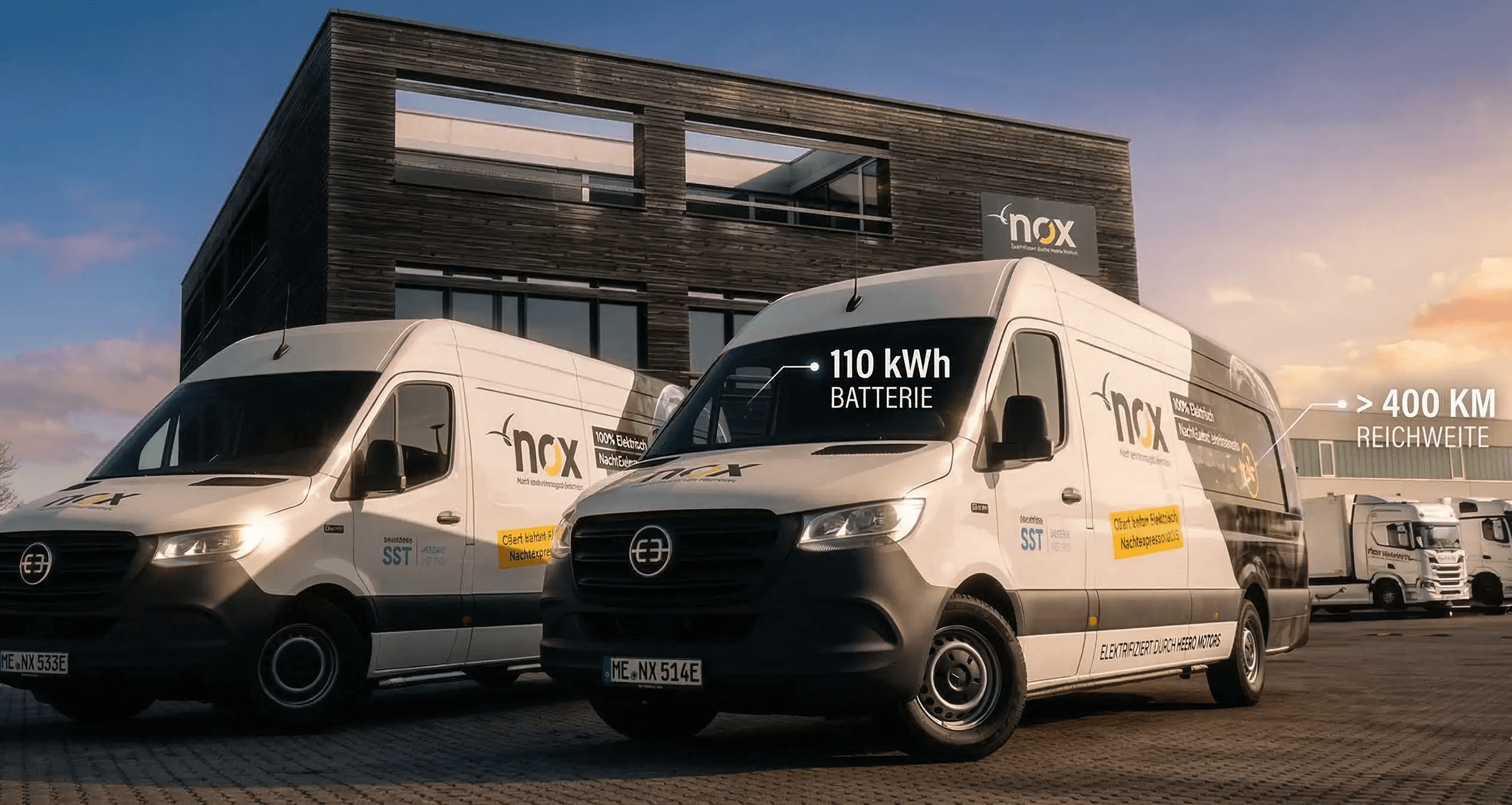
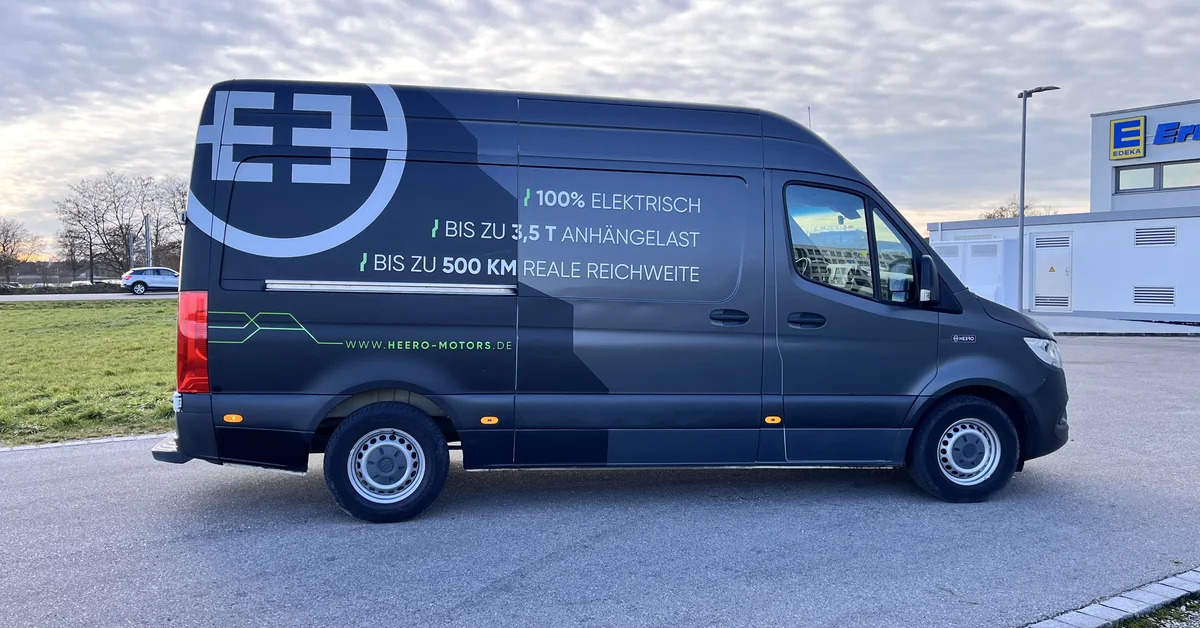
The funding guideline recognized the conversion of diesel vehicles as an equivalent measure to purchasing new ones. This remains a strategic option for fleet operators, especially those with expensive specialized bodies. Instead of completely replacing a proven vehicle, only the drivetrain is replaced. Our conversion for the Mercedes-Benz Sprinter is one such solution that protects investments and implements the principles of the circular economy. The costs for a conversion are often significantly lower than those for a new e-vehicle, making the funding used even more efficient. With a range of up to 425 km, our converted vehicles prove their full practical suitability. The funding rate of the bus program also applied to the conversion costs; as background: funding rate of 80 percent. The 2026 call ended on July 21, 2026, and no subsequent call has been announced.
Conclusion: Your advantage with HEERO in the E-Bus funding 2025
The electric bus funding easy-Online 2025 has been completed; the most recent funding call for buses ended on July 21, 2026. With a funding rate of up to 70% and the recognition of retrofits, the federal government had set strong incentives. HEERO is at your side as an innovative partner to help you set up your fleet planning independently of this. We offer not only state-of-the-art electric vehicles, but also a pragmatic solution that reduces costs and maximizes sustainability. Our expertise ensures a smooth transition, from analysis to final implementation. A follow-up call has not been announced; we clarify on a case-by-case basis which programs are currently open. Request your personal consultation or book an everyday test free of charge to convince yourself of the performance of our solutions.
More useful links
The official website of the Federal Government offers comprehensive information on political initiatives and funding programs, including the transport transition and electromobility.
The NOW GmbH is a federally owned company that coordinates the development and implementation of funding programs for sustainable mobility and energy, such as the federal funding for e-buses.
The Projektträger Jülich (PtJ) is an institution of the Forschungszentrum Jülich and supports federal ministries in implementing research and innovation funding programs, including the evaluation of applications for e-bus funding.