Subsidies for electric vans: What an 80% grant covered for your fleet

Up to 500 km range in the e-transporter and 80% of the additional costs subsidized? This was made possible by the federal KsNI funding directive until 2024. Find out what the subsidy covered and how you can make your fleet future-proof even after that; no new funding calls are planned.
The topic briefly and concisely
The 80% KsNI subsidy for e-transporters and conversions ran until 2024; new calls for funding are not planned.
The funding covered 80% of the vehicle costs (new or retrofit) and 40% of the charging infrastructure costs; it ran until 2024.
Converting a diesel van was eligible for subsidies and remains a sustainable alternative to buying a new vehicle, protecting investments in special bodies.
Rising diesel prices, impending city driving bans, and the requirements of the Clean Vehicles Directive are putting pressure on fleet operators. Electrification is no longer an option, but a business necessity. The KsNI funding round from the Federal Ministry for Digital and Transport (BMDV) made the transition particularly economical. The funding for electric vans offered up to an 80% subsidy on the additional costs of converting existing diesel vehicles or purchasing new vehicles; it ran until 2024. This guide explains what the subsidy covered and how you can set the course for an economical and sustainable future.
The Facts: Subsidy Rates and Deadlines at a Glance
The electrification of your commercial vehicle fleet remains a strategic decision. The final KsNI funding round offered conditions that required strategic action. The application deadline expired in 2024.
Here are the key points of the funding program:
80% Grant: Applied to the purchase of new electric commercial vehicles as well as the conversion of an existing diesel van to an electric drive (Diesel-to-Electric).
40% Grant: Covered the costs of setting up the necessary charging infrastructure on your company premises.
KsNI Directive: The "Climate-friendly Commercial Vehicles and Infrastructure" (KsNI) program ran until 2024; no new calls for funding are planned.
Clean Vehicles Directive: The EU directive mandated public procurement bodies to procure a quota of 38.5% "clean" light commercial vehicles by the end of 2025.
High grants and regulatory pressure created a narrow window of opportunity for an economically sound decision. The next section shows you the necessary steps in the application process.
Your 4-point action plan for cost-effective electrification
Bureaucracy and complex application procedures often represent a hurdle. However, with a structured approach, you can clarify the funding situation for your electric transporter in 2025 without any problems. We have divided the process into four manageable steps for you.
This is how you proceed strategically:
Carry out a needs analysis: Determine the exact requirements of your fleet. How many vehicles are to be converted or replaced? What charging capacity is required? A detailed checklist for funding eligibility will help you gather all relevant data.
Obtain quotes: Request binding quotes for the vehicles – whether a new purchase or conversion – and the charging infrastructure. For a HEERO Sprinter with up to 425 km range, you will receive all necessary documents from us.
Submit funding application: Applications under the KsNI directive were submitted to the Federal Office for Logistics and Mobility (BALM); this directive ran until 2024, and new funding calls are not planned. Ensure that the documents are complete to avoid queries.
Implementation after approval: Once you have received the positive funding decision, you can trigger the order for the vehicles and the charging infrastructure. It is important that the order is only placed after approval has been granted.
With this plan, you will navigate safely through the process and can check the financial details of the available funding pots.
The funding pools: Where the 80% subsidy until 2024 came from
Financial support for fleet electrification came from the BMDV's "Climate-friendly Commercial Vehicles and Infrastructure" (KsNI) funding program. This program was specifically designed to offset the additional costs of electric commercial vehicles compared to diesel models, thereby accelerating market ramp-up. It covered light commercial vehicles of the EC vehicle class N1, which includes typical vans up to 3.5 tons. The federal KsNI funding ran until 2024; no new funding calls are planned.
Particularly noteworthy was the explicit funding for retrofitting. Instead of scrapping an expensive specialized body, your proven Mercedes-Benz Sprinter is converted by us into a powerful electric vehicle within 10 days. This emphasis on the circular economy is a core concern of the funding guideline. The funding significantly lowered the investment barrier and made the switch profitable even for medium-sized businesses and craft enterprises. An analysis of the total cost of ownership shows just how sustainable this decision really is.
Cost Comparison: Total Cost of Ownership (TCO) in Focus
The acquisition costs are only part of the equation. Crucial for an economic fleet are the total operating costs, also known as Total Cost of Ownership (TCO). The TCO includes all costs over the lifespan of a vehicle – from acquisition, energy, and maintenance, through to the residual value. An electric van has decisive advantages here. Energy costs per 100 km are often more than 50% lower with electricity than with diesel.
A direct comparison makes it clear:
Lower maintenance costs: An electric drive has significantly fewer wear parts than an internal combustion engine. Oil changes, exhaust system maintenance, and clutch repairs are completely eliminated.
Tax advantages: Electric vehicles are exempt from vehicle tax for 10 years.
GHG quota: Each electric vehicle generates annual revenue through the sale of CO₂ certificates.
Value stability: By converting an existing vehicle, you protect the investment in expensive special bodies and secure a high residual value.
These factors mean that the higher acquisition costs – additionally supported by subsidies until 2024 – quickly amortize through the lower operating costs. The right vehicle technology is the key to success.
The Technology: Range and Performance for the Workday
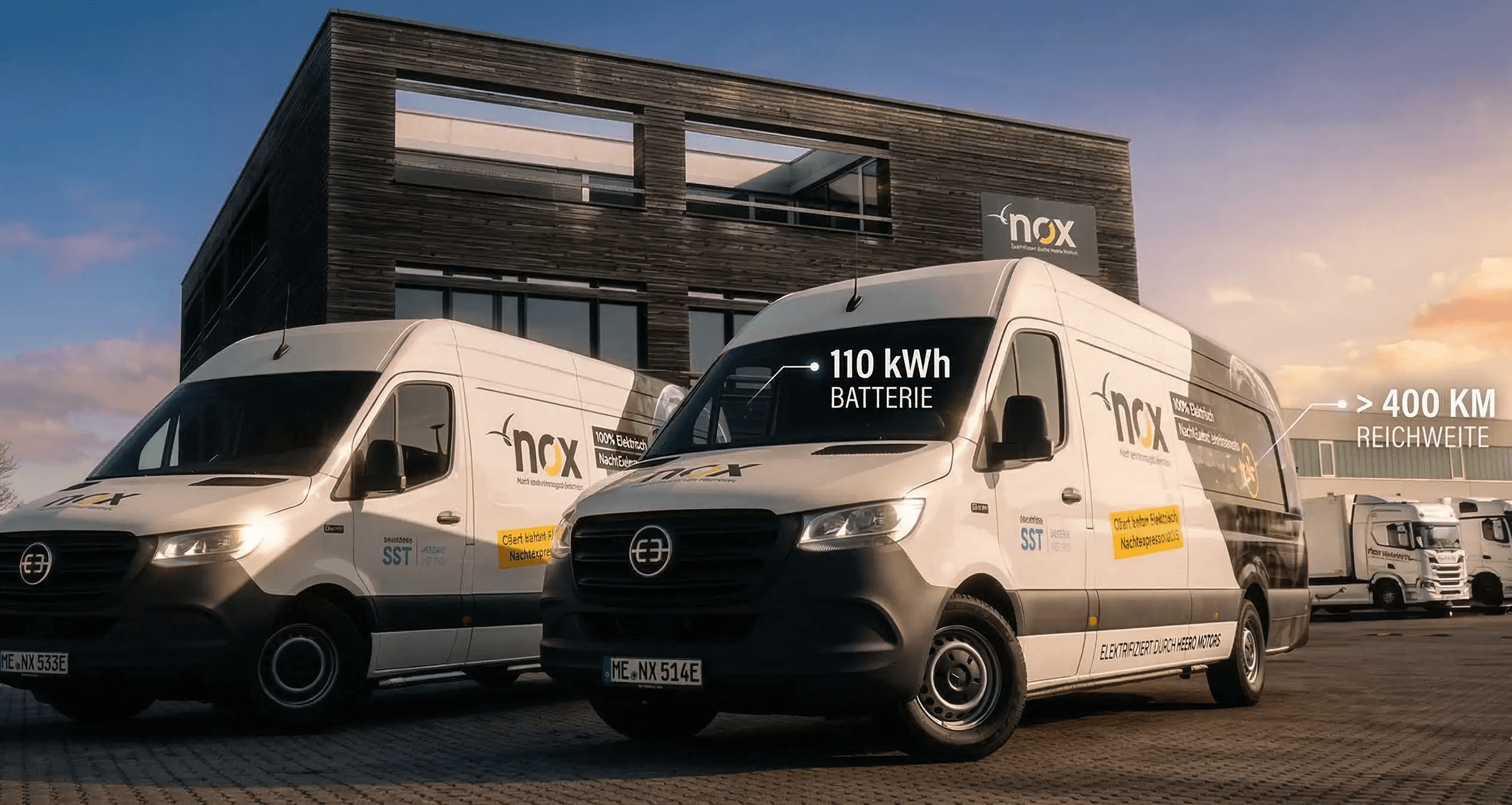
Practical suitability determines the success of electrification. Modern e-transporters fully meet the requirements of demanding fleets. HEERO relies on a standardized high-performance battery with 110 kWh gross or 96 kWh net capacity for all transporter models. This enables impressive ranges and charging performance.
Our solutions at a glance:
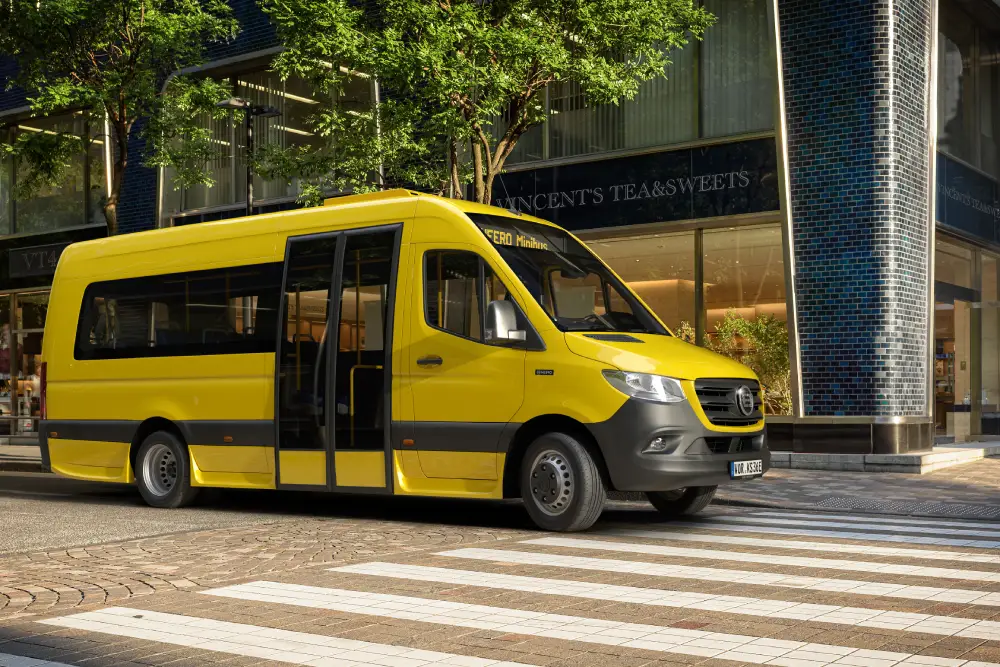
HEERO eTransporter: With a range of up to 500 km, it is ideal for distribution transport and regional operations.
HEERO DTE-Sprinter: After retrofitting, your proven Sprinter achieves up to 425 km, making it ready for almost any application.
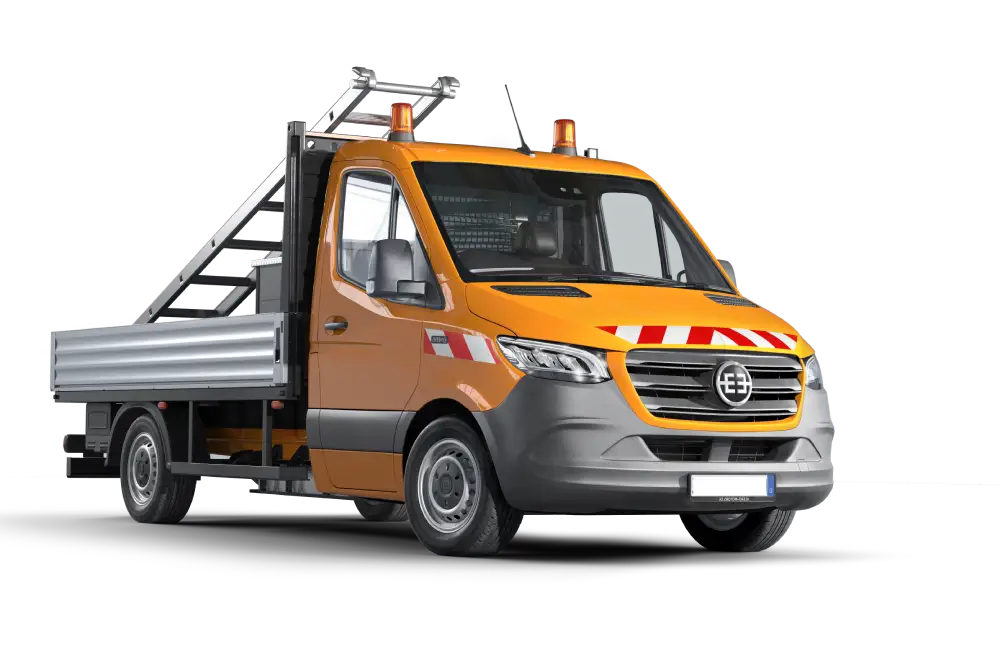
HEERO ePritschenwagen: Whether as a single or double cab, it offers a range of up to 400 km for trade and municipalities.
Fast charging capability: All models charge as standard with up to 135 kW direct current (DC). In just 30 minutes, the battery is recharged to 80%.
These performance data prove that a modern electric transporter requires no compromises. To fully exploit this potential, a well-thought-out charging infrastructure is essential.
The Charging Infrastructure: The Foundation of Your E-Fleet
A reliable charging infrastructure is the backbone of any e-fleet. The KsNI funding directive also granted a subsidy for the acquisition and installation costs here. This applied to non-public charging infrastructure that was used exclusively for the subsidized vehicles. An investment in the right charging infrastructure ensures maximum availability of your vehicles and optimizes operating costs.
An intelligent charging strategy, often overnight at the depot, significantly reduces energy costs compared to public ad-hoc charging processes. Planning should take into account factors such as the number of vehicles, idle times and the available grid capacity. With the funding, setting up a professional charging infrastructure became a manageable investment. This sets the course for a successful transformation.
More useful links
The Federal Office for Logistics and Mobility (BALM) provides detailed information on the funding program "Climate-friendly Commercial Vehicles and Infrastructure" (KsNI).
The Federal Ministry for Economic Affairs and Climate Action provides information on funding for commercial and special-purpose vehicles with climate-friendly drive systems.
The KfW presents funding programs for companies in the field of electromobility.
The Federal Statistical Office (Destatis) provides statistical data and press releases on electromobility.
The Federal Motor Transport Authority (KBA) provides statistics on new vehicle registrations, including electric vehicles.
The Federal Ministry of Transport (BMV) provides information on commercial vehicles with alternative drive systems and climate protection in transport.
The Federal Environment Agency (UBA) provides data and information on transport infrastructure and the vehicle fleet, including electric vehicles.