Special Purpose Electric Vehicles: Reduce TCO & meet CVD quotas through D2E conversion

Your special-purpose vehicles are valuable, but the Clean Vehicles Directive demands emission-free fleets. The HEERO D2E (Diesel-to-Electric) conversion for the MB Sprinter 907 is the pragmatic solution: you preserve your expensive bodies, meet legal quotas, and significantly reduce your operating costs (TCO).
The topic briefly and concisely
The D2E conversion ensures compliance with the Clean Vehicles Directive (CVD) without the need for expensive new vehicle purchases.
By preserving expensive specialized bodies, investments are protected and the total cost of ownership (TCO) is significantly reduced.
A Mercedes-Benz Sprinter (model series 907) is converted by HEERO into a high-performance electric vehicle in a maximum of 10 working days (model series 907 only).
Municipalities and companies are facing a challenge: The legal requirements of the Clean Vehicles Directive (CVD) demand rapid electrification of commercial vehicle fleets. At the same time, high investments are tied up in existing specialized vehicles such as refrigerated trucks, tippers, or workshop vehicles. Purchasing new electric special-purpose vehicles is expensive and leads to the loss of these valuable bodies. With its D2E (Diesel-to-Electric) conversion, HEERO offers an economically and ecologically superior alternative that is specifically tailored to the needs of fleet operators and secures the value of your existing assets.
The Clean Vehicles Directive: Statutory Pressure to Act for Fleets
The Clean Vehicles Directive (CVD) is not a distant vision of the future, but has been applicable law in Germany since 2021. It obliges public authorities and their service providers to meet binding minimum quotas when procuring clean vehicles. By the end of 2025, for example, 38.5% of new light commercial vehicles and 45% of buses must be low-emission. For many fleet managers, this represents a massive challenge, as replacing entire vehicle fleets is highly capital-intensive. Retrofitting existing vehicles is a direct and efficient method to meet these quotas. Converting to an Electric MiniBus or electric van (Diesel-to-Electric / D2E) is counted as procuring a zero-emission vehicle. This strategic step not only ensures regulatory compliance, but also avoids the high costs and long delivery times of new vehicles. The time for pragmatic solutions is now, as the next stage of the CVD already comes into force in 2026.
Preserving Value Over New Purchases: The Economic Dilemma of Specialized Bodies
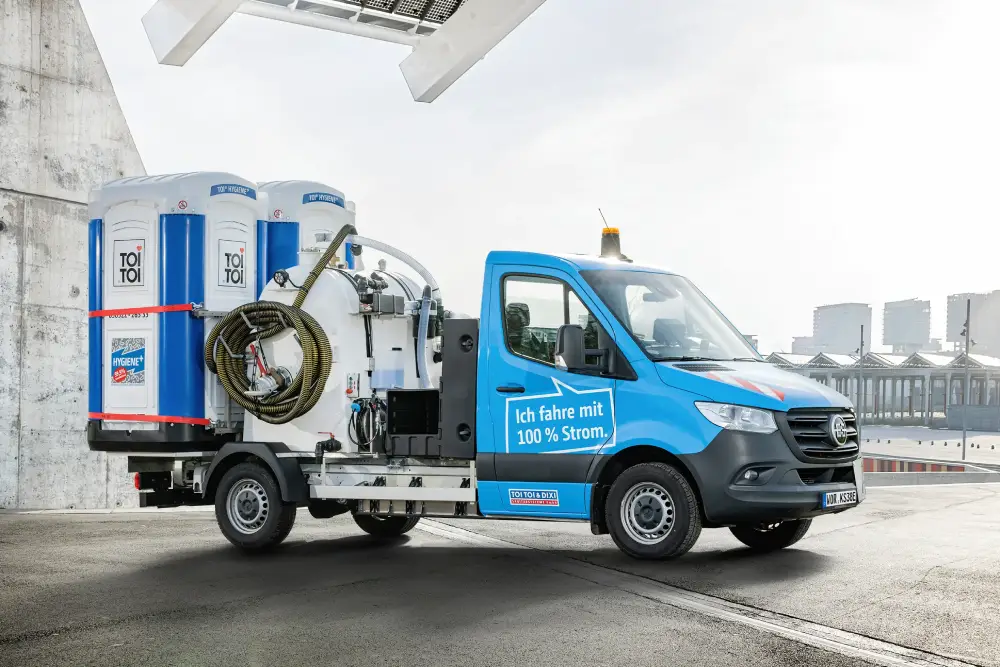
A standard van is just the base – the true value of many commercial vehicles lies in the specialized bodywork. A refrigerated vehicle body or a complex racking system for tradespeople can easily increase the vehicle value noticeably by up to 100%. When buying a new electric vehicle, this investment is often lost. The average technical service life of a truck chassis is over 1,000,000 kilometers, and a service life of 10-15 years is common for specialized bodies. This is exactly where the D2E conversion from HEERO comes in. We fully preserve your proven Mercedes-Benz Sprinter (model 907) and its valuable bodywork. You only exchange the drive, not the entire vehicle optimized for your processes.
This approach has a direct impact on your balance sheet and the Total Cost of Ownership (TCO). Consider the following points:
Avoidance of depreciation: Your specialized body remains in use instead of being written off with the base vehicle.
Lower capital costs: The costs for a D2E conversion are significantly lower than those for a comparable new electric special-purpose vehicle.
No process reorganization: Drivers and employees continue to use the familiar vehicle environment, ensuring efficiency.
Fast availability: While delivery times for new electric commercial vehicles often exceed 12 months, our conversion takes a maximum of 10 working days (only model series 907).
Choosing conversion is therefore a strategic investment in the future viability of your fleet, combining economic sense with ecological necessity.
HEERO D2E Conversion: Technical Facts and Performance
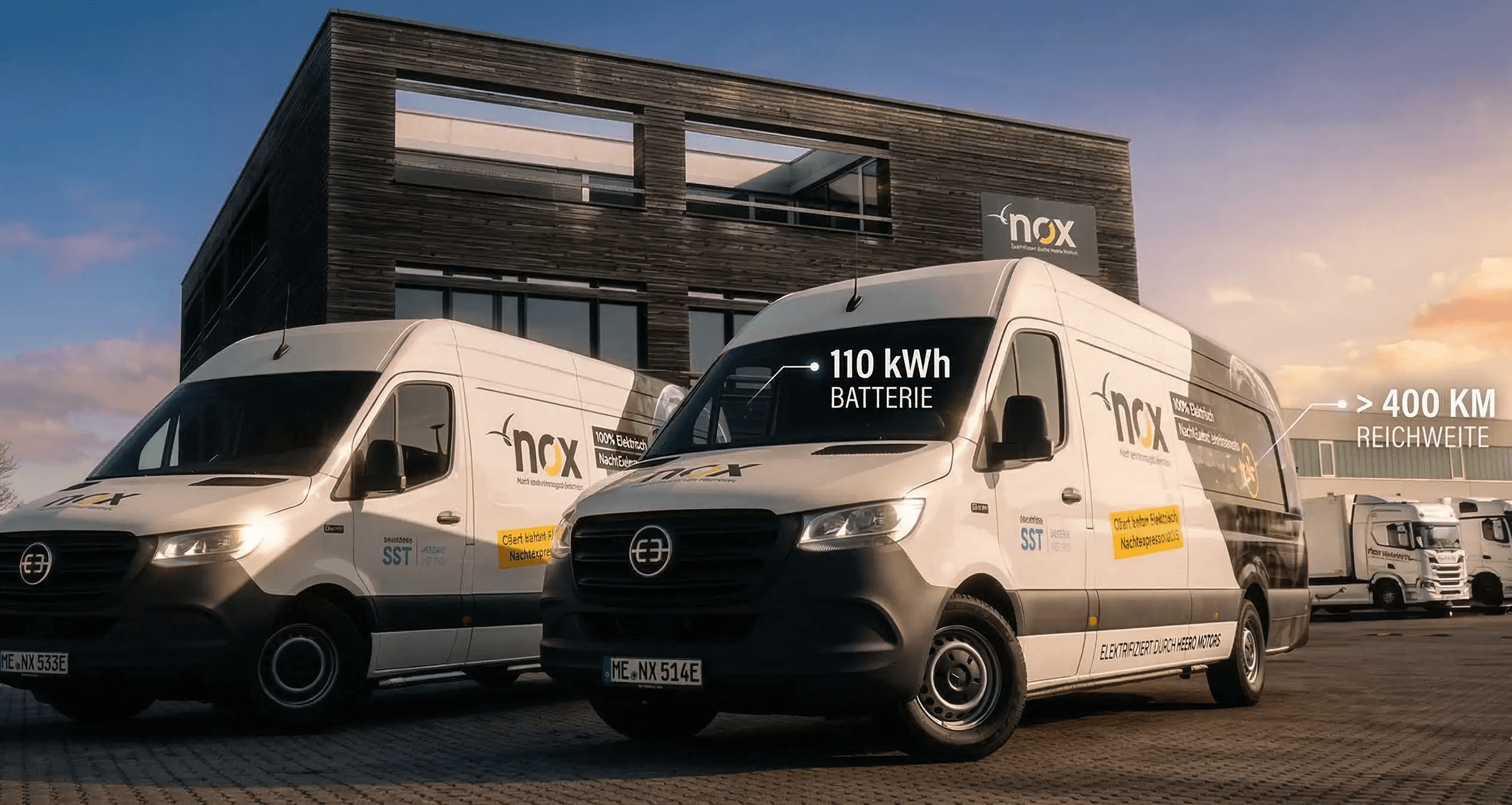
Our D2E conversion transforms your proven Model Series 907 (313, 316, 319, 324) Diesel Sprinters into high-performance electric special-purpose vehicles. The core of the conversion is our specially developed eDrive drivetrain, which is optimized for the demands of commercial use. With a battery capacity of 110 kWh, the converted vehicles achieve a practical range of up to 300 km (WLTP). This easily covers typical daily routes in distribution logistics, crafts and trades, or municipal services. The charging capacity of 165 kW at DC fast-charging stations enables recharging to 80% in just 60-90 minutes. A 22 kW AC charger is available for planned overnight charging at the depot.
The conversion process is standardized and highly efficient. Within a maximum of 10 working days (Model Series 907 only), the complete diesel drivetrain is replaced by our electric unit. We grant a comprehensive warranty on the new drive components. Our "Flying HEEROs" service concept ensures that maintenance and service work can be carried out directly on your premises in order to reduce downtime to a minimum. This makes fleet electrification a predictable and low-risk process.
TCO Analysis: Why Diesel-to-Electric conversion is the smarter investment
Total Cost of Ownership (TCO) is the decisive metric for fleet operators. While electric vehicles can be more expensive to purchase, they stand out with significantly lower operating costs. A D2E conversion reinforces this effect, as the acquisition costs are lower than for a new vehicle. The operating costs of a converted electric Sprinter can typically be over 30% lower than those of a comparable diesel vehicle. The main drivers for these savings are:
Energy costs: The cost per kilometer for electricity is generally 40-60% lower than for diesel.
Maintenance and repair: eDrives have significantly fewer wear parts. Oil changes, exhaust system maintenance, and clutch replacements are completely eliminated.
Taxes and duties: Electric vehicles are exempt from vehicle tax and benefit from lower CO2 levies.
Residual value: By continuing to use the special body and modernizing the drive, the residual value of the entire vehicle is stabilized.
Especially for vehicles with a high annual mileage, the investment in a conversion often pays off after just 3 to 4 years. Our experts will be happy to support you with an individual TCO calculation for your fleet and show you the concrete potential for savings. The Diesel-to-Electric conversion is not just a response to legal requirements, but a clear commercial decision to optimize your fleet costs.
Holistic solutions for your e-fleet
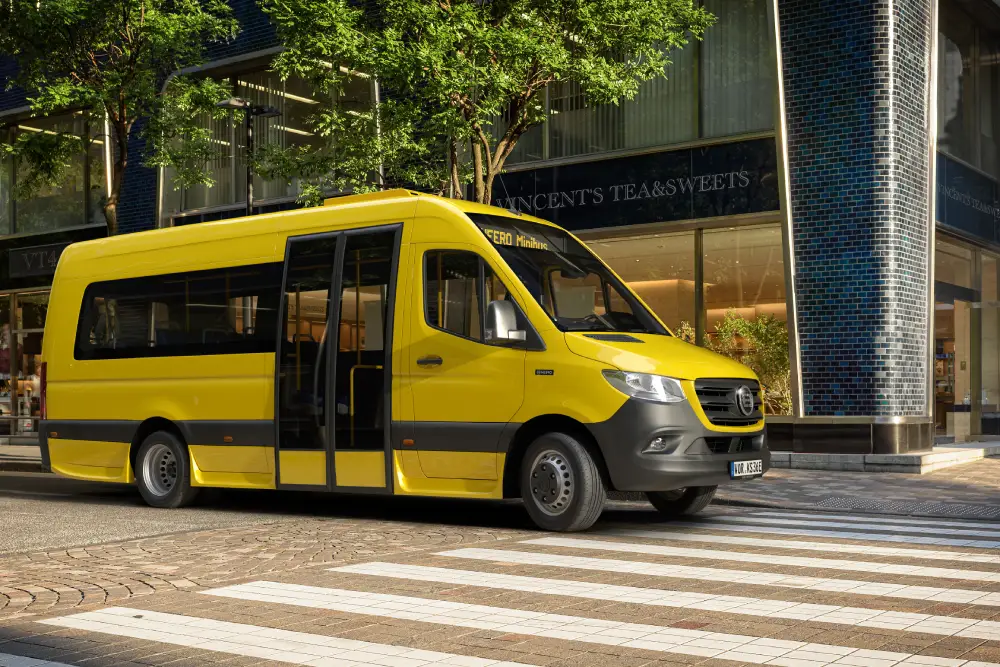
HEERO is more than just a converter. We see ourselves as an end-to-end partner for the electrification of your fleet. In addition to the D2E conversion, we also offer a portfolio of new electric vehicles based on the Sprinter. Our HEERO Electric FlatBed, for example, achieves ranges of up to 400 km. Designed for passenger transport, our Electric MiniBus models cover over 300 km on a single charge. These vehicles are ideal for supplementing your fleet or meeting specific new requirements. A crucial success factor for operating special-purpose electric vehicles is a well-planned charging infrastructure. Our experts therefore offer comprehensive consulting on the topic of depot charging. We analyze your location, determine energy requirements, and plan a scalable charging infrastructure including intelligent load management. This ensures that your vehicles are generally ready for use when you need them, while optimizing charging costs. From initial analysis to ongoing operation – we support you through every step of the transformation.
Circular economy as a sustainable principle
The D2E conversion is a prime example of a functioning circular economy in the automotive industry. Instead of prematurely retiring a fully functional vehicle with a valuable body, we extend its life cycle by many years. This approach conserves precious resources, reduces the carbon footprint in vehicle manufacturing, and avoids waste. Compared to new production, each converted vehicle saves around 15 metric tons of CO2 equivalents. Reusing the chassis and body is an active contribution to reducing primary raw material consumption. Companies and municipalities that rely on conversion solutions for special-purpose vehicles not only position themselves economically smart, but also as pioneers in sustainability. They demonstrate that ecological responsibility and economic efficiency can go hand in hand. With HEERO, you are investing in a solution that considers the entire life cycle of your fleet and puts the principles of the circular economy into practice.
More useful links
The Federal Motor Transport Authority (Kraftfahrt-Bundesamt) provides general tables and statistics on vehicles, including commercial vehicles.
The Federal Environment Agency (Umweltbundesamt) delivers data on vehicle fleets and transport infrastructure in Germany.
The International Council on Clean Transportation provides a factsheet on the total cost of ownership (TCO) of battery-electric trucks (BETs) in Europe with a focus on Germany.
The NOW GmbH offers an overview of studies on the total cost of ownership (TCO) of climate-friendly commercial vehicles.
The European Commission provides information on the agreement between the EU Parliament and the Council on new CO2 standards for trucks and buses.
The Federal Office for Logistics and Mobility offers information on the Climate Protection and Mobility (KSNI) funding program for commercial vehicles.
The Circular Economy Initiative Deutschland covers the topic of circular economy in the field of vehicles, batteries, and mobility.
DEKRA provides information on Diesel-to-Electric (D2E) conversion for trucks.
FAQ
Which Mercedes-Benz Sprinter models are eligible for our Diesel-to-Electric (D2E) conversion?
We focus exclusively on the D2E conversion of the Mercedes-Benz Sprinter 907 model range. This includes the widely used 313, 316, 319, and 324 base models. Your existing and often expensive custom body remains fully preserved and functional.
How long does the D2E conversion of a vehicle take?
Our process is designed for maximum efficiency to minimize your vehicle's downtime. The complete D2E conversion of a Sprinter 907 typically takes no longer than 10 working days (907 model series only). This ensures your modernized Electric Special Purpose Vehicle is quickly back in operation for you.
What happens to my expensive custom body?
Preserving your specialized body is the core advantage of our D2E conversion. The body on the chassis remains completely untouched. We simply replace the diesel powertrain with our electric drive. Your investment in the body—whether it is a refrigerated box, a tipper, or a mobile workshop—remains 100% protected.
What is the real-world range of a Diesel-to-Electric converted special-purpose vehicle?
A HEERO D2E Sprinter converted with our 110 kWh battery achieves a range of up to 425 km according to the WLTP standard. The actual range depends on factors such as payload, driving style, and ambient temperature, but reliably covers typical daily operations in urban and regional transport.
Do I receive a warranty on the Diesel-to-Electric (D2E) conversion?
Yes, of course. HEERO offers a comprehensive warranty on the entire electric drivetrain and all components we install. Furthermore, our mobile service, the “Flying HEEROs”, ensures fast and competent support directly at your location to maximize the uptime of your fleet.
Does the Diesel-to-Electric (D2E) conversion help to meet the requirements of the Clean Vehicles Directive (CVD)?
Absolutely. A vehicle retrofitted with an electric drive is recognized as a zero-emission vehicle under CVD (Clean Vehicles Directive) legislation. The D2E retrofit is therefore one of the fastest and most cost-effective methods to meet legally mandated procurement quotas while simultaneously optimizing your fleet costs.