Electrifying luxury minibuses: Categorization of subsidies under the 2026 call – up to 70% of additional costs
Electrifying luxury minibuses: Categorization of subsidies under the 2026 call – up to 70% of additional costs

More than 3,500 electric buses have already benefited from government subsidies – when will you electrify your fleet? The federal funding calls for buses and commercial vehicles have expired; we clarify which programs are currently open on a case-by-case basis. Bureaucracy, rising diesel prices, and strict climate regulations remain issues for your fleet planning regardless of this.
The topic briefly and concisely
The application deadline for funding for electric vehicles and conversions ended on July 21, 2026; up to 70% was funded.
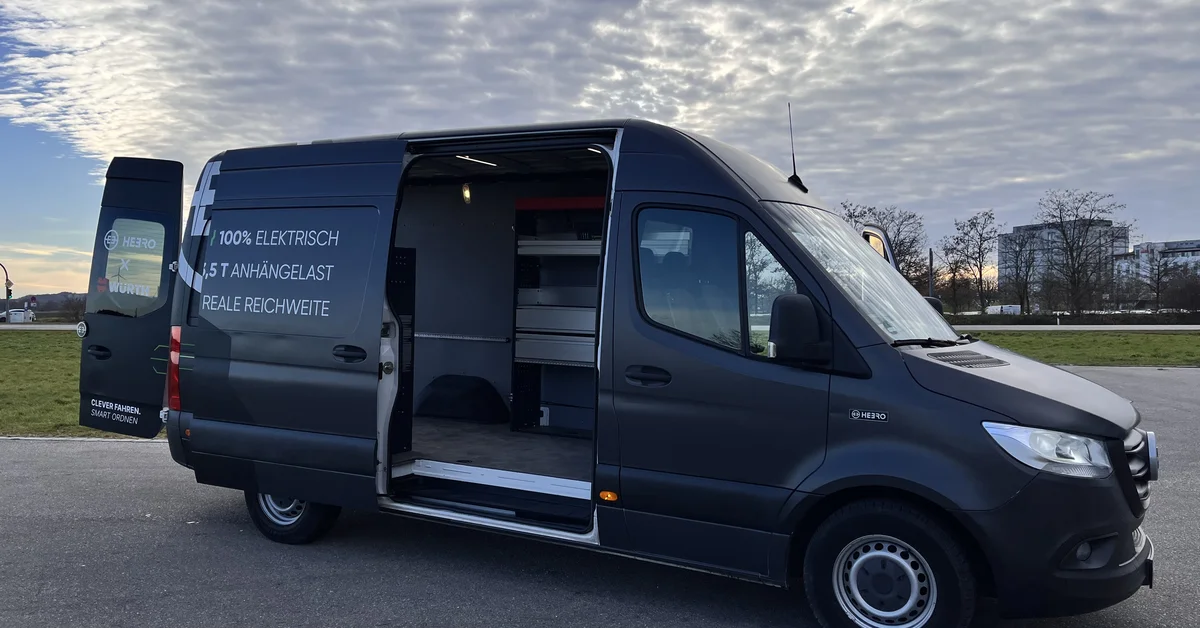
Retrofitting an existing luxury minibus (DTE) reduces total operating costs (TCO) and conserves resources through circular economy.
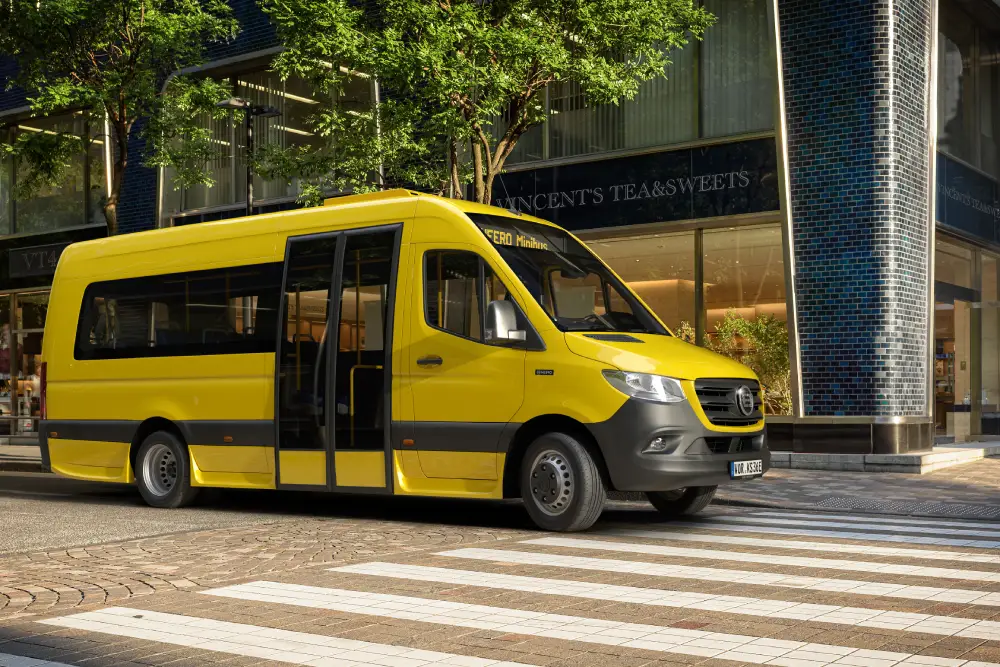
The HEERO Tourer offers up to 400 km range and 135 kW fast charging capability as an electric minibus for full practicality.
Rising operating costs, complex environmental regulations and the need to operate sustainably in the future present fleet operators with major challenges. Especially in the segment of passenger transport vehicles, such as the luxury minibus, an economical and at the same time sustainable solution is required. Electrification is the answer, but investing in new vehicles is not always the best way. A conversion offers a pragmatic alternative that preserves existing assets. This process converts your proven diesel vehicles into high-performance electric vehicles. At the same time, it reduces the Total Cost of Ownership (TCO) over the entire service life. The funding guidelines of the Federal Ministry for Digital and Transport (BMDV) have additionally made this step attractive for years.
Your advantages at a glance: numbers, data, facts
The decision to electrify is supported by clear economic and technological incentives. A strategic transition remains economically viable.
Funding rates in review: The BMDV funding guidelines subsidized the additional costs for acquisition or conversion – for commercial vehicles via KsNI until 2024 with up to 80%, for buses most recently with up to 70%.
40% for charging infrastructure: In addition, the development of the necessary charging infrastructure was funded with up to 40% of the costs, which lowered the barrier to entry.
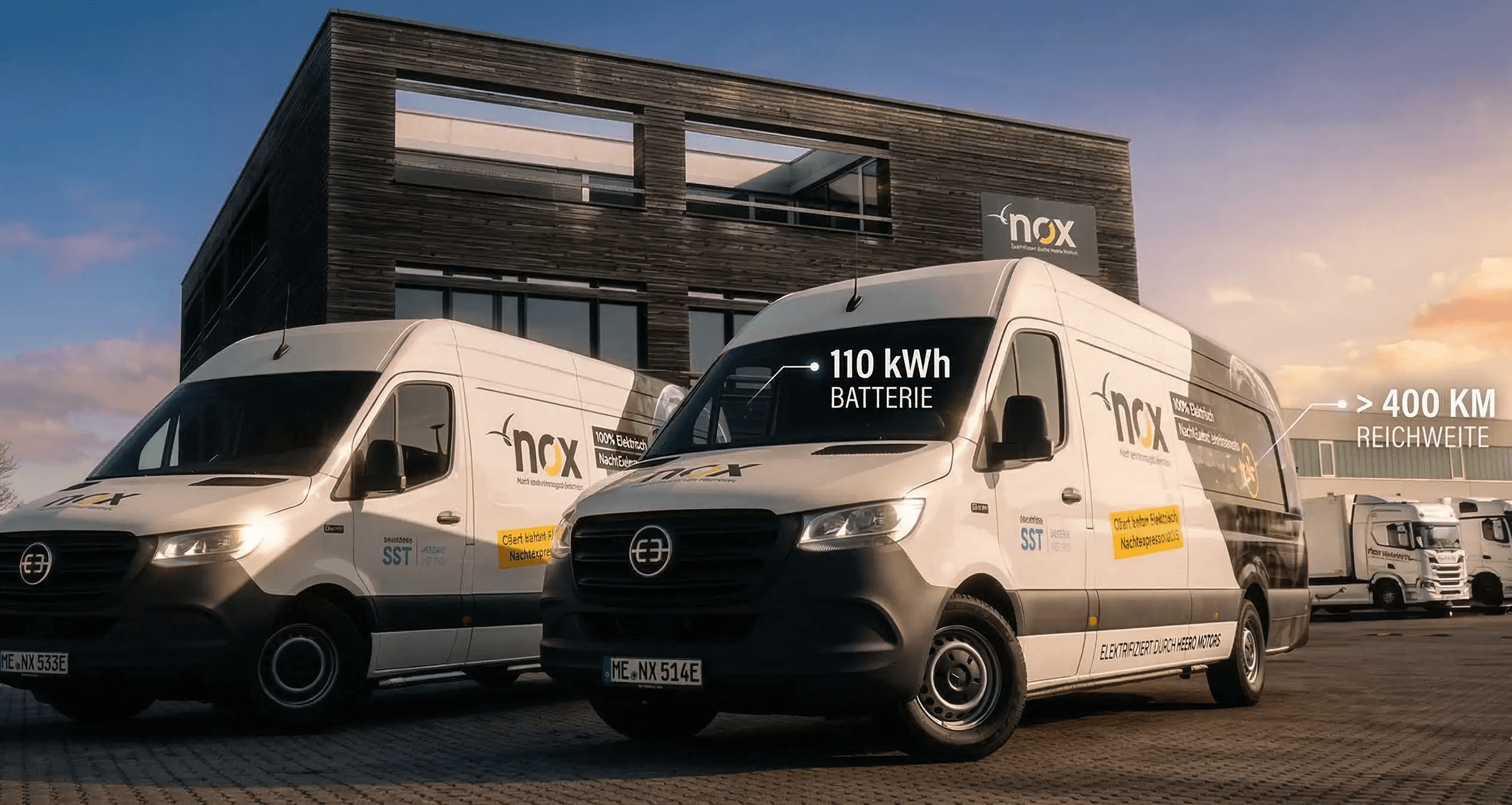
Up to 400 km range: The HEERO Tourer, an electric minibus for nine people converted on a Sprinter basis, achieves a practical range of up to 400 kilometers.
Status of the programs: the KsNI ran until 2024, the 2026 funding call for buses ended on July 21, 2026; no new calls have been announced.
Even without an active funding call, the mature technology speaks for modernizing your fleet.
Your 4-step plan to an e-fleet: How to classify the funding
A structured process is the key to success in order to clearly clarify the funding situation and make the transition run smoothly. With this checklist, you will navigate safely through the process.
Conduct a needs analysis: Analyze your daily driving profiles and operational requirements. Our experts will help you determine the exact range and charging needs for your luxury minibus.
Check funding opportunities: We will conduct a free funding analysis for you. This helps you understand what the most recently applicable rates of up to 80% for the vehicle and 40% for the charging infrastructure mean today.
Define the solution: Based on the analysis, decide between an efficient conversion solution for your existing fleet or the acquisition of a new e-transporter. We advise you objectively on the most economical option.
Prepare the application: With all the necessary documents and a clear strategy, we will assist you in submitting your application as soon as a suitable program is open.
The next step is to understand the financial framework that makes this transition possible.
Funding situation and deadlines: What still applies today
The Federal Government advanced the transport transition with substantial funds distributed via the BMDV's electromobility funding guidelines. These programs aimed to significantly reduce the additional costs associated with switching to electromobility. The most recent funding periods have expired: the KsNI since August 2024, the bus call on July 21, 2026. Via the KsNI until 2024, up to 80% of the additional investment costs for purchasing an electric commercial vehicle or converting a diesel vehicle were funded, and most recently up to 70% in the bus program. In parallel, companies could apply for a grant of up to 40% for the installation of normal and fast charging infrastructure on their own company premises. This financial support was crucial for the economic viability of fleet electrification.
Cost comparison: Why the conversion is worth it in the long run
The acquisition costs are only part of the equation; the true savings are revealed in the Total Cost of Ownership (TCO). An electric Minibus Elektro benefits from significantly lower expenses for energy and maintenance. Electricity is cheaper per kilometer compared to diesel, and an electric motor has far fewer wear parts than an internal combustion engine. A study by the ICCT shows that electric trucks in Germany can already achieve TCO parity with diesel vehicles today. Particularly the Diesel-to-Electric conversion (DTE) is economically attractive, as it preserves the value of your already existing specialized bodies and makes an expensive new acquisition unnecessary. With a DTE solution, you invest specifically in the drivetrain and make your proven luxury minibus ready for the future. A detailed TCO analysis is the basis for an informed decision.
Technology in detail: Range, battery, and charging power
Modern electric vehicles are designed for demanding commercial use. The HEERO Tourer, a passenger transporter for up to nine passengers, is the best example of the performance of current technology. With a net battery capacity of 96 kWh (110 kWh gross), it achieves a real-world range of up to 400 kilometers. This makes it ideal for shuttle services, hotel transfers, or as a VIP vehicle. Thanks to a DC fast charging capacity of up to 135 kW, the battery is recharged to 80% in about 40 minutes, which minimizes downtime and maximizes operational readiness. These technical indicators prove that an electric luxury minibus requires no compromises in terms of practicality. The technology is ready for widespread use.
Sustainability as Strategy: Circular Economy instead of New Purchase
Converting an existing vehicle is an active contribution to the circular economy and a strong signal of corporate responsibility. Instead of scrapping a fully functional luxury minibus, its lifecycle is significantly extended by a conversion solution. This approach reduces the demand for primary resources and considerably lowers the CO₂ emissions that would occur during the production of a new vehicle. The German automotive industry views the circular economy as a key lever for achieving climate goals. By opting for a conversion, you not only protect your budget but also conserve valuable resources. You act in the spirit of a modern, circular economy and position your company as a sustainable pioneer. This strategic advantage is further strengthened by compliance with legal requirements.
More useful links
BMDV offers an article about the milestone of 1,000 funded electric buses.
BMV publishes a press release on the funding call for buses.
Bundeswirtschaftsministerium provides a final report of a monitoring study on electric buses in public transport.
Bundeswirtschaftsministerium informs about the energy transition in a newsletter article.
Zukunftsnetzwerk ÖPNV offers an article about the funding and market ramp-up of electric buses.