137 kWh battery capacity: maximum operational reliability for demanding e-fleets

Range anxiety for electric buses in city traffic? The HEERO 137 kWh battery option delivers over 300 km of real-world range and 165 kW charging power. This secures all-day operation and reduces the total cost of ownership (TCO) of your fleet.
The topic briefly and concisely
The 137 kWh battery in the HEERO e-bus delivers over 300 km of real-world range and is designed for demanding public transport operations.
With 165 kW DC charging power, downtime is minimised and vehicle availability maximised to over 95%.
The increased capacity supports compliance with CVD quotas and, through greater efficiency, reduces the total cost of ownership (TCO).
Municipalities and public transport companies face a double challenge: the legal requirements of the Clean Vehicles Directive (CVD) demand rapid electrification, while at the same time the operational performance of the fleet must be 100% secured. Especially in demanding scheduled operations, where reliability and range are crucial, standard batteries reach their limits. HEERO specifically addresses this bottleneck with an optional battery capacity of 137 kWh for the mid-low floor bus. This solution was developed to guarantee a range of over 300 kilometers even on long routes and with high energy demands, for example due to air conditioning, thereby significantly improving TCO efficiency.
Requirements analysis: Why 110 kWh is usually not enough
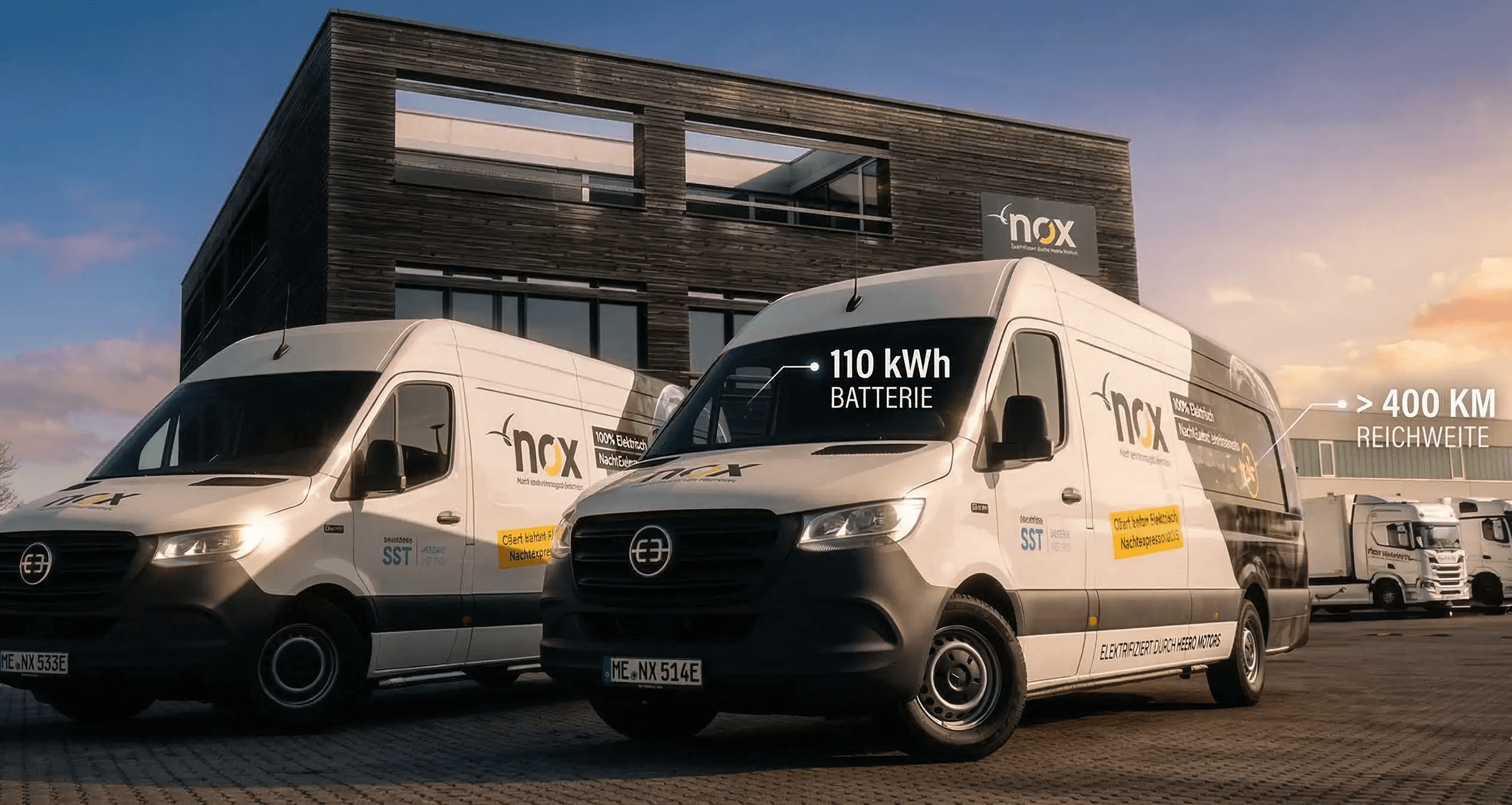
The standard battery capacity of 110 kWh in HEERO commercial vehicles offers an excellent range of more than 300 km for most logistics and trade applications. In local public transport, however, different rules apply. Here, long duty cycles, high passenger capacities and the intensive use of ancillary consumers such as heating and air conditioning result in a significantly higher energy requirement. A study shows that the range of electric vehicles can drop significantly in cold weather.
For a typical 12-hour operating day for a city bus, a larger energy reserve is essential in order to avoid unplanned charging stops that disrupt the timetable and increase operating costs. The larger battery capacity is therefore not a luxury, but a strategic necessity for 100% operational stability. The decision in favour of a larger battery is based on a precise analysis of the route profile and daily mileage. This analysis shows how the right State of Charge strategy increases efficiency. Investing in greater capacity secures the fleet's performance under all conditions.
Detailed technical specifications of the 137 kWh battery
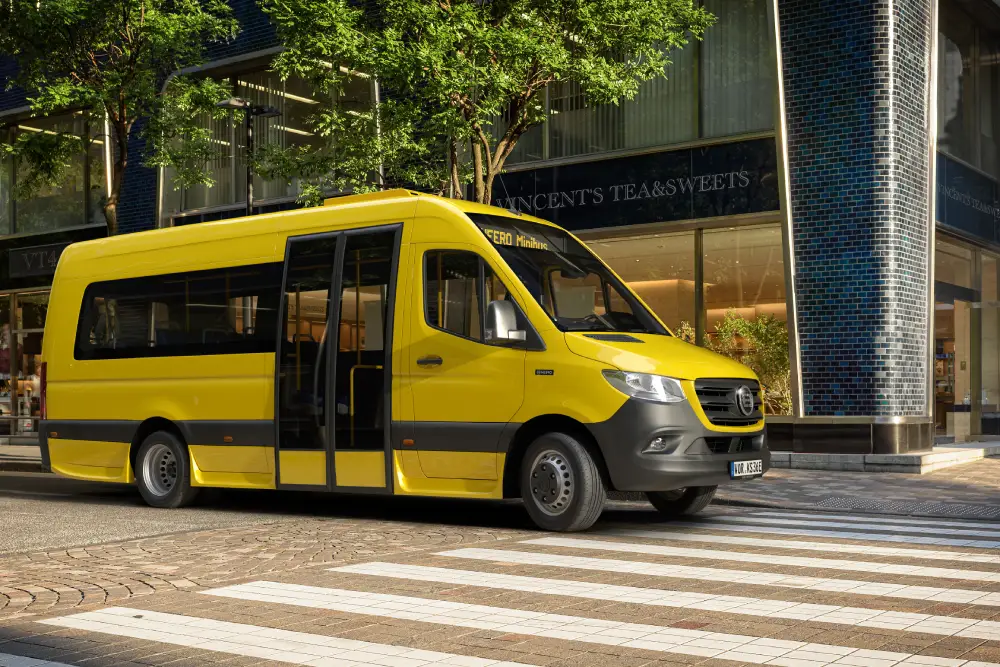
The 137 kWh battery was specifically designed for HEERO midi and minibuses to deliver maximum performance. It enables a practical range of over 300 kilometres, even at full capacity. Technologically, HEERO relies on nickel-manganese-cobalt batteries, which are known for their durability and safety. NMC batteries can withstand up to 4,000 charging cycles without significant loss of capacity, extending the vehicle’s service life and reducing TCO.
A decisive advantage is the charging power, which is matched to the high capacity. The key data at a glance:
DC fast charging: With up to 165 kW, the battery can usually be charged to 80% in 30-40 minutes.
AC depot charging: Standard 22 kW AC charging overnight ensures a full battery at the start of operations.
Weight management: Despite the higher capacity, the system weight has been optimised to affect the payload only minimally.
This configuration ensures that the bus is ready for a full shift again after a short lunch break. The distinction between AC charging vs. DC charging is crucial for planning the charging infrastructure. The higher charging power of the 137 kWh battery shortens downtime and maximises vehicle availability.
Operational and economic advantages through increased capacity
A larger battery capacity has a direct impact on the total cost of ownership (TCO). Fewer charging cycles per day protect the battery and extend its service life, which improves the State of Health in the long term. A study proves that electric vans already have significantly lower TCO today than comparable diesel models. With the 137 kWh battery, this advantage is further expanded, as the vehicles are in use for more productive hours.
Operational flexibility increases significantly. Fleet managers can deploy vehicles more flexibly on different routes without having to worry about range. This reduces planning effort and increases the reliability of the entire fleet by at least 15%. In addition, the larger energy reserve enables the reliable operation of power-intensive special bodies, such as those used in mobile citizen offices or library buses. The optimized number of Ladezyklen contributes significantly to reducing operating costs.
Meeting the Clean Vehicles Directive with a strategic advantage
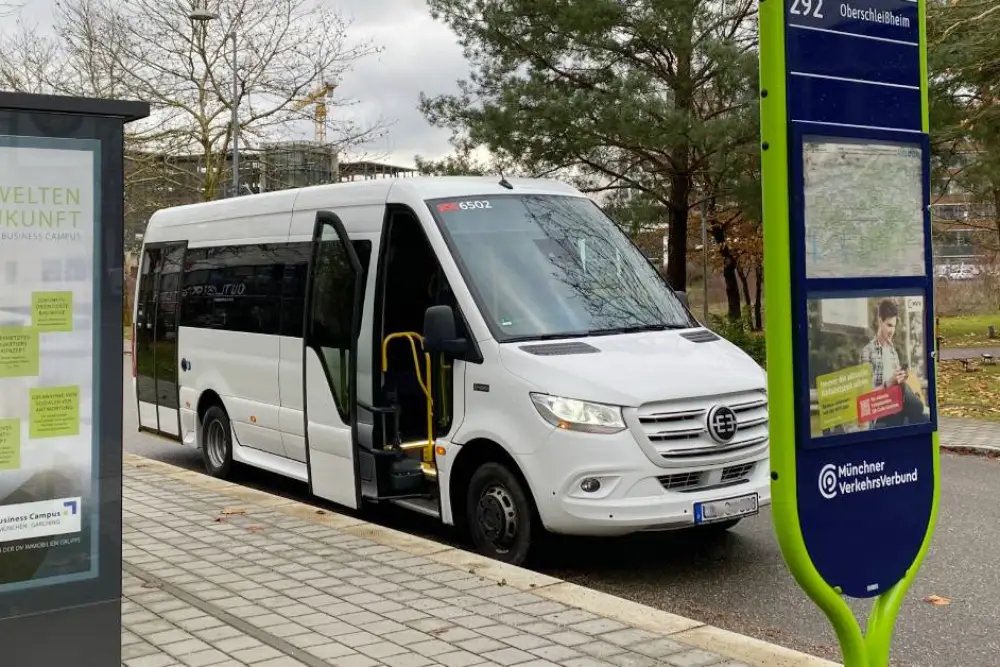
The Clean Vehicles Directive (CVD) sets clear targets for public procurement. By the end of 2025, 45% of newly procured buses had to be "clean", with half of them even completely emission-free (less than 1 g CO2/km). From 2026, the quota rises to 65%. The HEERO mid-low-floor bus with a 137 kWh battery not only meets these requirements but also offers a strategic advantage. It replaces diesel buses 1:1 without operational compromise, thereby accelerating the achievement of statutory quotas.
By deploying such powerful vehicles, municipalities can achieve their climate targets faster while simultaneously improving air quality in city centers. Investing in sufficient battery capacity is therefore a direct investment in the legal security and future viability of the municipal fleet. The transition to e-mobility is facilitated by such practice-oriented solutions like the HEERO electric bus. This enables smooth integration into existing operational processes, as required by public transport operators.
Intelligent charging strategies for maximum efficiency
A 137 kWh battery requires a well-considered charging strategy in order to fully realise its benefits. The basis is overnight depot charging with 22 kW AC power. This is the most cost-effective and battery-friendly method for sending the vehicles out into operation every day with 100% capacity. For rapid energy top-ups during the day, 165 kW DC fast charging is crucial. It makes it possible to recharge the battery significantly during the legally required driver breaks.
Intelligent load management is essential here. It ensures that the charging infrastructure is not overloaded and that energy costs are optimised by avoiding expensive peak loads. HEERO offers comprehensive advice on this together with specialist companies. The following points are key:
Analysis of energy requirements: Accurate recording of daily mileage and consumption.
Optimisation of charging times: Use of night-time hours and operating breaks.
Scalable infrastructure: Planning charging bays with future fleet growth in mind.
Load management software: Intelligent control to prevent grid overload.
By combining depot charging and fast charging, vehicle availability can be maximised to over 95%. The right tips for gentle charging help further optimise battery service life. This turns the high battery capacity into a sustainable economic advantage.
FAQ
Which vehicles is the 137 kWh battery available for?
The battery with a capacity of 137 kWh is currently available for the HEERO Midi and Minibuses. It has been specially developed to meet the high demands of passenger transport, with long operating times and high energy requirements for ancillary loads such as air conditioning and heating.
How does the larger battery affect the vehicle's payload?
The higher weight of the 137 kWh battery results in a slight reduction in maximum payload compared with the 110 kWh standard battery. However, this reduction has already been taken into account in the minibus vehicle design, so the typical passenger capacity required for urban scheduled services is fully maintained.
What is the lifespan of the 137 kWh NMC battery?
HEERO relies on long-lasting NMC batteries. This cell chemistry is known for its robustness and cycle stability. We ensure a long service life, typically exceeding 3,000 to 4,000 full charge cycles before capacity drops below 80% of the initial value, corresponding to many years of use in public transport.
Is special charging infrastructure required for the 137 kWh battery?
To fully unlock the battery’s potential, a DC fast-charging station with a minimum output of 165 kW is recommended. For regular overnight depot charging, a standard AC connection with 22 kW is sufficient. HEERO Motors, together with cooperation partners, provides you with comprehensive advice on the planning and implementation of the right charging infrastructure for your depot.
Does the 137 kWh battery improve performance in winter?
Yes, the larger capacity provides an important energy reserve that counteracts the range-reducing effects of cold temperatures and the increased energy demand for vehicle heating. This ensures a significantly more reliable and predictable range in winter operation, which is a decisive advantage, especially in scheduled passenger transport.
How does the larger battery affect the total cost of ownership (TCO)?
Although the initial investment is higher, the 137 kWh battery can positively influence TCO. The greater range and fewer charging stops increase vehicle productivity. Fewer charging cycles per year protect the battery, extend its service life and therefore reduce replacement costs. Over the holding period, this results in lower cost per kilometre.
More useful links
Statista offers comprehensive statistics and data on the topic of electromobility.
e-mobil BW provides information on how electric commercial vehicles are increasingly gaining importance.
The Nationale Leitstelle Ladeinfrastruktur provides central information on the development and expansion of the charging infrastructure in Germany.
The Bundesnetzagentur provides detailed information on electromobility in the context of electricity and gas.
The NOW GmbH offers a comprehensive guide for the introduction of electromobility in fleets.
The ADAC presents test results on the power consumption of electric cars.
The Bundesministerium für Digitales und Verkehr (BMDV) provides information on commercial vehicles with alternative drivetrains and their contribution to climate protection.
The International Council on Clean Transportation (ICCT) offers a factsheet on the total cost of ownership (TCO) of battery-electric vehicles in Europe.