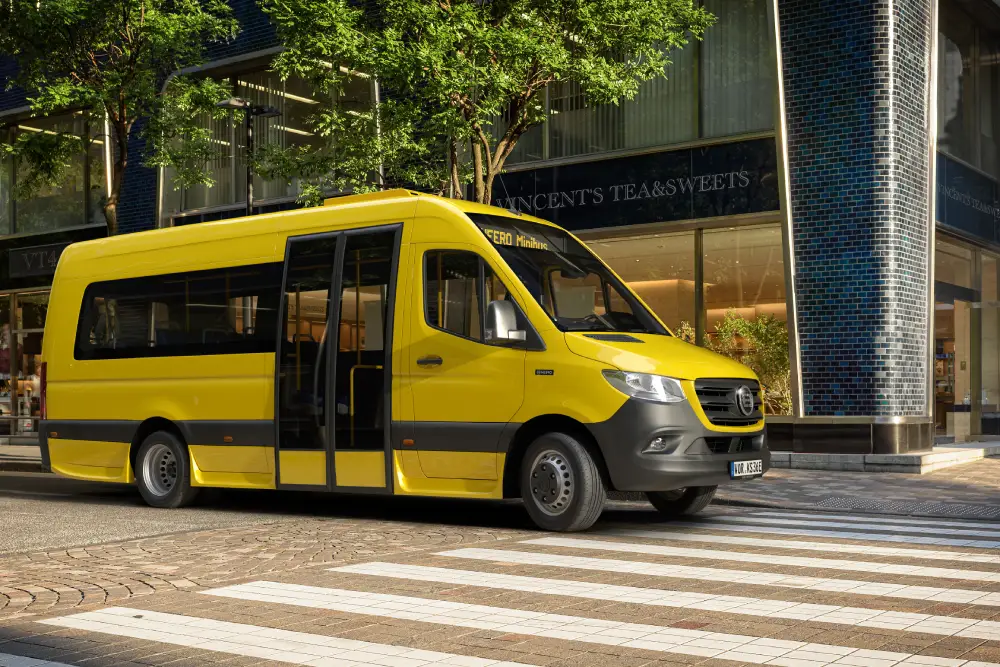
Electric MiniBus 2025: Optimize TCO and reliably meet CVD quotas

The Clean Vehicles Directive required a 45% quota for clean buses in public procurement by the end of 2025. This requirement creates pressure to act, but the solution does not necessarily lie in a costly new purchase.
The topic briefly and concisely
The Clean Vehicles Directive (CVD) mandated a 45% quota for clean buses in public procurement until the end of 2025.
An Electric MiniBus reduces TCO with over 50% lower energy costs and approximately 30-40% lower maintenance costs compared to diesel.
The D2E conversion of an MB Sprinter 907 takes only 10 days (907 model series only), preserves expensive custom bodies, and ensures rapid CVD compliance.
For fleet managers in municipalities and transport companies, electrification is no longer an option, but a strategic necessity. The legal requirements of the Clean Vehicles Directive (CVD) demand a quota of 45% for low-emission buses by 2025. At the same time, rising operating costs are forcing a rethink. A modern electric bus significantly reduces the Total Cost of Ownership (TCO), primarily through lower energy and maintenance expenses. HEERO Motors offers pragmatic solutions for this – from the conversion of existing Sprinter fleets in just 10 working days (only model series 907) (only model series 907) to highly efficient new electric vehicles.
CVD Pressure: Seizing the Statutory 2025 Deadline as an Opportunity
The EU's Clean Vehicles Directive is the decisive driver for the electrification of public and commercial fleets. By December 31, 2025, 45% of all newly procured buses had to be classified as "clean vehicles". Half of this quota, i.e. 22.5% of new procurements, even had to be completely emission-free (less than 1 g CO2/km). These binding targets present many fleet operators with enormous challenges in vehicle procurement. The time pressure requires an efficient strategy that goes beyond pure new purchases. Retrofitting is often the fastest way to meet these requirements. This development makes the transition to an electric bus an inevitable investment in the future security of the fleet. The right fleet electrification is therefore not a cost factor, but a strategic decision.
TCO Analysis: Why the Electric MiniBus Outperforms the Diesel
Although the acquisition costs for an electric bus can be up to 1.5 times higher than for a diesel counterpart, the Total Cost of Ownership (TCO) calculation is decisive. The operating costs of an e-bus are significantly lower. Energy costs per kilometer can drop to as low as €0.26, compared to around €0.60 for a diesel bus. This represents a reduction of over 50%. In addition, maintenance costs are typically 30-40% lower due to fewer moving parts and the elimination of oil changes. Over a holding period of 10 years, an electric bus can achieve savings of over €50,000 in energy costs alone. These TCO advantages make electrification an economically wise decision. The analysis of the total cost of ownership is therefore the key to evaluating the true economic efficiency.
D2E Conversion: Preserving Value and Achieving Rapid CVD Compliance
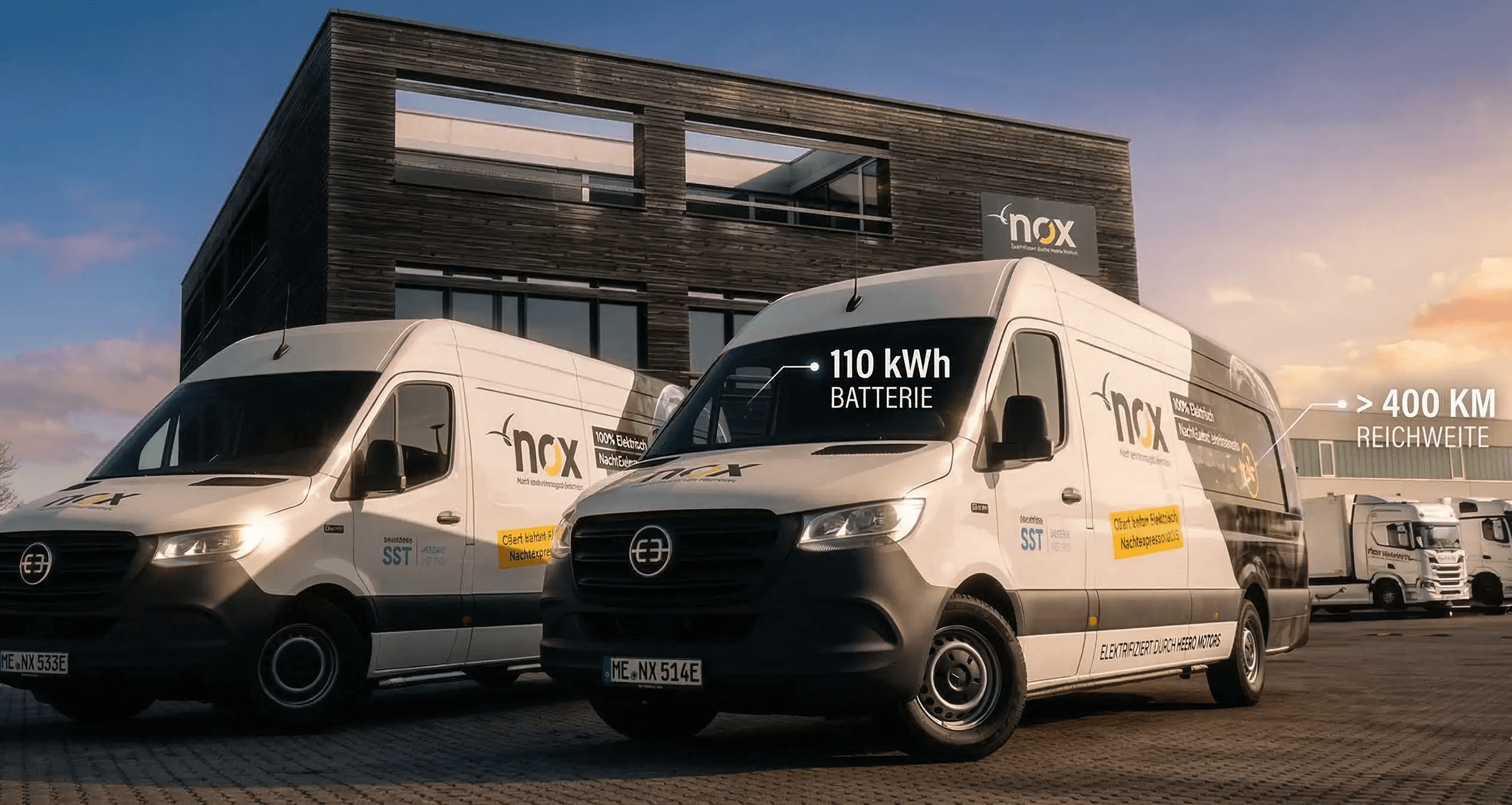
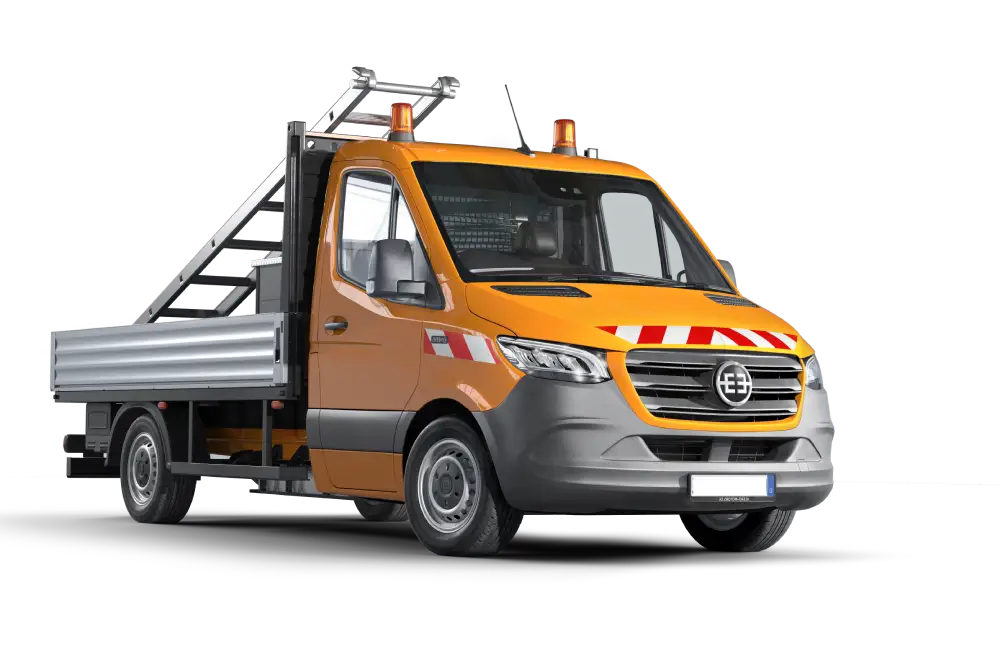
One of the greatest hurdles in fleet electrification is the depreciation of expensive special-purpose bodies such as refrigerated boxes or workshop fittings. The conversion of existing diesel vehicles to electric from HEERO solves this problem. We focus on the Mercedes-Benz Sprinter of the 907 series and convert your existing vehicle into a powerful electric drive in a maximum of 10 working days (only 907 model series). The entire special-purpose body remains fully intact. This not only protects your budget but also massively accelerates compliance with CVD quotas. Instead of waiting for long delivery times for new vehicles, you can convert your fleet in a timely manner. Our conversion for the Sprinter offers the following advantages:
Preservation of vehicle value and special-purpose bodies.
Conversion in only approx. 10 working days (only 907 model series) for the 907 model.
Up to 300 km range with a 110 kWh battery.
Fast-charging capability with 165 kW DC power.
This method offers a pragmatic bridge to electromobility.
Range and charging infrastructure: practicality in focus
Range anxiety is a common concern that often proves to be unfounded in practice. Our HEERO electric bus models, such as the mid-low floor bus or the rear-low floor bus, offer field-tested ranges of over 300 km. This reliably covers the typical daily routes in urban and regional transport of 200-250 km. Charging infrastructure is the second crucial factor. Our vehicles support depot charging with 22 kW AC overnight as well as fast charging with up to 165 kW DC, enabling a charge to 80% in 60-90 minutes. An intelligent charging infrastructure at the depot is the key to smooth operation. We advise you comprehensively on the planning and implementation of the appropriate charging solutions and load management. This is how we ensure that your electric bus fleet is always ready for operation.
The HEERO Portfolio: Tailored E-Solutions for Every Application
In addition to the conversion, we offer a complete portfolio of new electric commercial vehicles based on the Sprinter. Each vehicle is designed for specific requirements and offers an optimal balance of range, cargo capacity, and efficiency. Our offering includes specialized bus models for various applications. Here is an overview of our electric bus variants:
HEERO Mid-low Floor Bus: Over 300 km range, equipped with a 137 kWh battery and 165 kW DC charging power.
HEERO Rear-low Floor Bus: Also over 300 km range, ideal for barrier-free access in regular service.
HEERO Tourer: Up to 300 km range, perfect for shuttle services and excursions.
All of our electric bus models are based on the proven Sprinter platform and guarantee the highest reliability. This allows us to offer the right emission-free transport solution for every requirement.
FAQ: Answers to the most frequently asked questions about the Electric MiniBus
FAQ
How quickly can my fleet meet CVD quotas with HEERO?
Very fast. Our D2E conversion of a Mercedes-Benz Sprinter (Model 907) takes a maximum of 10 working days (Model 907 only). This is one of the most efficient methods to meet regulatory requirements in the short term, without having to wait for the long delivery times of new vehicles.
Is the range of a HEERO Electric MiniBus sufficient for our daily routes?
Yes, usually. Our Electric MiniBus models offer ranges of over 300 km. Since the average daily driving distance in urban and regional transport is often between 200 and 250 km, our vehicles cover these requirements with a safety margin.
What happens to the base vehicle's warranty after a D2E conversion?
HEERO Motors assumes the warranty for the entire electric drivetrain and the battery. The warranty for the parts of the base vehicle not affected by the conversion typically remains unaffected, unless otherwise regulated by the manufacturer.
What advantages does the D2E conversion offer compared to purchasing a new Electric MiniBus?
The main advantage is preserving the value of your existing fleet, especially for vehicles with expensive custom bodies. In addition, our Diesel-to-Electric conversion is significantly faster than procuring a new vehicle and can further optimize TCO through lower initial investment.
Does HEERO also support you with planning the charging infrastructure?
Yes, absolutely. We see ourselves as an end-to-end partner. Our experts from the Flying Heeros will provide you with comprehensive advice on the planning and implementation of the optimal charging infrastructure for your depot, including intelligent load management to reduce operating costs and maximize the availability of your fleet.
Which Sprinter models can be converted?
Our focus lies on the D2E conversion of the Mercedes-Benz Sprinter 907 series. We specialize in the base chassis of the 313, 316, 319, and 324 models to ensure the highest level of quality and efficiency in the conversion process.
More useful links
PwC offers analyses and insights on the topic of electromobility in public passenger transport.
The Bundesministerium für Verkehr provides information on the Clean Vehicles Directive.
The VDV (Verband Deutscher Verkehrsunternehmen) provides information on the implementation of the Clean Vehicles Directive.
The NOW GmbH offers a factsheet on the Clean Vehicles Directive (CVD).
The Statistische Bundesamt (Destatis) provides information on the topic of passenger transport.
The ifeu publishes an article on the competitiveness of electric buses through funding policies and the position of German providers.
Siemens provides information in a press release about supporting the expansion of e-bus charging infrastructure in Germany.
The Umweltbundesamt offers information on the topic of climate protection in transport.
The Bundesministerium für Umwelt, Naturschutz, nukleare Sicherheit und Verbraucherschutz provides the reading version of the Climate Protection Act (KSG).