Depot charging infrastructure for electric buses: reducing TCO and meeting CVD quotas

The electrification of your bus fleet begins at the depot. A strategically planned charging infrastructure is the key to maximising vehicle availability and reducing total cost of ownership (TCO).
The topic briefly and concisely
An early analysis of the grid connection is crucial to avoid expansion costs and shorten project lead times.
Intelligent load management can significantly reduce energy costs by avoiding expensive peak loads and optimising the available power.
The Clean Vehicles Directive requires a quota of zero-emission buses in new procurement from 2025. Infrastructure planning is becoming increasingly important.
Transitioning to electric buses presents fleet operators with complex challenges that extend far beyond vehicle procurement. The heart of any e-bus fleet is the depot charging infrastructure. It too determines the efficiency, reliability and, ultimately, the cost-effectiveness of the entire operation. Inadequate planning leads to high peak loads, expensive grid expansion costs and limited vehicle availability. This advisory article shows you how to build a scalable and cost-efficient charging infrastructure through systematic analysis and the use of intelligent technologies. In doing so, you not only secure smooth operations, but also meet the legal requirements of the Clean Vehicles Directive (CVD).
Analysis of grid connection capacity as the foundation
The capacity of your grid connection is the limiting factor for any depot charging infrastructure. A detailed analysis of the existing capacity at the operating site is the first, indispensable step. Often, the energy demand of an e-bus fleet of 20 vehicles already exceeds 1 megawatt. Early coordination with the local grid operator can significantly shorten the project time. Insufficient connection capacity inevitably leads to extremely high costs for grid expansion. Careful planning of the depot charging infrastructure therefore usually takes the maximum available capacity into account. This analysis determines the maximum possible charging capacity and sets the basis for intelligent load management. The strategic planning of the grid connection is thus the decisive lever for controlling the initial investment costs.
Selecting the right charging technology for maximum efficiency
The choice of charging technology depends directly on the operational processes of your fleet. For overnight depot charging, AC charging points with 22 kW charging output are usually the most economical solution. They enable gentle battery charging over a period of 6-8 hours. HEERO e-buses use this technology for a full overnight charge. For routes that require an opportunity charge, DC charging systems with 165 kW are essential. These systems can bring a vehicle battery to 80 % State of Charge (SoC) in just 30-40 minutes. The right mix of AC and DC systems maximises fleet availability. A typical configuration for a depot with 50 buses could look like this:
45 AC charging points of 22 kW each for overnight charging.
5 DC charging points of 165 kW each for fast opportunity charging during the day.
Integration into a central management system for prioritising charging processes.
Scalable design that allows significant expansion without major modifications.
This hybrid solution for e-bus charging stations offers operational flexibility and cost control. It ensures that vehicle deployment planning is not constrained by the charging infrastructure.
Implementation of intelligent load management to reduce costs
Intelligent load management is the brain of your charging infrastructure and avoids costly load peaks. Without such a system, all buses would charge at maximum power at the same time, which would overload the grid connection and significantly increase electricity costs. A dynamic load management system intelligently distributes the available power across the connected vehicles. It prioritises charging processes based on the planned departure time and the required SoC. Communication between the charging station and the depot management system is ensured by standards such as VDV 463. This enables fully automated and optimised charging operations. Effective depot load management is therefore not an optional extra, but can become a business necessity. It significantly reduces energy costs and often makes it possible to operate the charging infrastructure on an existing, lower-capacity grid connection.
Meeting CVD quotas through strategic electrification
The Clean Vehicles Directive (CVD) sets clear and binding targets for public fleet operators. By the end of 2025, 45% of newly procured buses had to be "clean," of which half, i.e., 22.5%, had to be completely locally emission-free. From 2026, these quotas will rise to 65% and 32.5% respectively, and will continue to increase. A well-thought-out charging infrastructure should be considered as a possible prerequisite to achieve these targets. It not only enables the operation of new electric buses, but also the cost-efficient electrification of your existing fleet through a HEERO service. The conversion of a Sprinter base vehicle into an eBus at HEERO usually takes a maximum of only 10 working days (only model series 907). This significantly accelerates compliance with CVD quotas compared to the longer delivery times for new electric buses. Investing in a scalable charging infrastructure is therefore a direct investment in the legal compliance and future viability of your fleet.
Integration of D2E-converted vehicles into charging planning
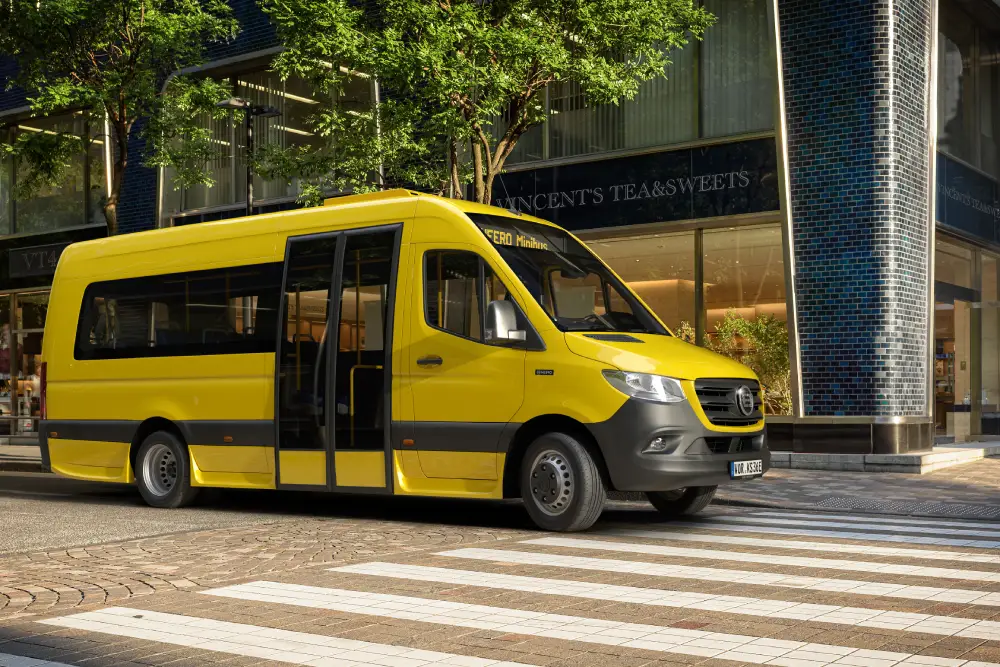
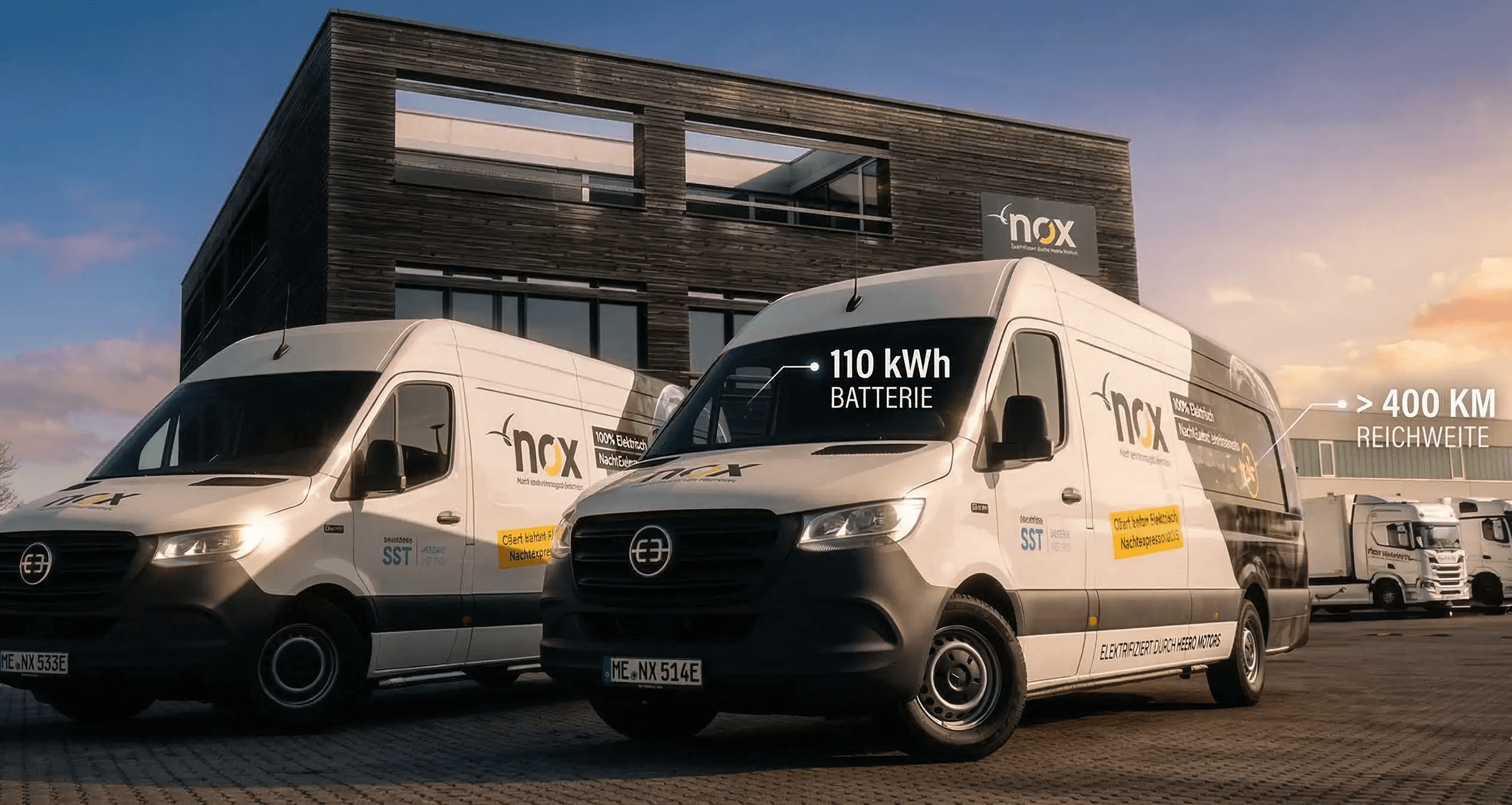
Electrification does not have to mean the loss of expensive, but still operational buses. The conversion of existing vehicles based on the Mercedes-Benz Sprinter (model 907) is a pragmatic solution. These vehicles integrate seamlessly into the existing charging infrastructure. With a battery capacity of 110 kWh and a DC charging power of 165 kW, they feature charging characteristics that often even surpass new electric vehicles. The range of up to 300 km ensures full operational capability for most urban routes. The 600V technology with the 137 kWh battery in the HEERO Mittelniederflur Bus forms the spearhead of the HEERO fleet. The planning of the charging infrastructure must take these vehicles into account in order to fully exploit their advantages. An intelligent management system recognizes the vehicle and applies the optimal charging profile, typically a slow AC charge overnight. This protects the battery and utilizes cheaper electricity tariffs, which further optimizes the TCO.
FAQ
What is the biggest technical challenge when setting up charging infrastructure for electric buses?
The greatest challenge is typically ensuring sufficient grid connection capacity at the depot site. In many cases, the existing capacity is not designed for the high energy demand of an eBus fleet, which requires close and early coordination with the grid operator as well as potentially costly expansion measures. Intelligent load management is essential here in order to make optimal use of the available capacity.
How long does it take to charge an electric bus at the depot?
The charging time depends on the technology. With a typical 22 kW AC overnight charge, a full charge takes between 6 and 8 hours, depending on battery size. With DC fast charging, such as that offered by HEERO at 165 kW, a bus can be charged from 20% to 80% of its battery capacity in just 30 to 40 minutes, which is crucial for flexible use during the day.
Can I expand my charging infrastructure later?
Yes, modular and scalable planning is a core principle of modern charging infrastructure. Systems are designed so that they can grow with your fleet. This means that the electrical installation, main distribution board and load management system can be designed from the outset for future expansion of, for example, 25-50%, without the need to renew the entire base infrastructure.
What role does software play in depot charging for electric buses?
Software is crucial for efficient and cost-effective operation. A charging and energy management system controls and monitors all charging processes, prevents peak loads and optimises energy procurement. Interfaces such as VDV 463 also ensure seamless communication with your depot management system, so that charging schedules can be automatically adapted to the bus timetables and their operational readiness ensured.
Is AC or DC charging better suited for a bus depot?
The optimal solution is usually a combination of both. AC charging at 22 kW is ideal and cost-effective for scheduled overnight charging, as it is gentler on the battery and places less load on the power grid. DC charging with high power (e.g. 165 kW) is essential for the flexibility required to make vehicles quickly ready for use again during unplanned deployments or short turnaround times.
How does a HEERO eDrive system affect my charging infrastructure requirements?
Not at all. A professionally electrified vehicle such as a HEERO behaves at the charging point like a standard electric vehicle. It uses standardised charging connectors (CCS) and communicates via common protocols. The charging infrastructure therefore does not need to be specially adapted. The vehicles are recognised by the load management system like any other electric vehicle and integrated into the charging schedule.
More useful links
Nationale Leitstelle Ladeinfrastruktur is the central contact point for the expansion of charging infrastructure in Germany.
The NOW GmbH offers a guide for the simple charging of electric buses in the depot.
The Bundesministerium für Digitales und Verkehr (BMDV) provides the Federal Government's Master Plan for Charging Infrastructure II.
The Umweltbundesamt offers comprehensive information on climate protection in the transport sector.
PwC provides a detailed analysis of the electric bus market as part of the E-Bus-Radar.
The Bundesamt für Güterverkehr (BAG) provides information on funding programs for charging infrastructure for electric vehicles.
The Bundesministerium für Digitales und Verkehr (BMDV) provides the funding directive for charging infrastructure for electric vehicles.
Statista offers an outlook and data on the market for electric buses in Germany.
The Verband Deutscher Verkehrsunternehmen (VDV) provides comprehensive information and positions on the topic of e-mobility in public transport.