Fast charging for the electric bus: How fleet operators can optimise TCO and CVD targets with 165 kW DC charging power

Fast charging for the electric bus: How fleet operators can optimise TCO and CVD targets with 165 kW DC charging power

The Clean Vehicles Directive requires a 45% quota for clean buses by 2025 - and that quota continues to rise. Fast charging for electric buses can be crucial. However, success for bus operators does not depend on maximum charging power, but on an intelligent depot strategy.
The topic briefly and concisely
A DC charging power of 165 kW is the ideal compromise between fast charging times at the depot and manageable infrastructure costs.
Intelligent load management can significantly reduce electricity costs by avoiding peak loads (peak shaving).
Meeting the rising CVD quota requires a holistic strategy that combines vehicle procurement and charging infrastructure planning.
The electrification of bus fleets is no longer an option, but a legal necessity. The Clean Vehicles Directive (CVD) mandated a procurement quota of 45% for clean buses by the end of 2025, half of which had to be completely emission-free. For fleet managers, this means a dual challenge: the rapid integration of vehicles and the establishment of a charging infrastructure that does not jeopardize operations. The focus is often on the topic of fast charging. However, high charging capacity alone is no guarantee of cost-effectiveness. A well-thought-out charging concept in the depot, tailored to real vehicle circulation plans and the existing grid infrastructure, determines the reduction of total cost of ownership (TCO) and long-term success.
DC fast charging at the depot: the 165 kW sweet spot
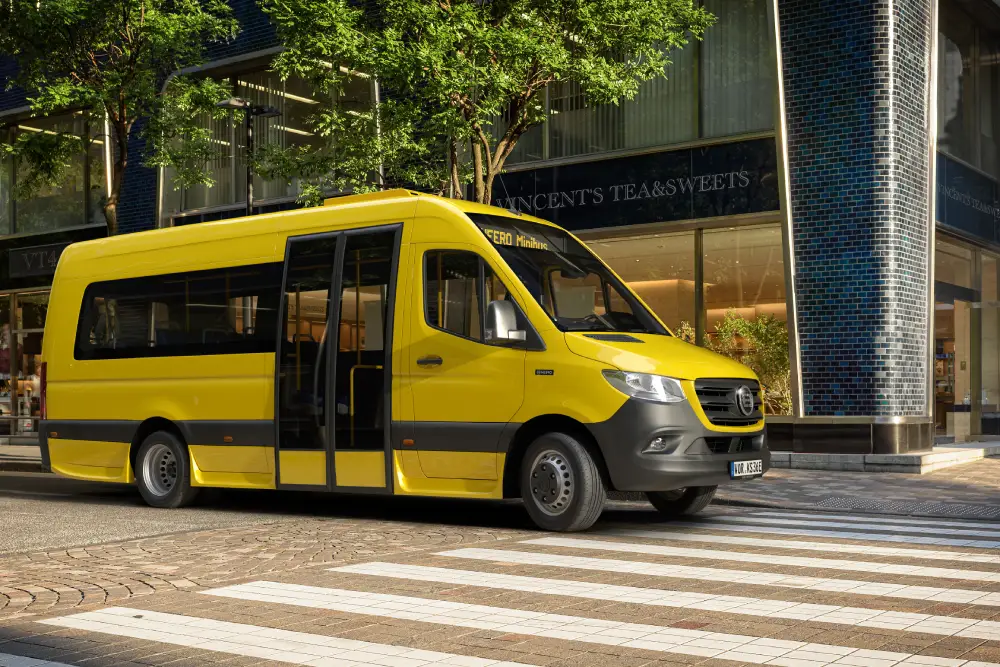
Depot charging typically takes place with outputs between 50 kW and 150 kW. HEERO relies on a pragmatic standard of 165 kW DC charging power for its new e-buses and retrofits. This power makes it possible to charge a 110 or 137 kWh battery to 80% in 30 to 40 minutes. This is sufficient to flexibly prepare vehicles for the next run during longer breaks or between shifts. This 165 kW option is also available for the HEERO Mittelniederflur-Bus with its 137 kWh battery. The decisive advantage of this method lies in the balance: it is fast enough for operational needs without driving up network connection requirements and infrastructure costs immeasurably. A well-thought-out AC/DC-Ladestrategie is the key here. This controlled form of fast charging also protects the battery and maximizes its service life, which has a directly positive effect on TCO. In this way, the depot becomes the efficiency center of the fleet.
Grid connection capacity: The invisible limit of electrification
The greatest technical hurdle in the electrification of a bus depot is the available grid connection capacity. A single 150 kW fast charger already requires a significant amount of electricity. If 10 buses charge simultaneously, the demand quickly adds up to 1.5 megawatts (MW) or more. Many existing depots, often in inner-city locations, were not designed for such energy requirements. Increasing the grid connection is a complex process that often takes months and is associated with significant costs. Without a precise analysis of the connection capacity, any fast-charging strategy is bound to fail. It is therefore essential to carry out a professional site analysis before investing in charging points. This analysis checks what capacity is actually available and how it can be utilized optimally. Planning the right charging infrastructure for e-bus depots is thus the first step to success.
Intelligent load management to reduce operating costs
The solution for limited grid connections is intelligent load management. Instead of charging all vehicles at the same time at maximum power, such a system distributes the available energy dynamically. It prioritises buses that need to depart next and charges other vehicles more slowly or at staggered times. A key lever for reducing costs is the so-called “peak shaving”. It prevents expensive load peaks by controlling the charging processes so that a defined maximum grid draw is never exceeded. By means of controlled load distribution alone, electricity costs can be reduced significantly. Intelligent depot charging for electric buses is therefore more than just charging batteries. It is an active tool for reducing TCO. The following points are crucial:
Prioritisation of charging processes according to departure time
Avoidance of load peaks (peak shaving)
Optimal use of the existing grid connection
Reduction of the capacity charge per kilowatt
Integration into the depot management system
This strategic control makes the difference between an expensive and an economical e-bus operation.
CVD compliance through a holistic electrification strategy
The Clean Vehicles Directive sets a clear timeframe: since 2025, increasing quotas have applied to newly procured buses - starting at 45%. To meet this quota, fleet operators must plan their procurement in a structured manner. However, purchasing vehicles is only half the battle. Without a functioning and economical charging strategy, the new e-buses will remain stationary in the depot. HEERO offers a decisive advantage here: the combination of vehicle technology and charging advice with experienced cooperation partners. The retrofitting of existing Mercedes-Benz Sprinters (Model 907) enables a rapid electrification of parts of the fleet in just 10 working days - a possible entry point, in addition to the procurement of new electric HEERO minibuses. In parallel, the HEERO experts analyze the conditions in the depot and develop a customized charging concept. This holistic approach ensures that the vehicles not only meet the CVD criteria but can also be seamlessly integrated into the operational workflow. In this way, the legal obligation becomes an economically sensible investment in the future, as embodied by our HEERO e-buses.
FAQ
How long does it really take to fast-charge an electric bus?
With a 165 kW DC charging capacity, as offered by HEERO as standard, a 110 or 137 kWh battery can typically be charged from a low state of charge to 80% in 30 to 40 minutes. The exact time depends on the battery temperature and the initial state of charge. This enables a full charge during longer operational breaks.
What is the difference between depot charging and opportunity charging?
Depot charging takes place overnight or during longer breaks at the depot, typically with 22 kW (AC) to 150 kW (DC). Opportunity Charging uses very high charging power (up to 600 kW) at terminal stops or along the route to extend range during the day with short charging stops. It requires more expensive infrastructure.
Is my existing grid connection sufficient for fast-charging electric buses?
In most cases, a depot’s existing grid connection is not designed for the simultaneous fast-charging of several buses. A professional grid analysis is essential. An intelligent load management system is often the most cost-effective solution for optimising the available capacity and avoiding expensive grid expansion.
Does frequent rapid charging affect the lifespan of the vehicle battery?
Extremely high charging outputs can place greater stress on the battery than slower charging. Moderate DC fast charging in the 165 kW range, combined with intelligent charging management, offers a very good compromise. It is gentler on the battery compared with ultra-fast charging systems with 300 kW or more, helping to ensure a long service life and lower TCO.
Can my existing Sprinter minibuses be retrofitted for rapid charging?
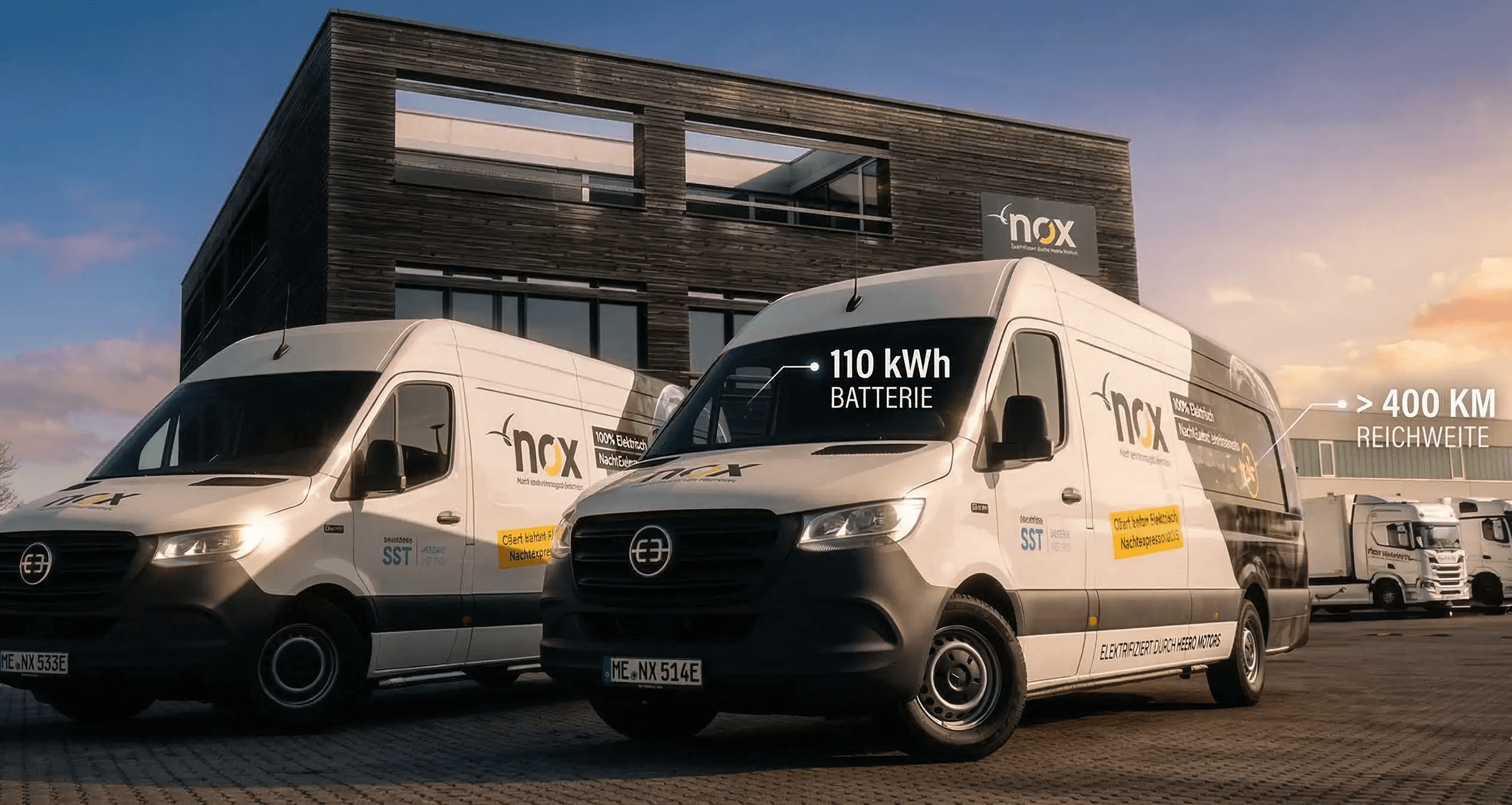
Yes, the HEERO D2E conversion for the Mercedes-Benz Sprinter model 907 is explicitly designed for fast charging. The converted vehicles feature a 110 kWh battery and support DC charging power of up to 165 kW. This enables the rapid and cost-efficient electrification of your fleet while retaining your proven vehicles.
What is more important: high charging power or intelligent load management?
For the economical operation of an e-bus fleet, smart load management is more important than the maximum possible charging output. An intelligent system significantly reduces operating costs by avoiding power peaks and makes it possible to run rapid chargers even with limited grid connection capacity. It is the basis for scalable, cost-efficient charging infrastructure.
More useful links
Statista offers statistics and forecasts on the market for electric buses in Germany.
PwC provides a companion study on the funding of electric buses in public transport.
TU Berlin offers a final report on a research project on the Combined Charging System (CCS) for electric vehicles.
Bundesministerium für Umwelt, Naturschutz, nukleare Sicherheit und Verbraucherschutz (BMUV) contains the funding guideline for electric buses.
Bundesnetzagentur offers comprehensive information on the topic of electromobility.
VDE (Verband der Elektrotechnik Elektronik Informationstechnik) provides a technical guide on charging infrastructure for electromobility.
VDV (Verband Deutscher Verkehrsunternehmen) offers facts and figures on public transport.
Fraunhofer ISI contains a press release on the operational planning of electric trucks, their potentials, and costs.