Depot charging for electric buses: reduce TCO and meet CVD quotas

The electrification of bus fleets is unavoidable, yet the complexity of charging infrastructure presents many operators with challenges. Intelligent depot charging is a key lever for significantly reducing total cost of ownership (TCO) and meeting the stringent CVD quotas.
The topic briefly and concisely
Depot charging overnight makes use of low electricity tariffs and can significantly reduce energy costs per kilometre compared with diesel.
Intelligent load management is crucial to avoid costly peak loads and make optimal use of the existing grid infrastructure.
Meeting the 45% CVD target for buses requires reliable charging infrastructure, which depot charging helps to ensure.
The pressure on fleet operators is growing: the Clean Vehicles Directive (CVD) requires an ever-increasing quota for clean buses in new procurement from 2025 onwards. At the same time, volatile diesel prices, such as those we also experienced during the Iran crisis, are putting budgets under strain. A well-considered strategy for depot charging of electric buses is the pragmatic response to this dual challenge. It not only secures your fleet’s operational readiness with charging times of typically 4–6 hours overnight, but also becomes the decisive lever for reducing lifecycle cost considerations across the entire life of your vehicles (TCO - Total Cost of Ownership). HEERO Motors supports you with a pool of experts from vehicle procurement, through analysis, to the implementation of a tailored charging infrastructure.
Ensure CVD compliance through strategic depot charging
The Clean Vehicles Directive (CVD) is the central driver for electrification in public transport. It mandates that increasingly larger shares of newly procured buses must be low-emission, half of which must be completely emission-free. For a sample fleet of 100 buses, this means purchasing at least 22 locally emission-free vehicles in the first phase of 2025. Overnight depot charging represents the most reliable method to ensure maximum vehicle availability of over 98% in the morning. This predictability is essential for compliance with legal quotas. A stable charging infrastructure in the depot forms the backbone for achieving the demanding goals of the CVD. In this way, the transition does not become a burden, but rather a predictable strategic advantage in fleet management.
TCO reduction: Harnessing the economic advantages of overnight charging
Although the acquisition costs for an electric bus can currently be at least 1.5 times higher than for a diesel equivalent, operating costs are significantly lower. Energy costs per kilometre can be reduced considerably through intelligent depot charging. The decisive factor is electricity prices, which are often significantly cheaper at night than daytime tariffs. Intelligent load management distributes charging processes over several hours and makes optimal use of these off-peak windows. Maintenance costs for electric buses are also typically noticeably lower, as fewer moving parts wear out. These savings in energy and maintenance mean that the higher purchase price has often already paid for itself after 5 years. Optimised overnight depot charging is therefore a direct lever for TCO optimisation.
Technical Planning: The Right Charging Infrastructure for Your Fleet
There is no standard solution for the charging infrastructure in the bus depot. A careful analysis of the operational requirements is the first step. For classic depot charging overnight, AC charging with 22 kW has established itself as an efficient standard. It protects the vehicle battery and makes optimal use of the long idle times. For shorter runs or intermediate charging, DC charging with up to 165 kW or more is necessary. The planning must take several factors into account:
Analysis of the grid connection capacity at the depot location.
Definition of the required charging power per parking space.
Layout planning to optimize maneuvering and charging processes.
Selection of a scalable system that grows with the fleet.
Integration of an intelligent charging and energy management system.
Professional planning of electric bus charging prevents expensive bad investments and ensures smooth operation for the next 10–15 years.
Intelligent load management: avoiding cost traps at peak grid loads
If many electric buses are charged simultaneously at high power, this can exceed the maximum grid connection capacity. Such peak loads lead to extremely high grid fees, which can significantly increase the electricity bill. Dynamic load management is therefore not a luxury, but an economic necessity. It intelligently distributes the available power among the charging vehicles. As a result, the grid connection capacity is never exceeded at any point in time. Modern systems take into account the state of charge (SoC) of the batteries, the planned departure time, and the priority of the vehicle. Effective load management in the depot reduces energy costs and can even prevent the need for an expensive grid expansion.
The HEERO end-to-end solution: eDrive system and charging concept from a single source
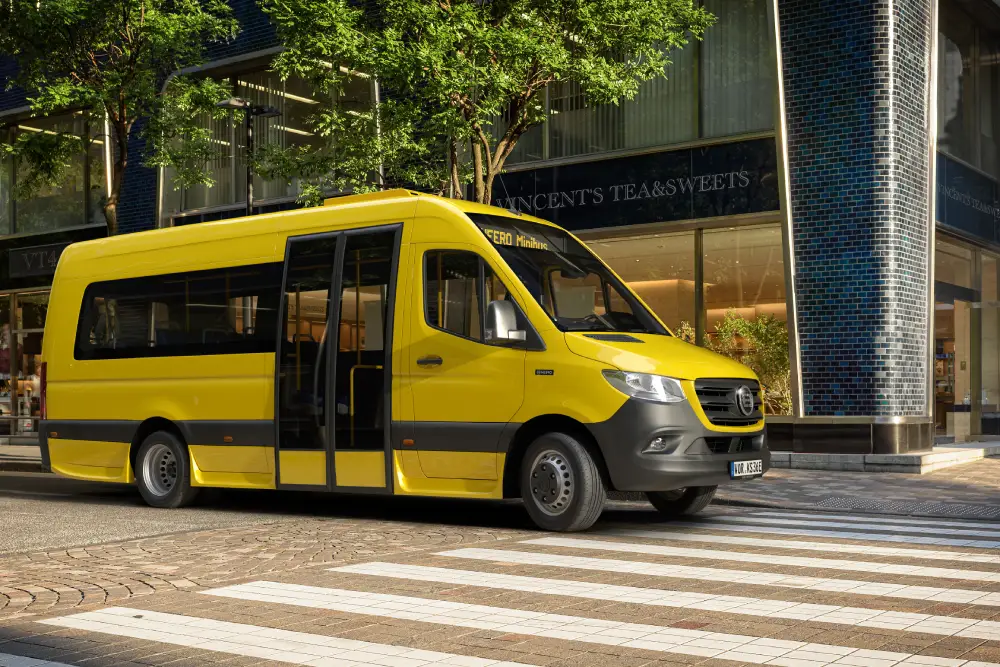
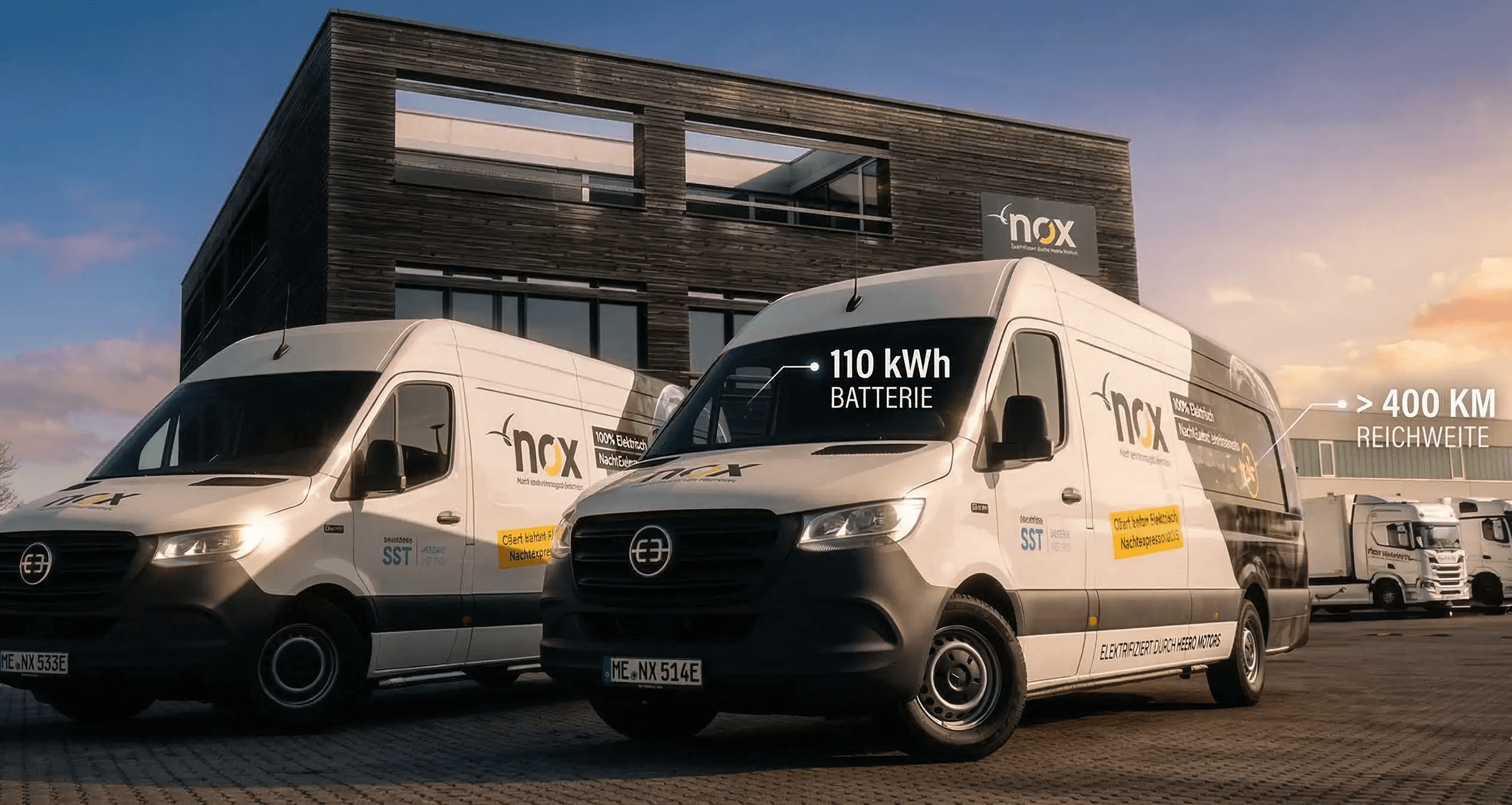
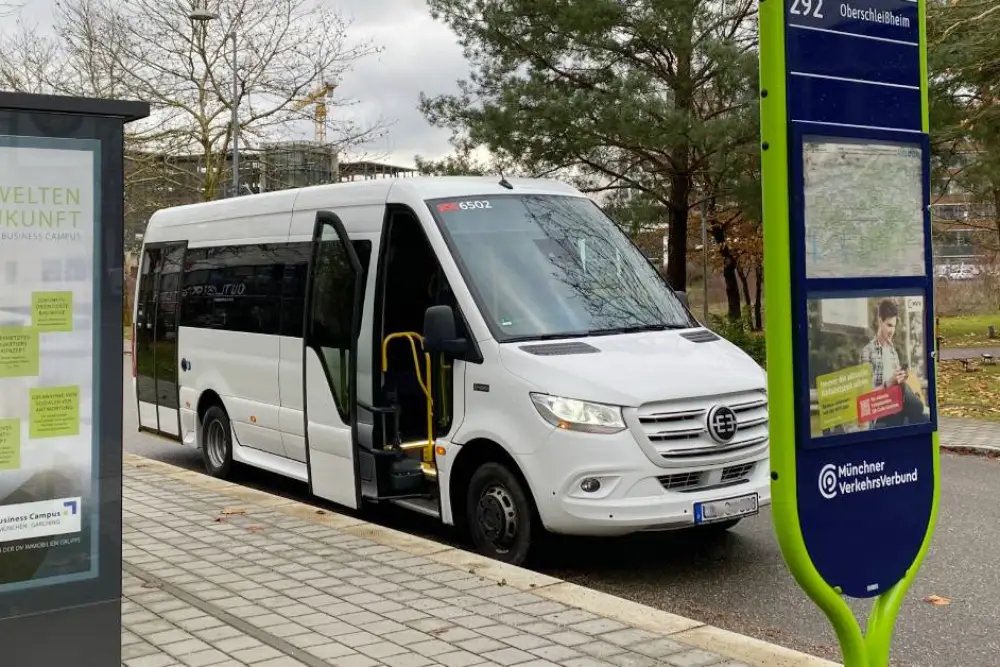
HEERO Motors offers more than just vehicles. We see ourselves as a partner for your entire electrification strategy. In addition to the procurement of new 100% electric HEERO minibuses, we have another ace up our sleeve for you. Our self-developed, complete eDrive system enables fast electrification of parts of your fleet in a maximum of 10 working days through a conversion (only model series 907). This is ideal for feeder and service vehicles. Our new electric buses, such as the HEERO medium low-floor bus with a range of over 300 km, cover the demand in scheduled service. We seamlessly integrate vehicle procurement into a tailored charging concept for your depot. Our HEERO experts, in combination with our partner network, advise you on the planning of the charging infrastructure and implement a suitable load management system. This ensures that your electrified fleet operates economically and reliably from day one.
FAQ
What is the main advantage of depot charging compared with opportunity charging?
The main advantage of depot charging lies in the lower infrastructure costs per vehicle and the use of cheaper night-time electricity tariffs. It also protects the batteries through slower 22 kW AC charging and typically ensures high fleet availability in the morning, without disrupting daytime operations.
How long does it take to fully charge an electric bus at the depot?
Charging time depends on battery size and charging output. A standard electric bus with a 350 kWh battery requires around 16 hours for a full charge at a 22 kW AC charging point. As buses rarely arrive completely empty, typical overnight charging times of 6–8 hours are sufficient to restore the full range. With the 137 kWh battery, sized for practical use in minibuses, a full charge is completed without issue in around 6 hours, even when the battery is relatively low.
Is my existing grid connection sufficient for an electric bus fleet?
This depends on the size of the fleet and the existing capacity. For more than 5–10 buses, reinforcement of the grid connection is often necessary. An early analysis by a specialist such as HEERO and the network operator is crucial. Intelligent load management can help to avoid or delay an expensive expansion.
Can my existing diesel Sprinters be converted for feeder transport?
Yes, that is a core competence of HEERO Motors. We offer a D2E conversion (Diesel-to-Electric) for the Mercedes-Benz Sprinter model 907. The conversion takes a maximum of 10 working days and is a fast, cost-effective way to preserve the value of your specialist conversions and electrify your fleet.
How does load management work in practice?
A central control system communicates with the charge points and vehicles. The fleet manager specifies the planned departure time for each vehicle. The system then distributes the available electrical power so that all buses are fully charged on time, without exceeding the maximum power limit of the grid connection.
What charging power is recommended for depot charging?
For classic overnight depot charging, AC charging at 22 kW per charging point is a proven and cost-effective standard. For fleets with very short dwell times or high energy demand, DC charging stations with 50 kW to 150 kW can also be a sensible option, although this requires higher initial investment and grid capacity.
More useful links
Bundesministerium für Digitales und Verkehr (BMDV) provides information on the funding guidelines for charging infrastructure for electric vehicles.
Nationale Leitstelle Ladeinfrastruktur offers information and support for implementing measures in the field of sustainable mobility.
VDE Verband der Elektrotechnik Elektronik Informationstechnik provides the 2023 LBO study on charging infrastructure and/or battery technology.
NOW GmbH offers an overview of studies on the total cost of ownership (TCO) of climate-friendly commercial vehicles.
Transport & Environment presents a summary of a study on the decarbonization of long-haul road freight transport in Germany.
Bundesministerium für Digitales und Verkehr (BMDV) provides information on the Clean Vehicles Directive.
Energieagentur Rheinland-Pfalz provides information on the implementation of the Clean Vehicles Directive, specifically for municipalities.
Verband Deutscher Verkehrsunternehmen (VDV) provides information on the implementation of the Clean Vehicles Directive.
Kraftfahrt-Bundesamt (KBA) provides statistics on electromobility in Germany.