22-seater electric bus: reduce TCO and systematically meet CVD quotas

The Clean Vehicles Directive requires a 45% quota for clean buses by 2025, yet the costs of new electric vehicles are high. A D2E conversion (Diesel-to-Electric) for existing 22-seaters based on the Sprinter platform offers a more economically advantageous solution.
The topic briefly and concisely
Meet the CVD bus quota from 2025 with the D2E conversion of existing Mercedes-Benz Sprinter vehicles and avoid high new acquisition costs.
Reduce your total cost of ownership (TCO) significantly thanks to much lower energy and maintenance costs compared with diesel powertrains.
Maintain the value of your fleet by continuing to use expensive specialized bodies and extending the service life of your vehicles by at least 8 years.
Fleet managers in municipalities and transport companies face a double challenge: the statutory requirements of the Clean Vehicles Directive (CVD) demand rapid electrification, while budgets are tight. A new electric 22-seater bus represents a significant investment. HEERO Motors offers a pragmatic alternative with the conversion for the Mercedes-Benz Sprinter (model 907) and new electric buses. This approach not only significantly reduces the total cost of ownership (TCO), but also enables the continued use of expensive custom bodies and ensures compliance with CVD quotas.
Legislative pressure to act: The Clean Vehicles Directive as the driving force
The EU's Clean Vehicles Directive (CVD), implemented through the Clean Vehicles Procurement Act (SaubFahrzeugBeschG), exerts significant pressure on public contracting authorities. By the end of 2025, 45% of all newly procured buses had to be classified as "clean". At least half of these, i.e., 22.5% of new procurements, had to be completely emission-free, which in practice requires battery-electric or fuel-cell powered vehicles.
These binding quotas directly affect municipalities and transport companies operating scheduled services. The need for conversion is substantial, and non-compliance with the requirements can have consequences under procurement law. For a fleet of 10 buses, this means that if 4 vehicles are renewed, at least 2 of them must meet the criteria for clean drives. The need for action to modernize fleets is therefore no longer an option, but a legal obligation; its first stage was in effect until December 31, 2025.
These regulatory requirements force fleet operators to fundamentally rethink their procurement strategies for the next 12 to 24 months. Focusing solely on purchasing new electric buses quickly reaches financial and practical limits, which highlights the need for alternative electrification pathways.
Overcoming financial barriers: evaluating TCO rather than the purchase price
The acquisition costs for a new 22-seater electric bus can exceed those of a comparable diesel model by 1.5 times. This high initial investment (CapEx) represents a significant hurdle for many municipal and private operators. However, looking solely at the purchase price is too short-sighted and distorts the economic reality over the lifespan of the vehicle. The decisive evaluation standard is the Total Cost of Ownership (TCO).
The TCO analysis takes into account all incurred costs over a period of typically 8 to 12 years. This is where electric vehicles demonstrate their strengths. Operating expenses (OpEx) are significantly lower, which is comprised of several factors:
Energy costs: The cost of electricity per 100 kilometers is generally 50-70% lower than that of diesel.
Maintenance: An electric motor has significantly fewer moving parts than an internal combustion engine. The elimination of oil changes, exhaust system maintenance (including AdBlue), and clutch wear reduces maintenance costs by at least 40%.
Taxes & Levies: Until the end of 2025, electric commercial vehicles were exempt from the truck toll, which represented a significant additional saving.
An example calculation shows that an electric bus over a holding period of 10 years and with an annual mileage of 70,000 km can save around €240,000 in pure energy costs compared to diesel. These savings in operating costs often compensate for the higher acquisition costs after just 4 to 5 years. Focusing on the TCO is therefore the key to the economic electrification of bus fleets.
The solution: D2E conversion as a strategic advantage for MB Sprinter
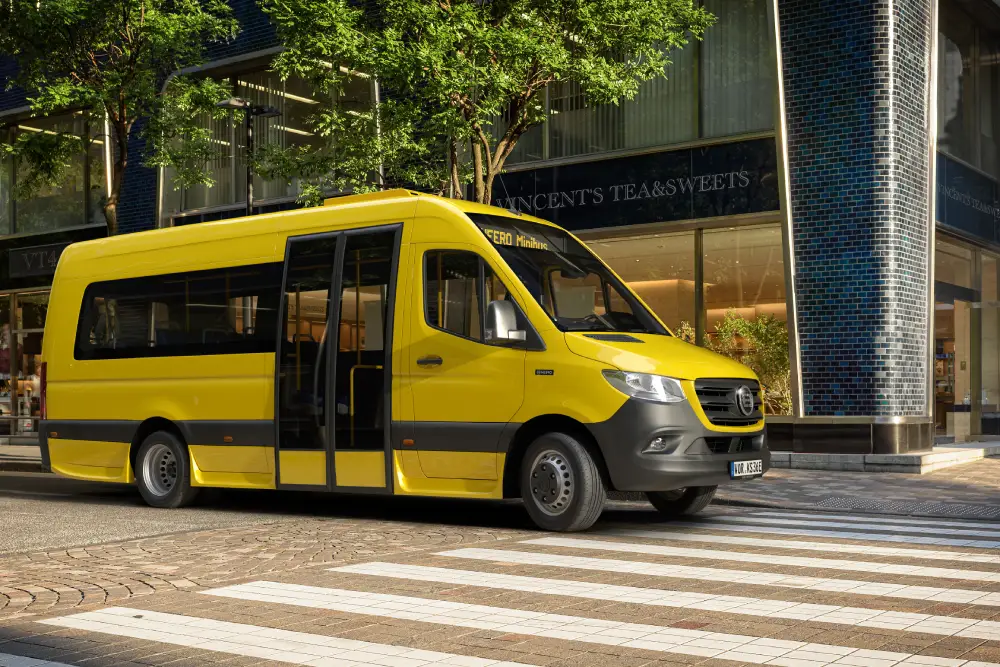
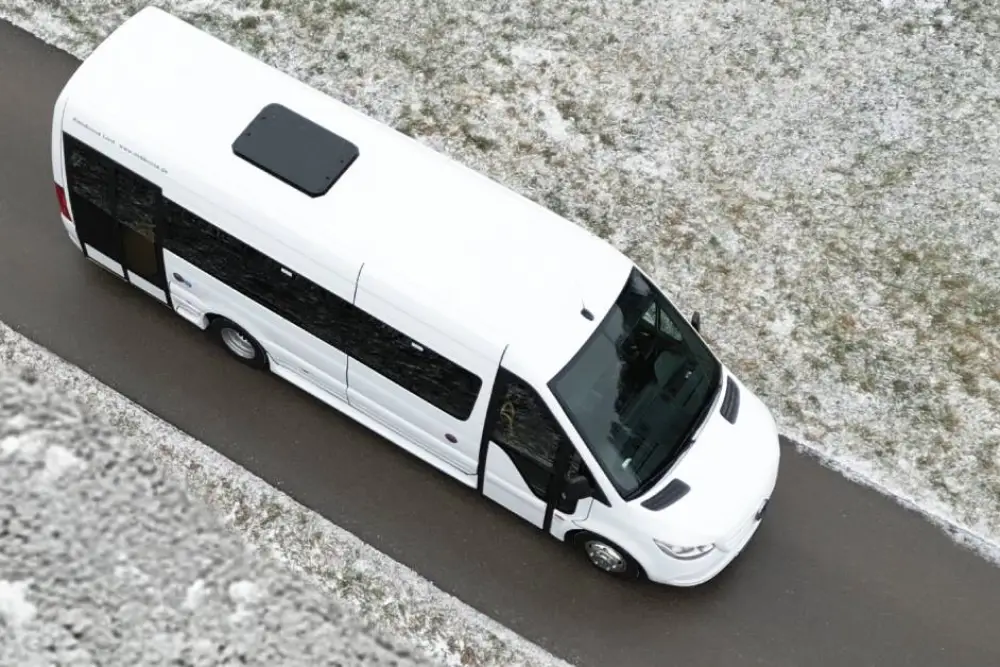
Instead of decommissioning a fully functional diesel bus and replacing it at high cost, the D2E (Diesel-to-Electric) conversion from HEERO offers a resource-conserving and economically clever alternative. This process focuses exclusively on the Mercedes-Benz Sprinter Model 907, transforming it into a high-performance 22-seater Electric MiniBus within a maximum of 10 working days. The greatest advantage lies in value retention. Existing and often expensive special bodyworks remain completely intact.
The conversion process is standardised and efficient. First, the diesel engine, gearbox, exhaust system and fuel tank are removed. They are replaced by the HEERO eDrive, the 137 kWh battery packs and the entire control electronics. The vehicle retains its familiar handling characteristics and its full payload. Fleet operators benefit from rapid and predictable electrification without the long delivery times of new vehicles. More information on the technical basis can be found in our article on the HEERO Electric Sprinter.
The D2E conversion is more than just a technical replacement; it is a central component of the circular economy. It extends the service life of high-quality vehicles by at least 8 to 10 years and avoids the CO2 emissions that would be generated during the production of a completely new bus. This makes electrification not only legally compliant, but also highly sustainable.
Performance and range for demanding everyday operations
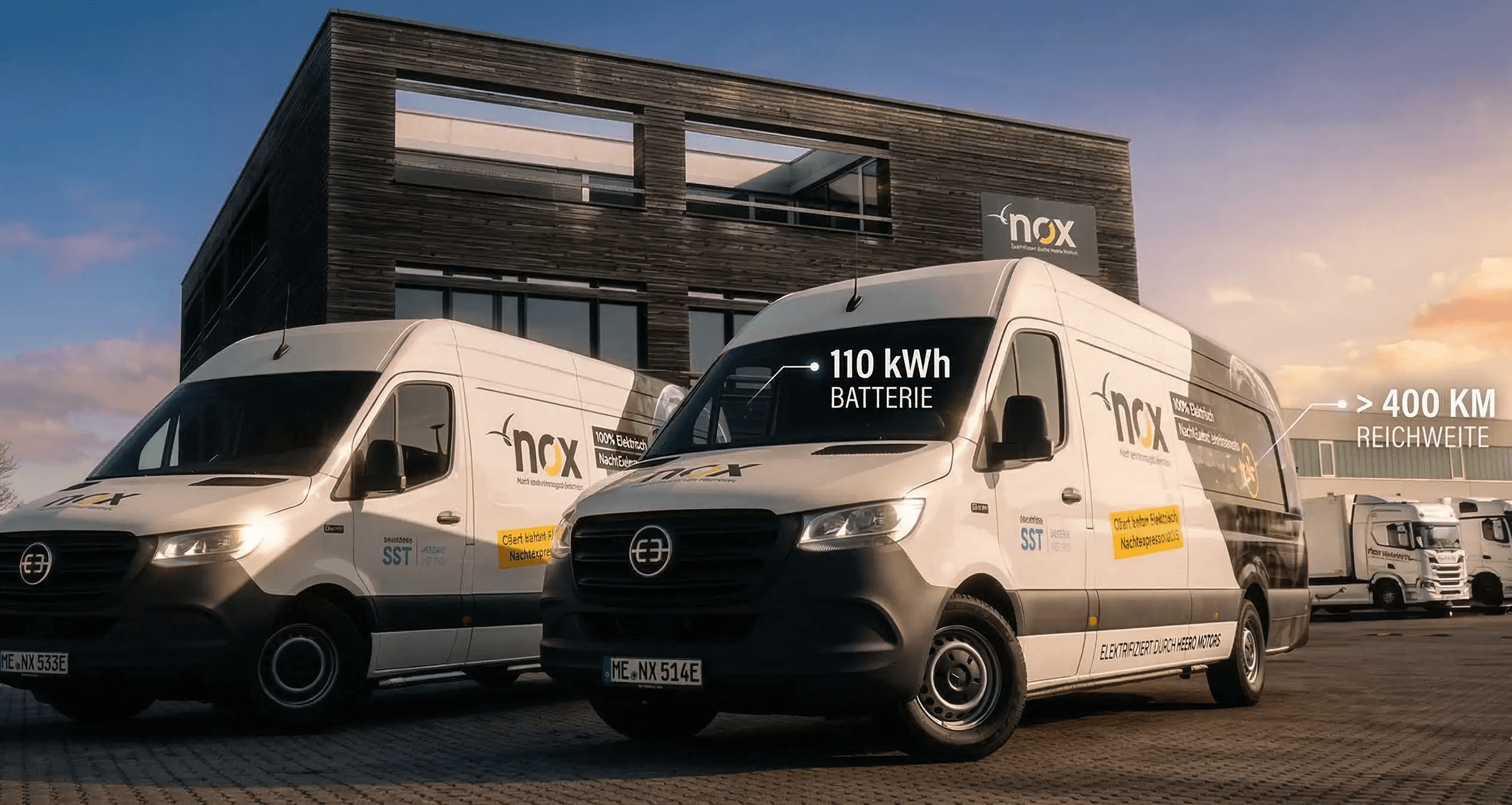
The practicality of a 22-seater electric bus is largely determined by its range and charging capacity. The D2E Sprinter converted by HEERO achieves a WLTP range of up to over 300 km with its 137 kWh battery. This value easily covers the typical daily routes in city, shuttle, or regional transport for over 90% of all applications. Even under real-world conditions with a payload and varying weather conditions, an established practical range of over 300 km is reliably achievable.
Charging capacity is equally crucial for high vehicle availability. The HEERO Electric MiniBus supports DC fast charging up to 165 kW. This allows the battery to be charged from 20% to 80% in just 30 to 40 minutes, for example during legally required driver breaks. For scheduled overnight charging at the depot, a 22 kW AC on-board charger is available. This charging flexibility ensures that the vehicle is ready for operation at 100% capacity the next morning.
The HEERO portfolio also includes other specialized vehicles, such as the low-floor rear bus with a range of over 300 km, specifically designed for barrier-free passenger transport. Determining the exact range is complex, as explained in detail in our article on WLTP range for commercial vehicles. The HEERO technology ensures that the performance values more than meet everyday demands.
Intelligent charging concepts as the foundation for fleet operations
Switching to an electric 22-seater bus is only half the battle; a well-thought-out charging infrastructure is the second decisive success factor. If several e-buses are charged simultaneously and without control, this can lead to extreme peak loads that overload the local power grid and drive up energy costs due to high capacity charges. HEERO therefore offers comprehensive depot charging advice together with partners to avoid such scenarios.
Intelligent charging and load management is essential for the efficient operation of an electric minibus fleet. The system intelligently distributes the available grid power among the vehicles to be charged. In doing so, it takes into account the planned departure time and the current state of charge of each individual bus. This ensures that all vehicles are fully charged in the morning, without creating expensive peak loads or requiring the grid connection to be upgraded for hundreds of thousands of euros.
The implementation of such a charging infrastructure requires careful planning, which includes the following points:
Analysis of energy demand: Determination of the daily energy consumption of the fleet based on the route schedules.
Grid connection assessment: Evaluation of the existing capacity at the operating site.
Selection of charging technology: Definition of the right mix of AC and DC charging points.
Implementation of load management: Installation of software for the intelligent control of charging processes.
Professional planning significantly reduces the investment and operating costs of the charging infrastructure. Experience the efficiency for yourself and arrange a non-binding test drive with one of our e-vehicles to get to know the system solution.
FAQ
What warranty is provided for the D2E conversion and the battery?
HEERO offers comprehensive warranty coverage for all installed components of the electric drivetrain, including the motor and power electronics. A separate warranty for the high-voltage battery covers capacity over a defined period and a specified mileage, typically 8 years. All details are set out transparently in the service contract.
For which Mercedes-Benz Sprinter models is the D2E conversion available?
HEERO's standardised D2E conversion is designed exclusively for the Mercedes-Benz Sprinter 907 model. This includes common base vehicles such as the 313, 316, 319 and 324 models. This focus on a single platform enables a fast, efficient and high-quality conversion process in just 10 working days (907 series only).
Is a range of over 300 km also practical in winter?
Yes, the range is absolutely practical for real-world use. The stated WLTP range of up to more than 300 km is a standardised figure. In real-world operation, particularly at low winter temperatures, the range may decrease by 20–30%. Thanks to the large 110 kWh battery, however, even then a usable range of over 280 km remains, which is sufficient for the vast majority of daily passenger transport applications.
What happens to the removed diesel engine and the other components?
In line with the circular economy, removed components are not simply disposed of. Functional diesel engines, gearboxes and other parts are inspected, reconditioned and returned to the spare parts market. This extends the service life of these components and conserves valuable resources. This is part of HEERO's comprehensive sustainability approach.
Can I continue to use the usual service for my Sprinter after the conversion?
Yes, for all vehicle-side maintenance and repair work that does not concern the eDrive (e.g. brakes, suspension, bodywork), you can continue to use your usual service partner. For the electric powertrain, our specialised service team is available to carry out maintenance and any repairs quickly and professionally.
Does the conversion affect the payload or the number of seats?
No, the D2E conversion is designed in such a way that the original payload and the 22-seat configuration are fully preserved. The weight of the battery and the eDrive motor is engineered to compensate for the weight of the removed diesel drivetrain. Your vehicle therefore retains its full functionality and transport capacity.
More useful links
Bundesministerium für Verkehr und digitale Infrastruktur provides information on the Clean Vehicles Directive.
Thüringer Ministerium für Infrastruktur und Landwirtschaft provides FAQs on the Clean Vehicles Procurement Act (Saubere-Fahrzeuge-Beschaffungs-Gesetz).
EUR-Lex publishes Directive (EU) 2019/1161 on the promotion of clean road transport vehicles.
Hochschule Offenburg offers a conference paper on electromobility and its impacts.
Karlsruher Institut für Technologie provides a discussion paper on the transformation of public transport through electromobility.
PwC conducted a supporting study on the promotion of electric buses in public transport.
Statista provides statistics on cities with the highest number of purely electric buses in Germany.
PwC offers the E-Bus Radar with information and analysis on electromobility in public transport.
Verband Deutscher Verkehrsunternehmen (VDV) provides information on its E-Bus project.