Bidirectional charging (V2G): reduce TCO and maximise fleet returns

Does your fleet stand idle for an average of more than 20 hours a day? Soon, bidirectional charging (V2G) will turn every period of downtime into profitable time by enabling your vehicles to stabilise the power grid.
The topic briefly and concisely
Bidirectional charging (V2G) transforms your fleet from a cost centre into an active revenue stream through grid services.
From 2026, the double grid charges in Germany will be removed, which could make V2G economically viable for fleet operators for the first time.
The technical basis for V2G is vehicles and charging stations compliant with ISO 15118-20, as well as an intelligent energy management system.
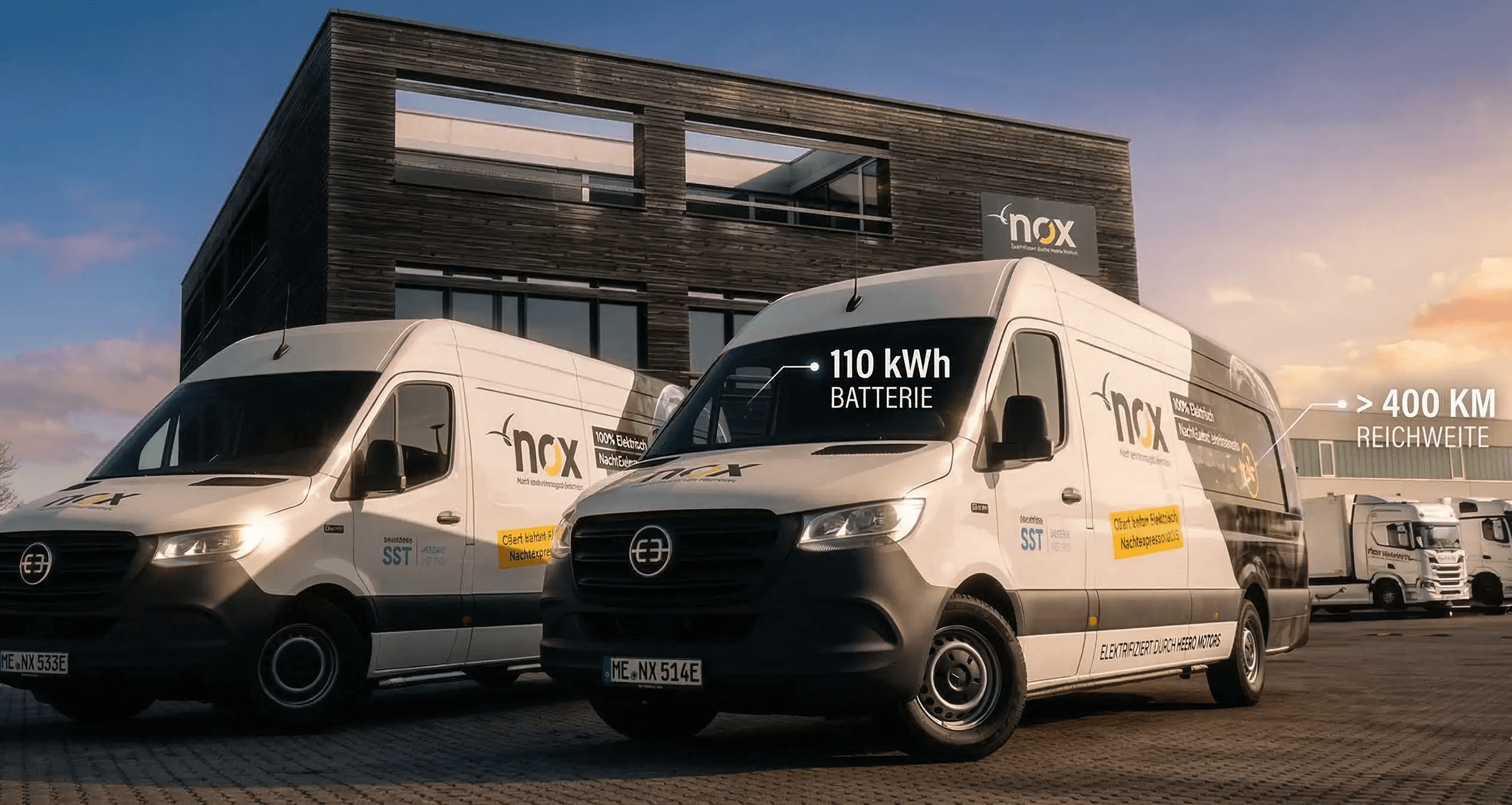
The electrification of commercial vehicle fleets is essential for compliance with the Clean Vehicles Directive (CVD). But the real revolution lies not only in driving, but in intelligent parking. Bidirectional charging (V2G) turns the HEERO eDrive system into mobile energy storage units with a capacity of 110 kWh or 137 kWh each. This technology makes it possible to feed energy back into the grid when needed, shave peak loads and generate new revenue streams. The legal framework and technical prerequisites in Germany will soon be in place to make V2G economically viable and to sustainably optimise your fleet's operating costs.
V2G as a strategic lever for fleet management
Vehicle-to-Grid (V2G) is a technology that enables energy flow in two directions. Your electric vehicles can not only draw power from the grid, but can also feed it back when required. This turns every parked HEERO into a decentralised energy storage unit. The more than 1.8 million electric vehicles already on the road in Germany represent a theoretical storage capacity of over 132 GWh. For fleet operators, this means a strategic realignment: vehicles become active participants in the energy market. Rather than merely generating operating costs, they can generate revenue by providing grid services. This new perspective on various V2X charging options is crucial for the future viability of logistics and municipal fleets. The ability to stabilise the grid becomes a measurable economic advantage. Electrification thus becomes not only an ecological necessity, but also an economic one.
TCO reduction through new V2G revenue models
The economic viability of bidirectional charging is based on several pillars that directly contribute to reducing the Total Cost of Ownership (TCO). Simulations for fleet applications show that, through intelligent charging alone, charging costs can be significantly reduced. With V2G, additional revenue streams are added. The greatest lever is the so-called Peak Shaving, in which expensive load peaks in the company depot are avoided through the targeted use of vehicle batteries. This reduces grid charges significantly. In addition, V2G opens access to balancing services markets, where the provision of capacity for grid stabilisation is remunerated. The combination of these factors makes electrification strategically even more valuable.
Reduction of electricity procurement costs by charging during off-peak tariff times.
Avoidance of high demand charges by capping load peaks (Peak Shaving).
Revenue from participation in the balancing energy market for frequency maintenance.
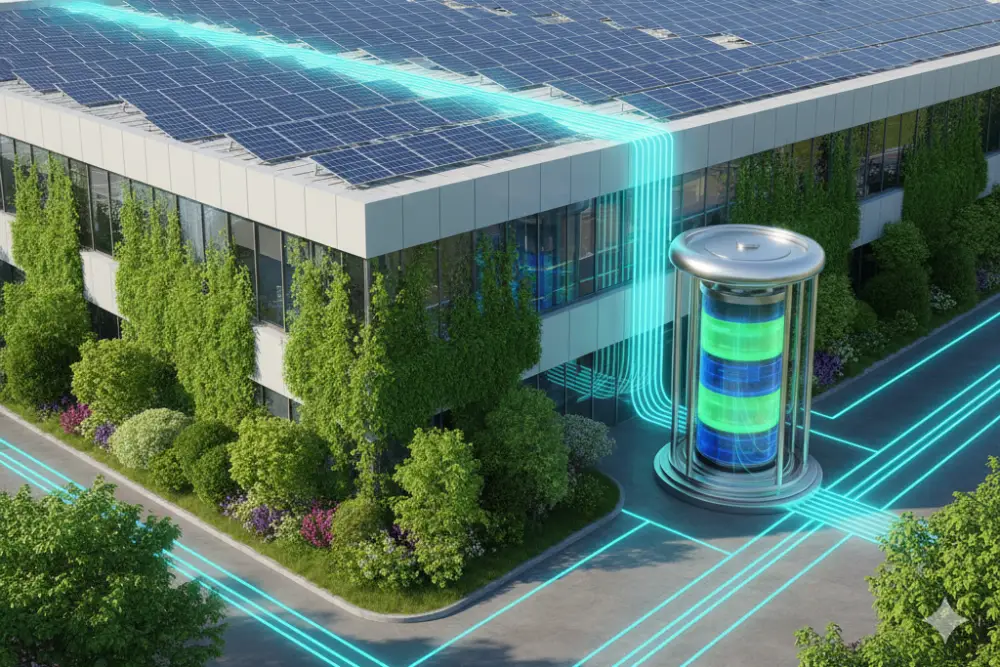
Optimisation of self-consumption of locally generated solar power.
Potential savings of over 700 euros per vehicle per year through optimised charging and discharging alone.
Through the intelligent control of your charging and discharging processes, the electrification of your fleet becomes an investment that pays for itself more quickly. The transition thus shifts from a mere necessity to a sound business decision.
Regulatory turning point: Germany is beginning to make V2G profitable
One of the biggest hurdles to the economic viability of V2G in Germany has been the regulatory double burden. A change in legislation passed by the Bundestag at the end of 2025 now creates clarity and investment security for fleet operators. From 1 January 2026, the double burden of grid charges for electricity that is temporarily stored and then fed back into the grid will no longer apply. Vehicles will therefore be treated legally in the same way as other mobile storage units. This step alone makes many V2G business models profitable for the first time. In addition, new technical process rules from the Federal Network Agency from April 2026 will significantly simplify the market integration and billing of storage systems and charging points. These new framework conditions enable fleet managers to approach V2G projects on a solid planning basis and to fully realise the benefits of the technology. The course for the transition to Circular Mobility is therefore also set from a regulatory perspective. This creates the necessary certainty to invest now in V2G-ready charging infrastructure.
Technical Implementation: The V2G Value Chain in the Depot
Successful implementation of V2G requires the interaction of three core components. The foundation is a V2G-capable vehicle, whose battery provides ideal buffer capacity. The second component is a bidirectional DC charging station that can control power flow in both directions. Crucial for interoperability and safety is compliance with the communication standard ISO 15118-20, whose implementation by manufacturers will begin in 2025. The third and most important component is an intelligent charging and energy management system (EMS). This system controls charging and discharging based on grid signals, electricity prices and the fleet's mobility requirements. The safety of the vehicle batteries is ensured by algorithms that manage the cycles gently.
Implementation typically follows a clear process:
Analysis of the fleet's driving profiles and idle times to determine V2G potential.
Planning of depot charging infrastructure including grid connection assessment.
Installation of bidirectional DC wallboxes and integration into the local power grid.
Implementation of the energy management system for intelligent control.
Connection to an aggregator for marketing flexibility in the energy market.
This structured approach ensures that the V2G solution is optimally tailored to your fleet's operational requirements. In this way, the technology becomes an integral part of your operations.
More useful links
The Research Centre for Energy Economics (FfE) provides a detailed report on the potential of Vehicle-to-Grid (V2G).
The Federal Ministry for Economic Affairs and Climate Action provides information on the electric mobility funding programme.
Agora Verkehrswende provides a comprehensive report on bidirectional charging.
The VDE (Association for Electrical, Electronic and Information Technologies) provides information on bidirectional charging.
The NOW GmbH (National Organisation for Hydrogen and Fuel Cell Technology) provides a fact sheet comparing different drive types for passenger cars.
e-mobil BW presents a potential analysis on bidirectional charging.
FAQ
Does bidirectional charging affect the service life of the vehicle battery?
Intelligent battery management is crucial. Modern V2G systems control charging and discharging cycles so that they typically take place within the gentler range of 20% to 80% of battery capacity. This minimises additional stress and, according to current findings, has only a negligible impact on the overall service life of commercial vehicle batteries designed for 2,000 to 3,500 cycles.
Is my HEERO eDrive system ready for V2G?
Yes, the eDrive Systems hardware supports BiDi charging, especially the systems based on 400V technology. HEERO charging electronics are designed to meet the requirements of bidirectional charging. Full V2G functionality is activated by combining it with a compliant, bidirectional DC charging station and the corresponding software of the charging management system, which supports the ISO 15118-20 standard.
What charging infrastructure is required for V2G at the depot?
For V2G, you need a bidirectional DC charging station. Unlike AC chargers, which require an on-board converter in the vehicle, the conversion from direct current to alternating current takes place in the charging station in DC systems. This is more efficient for feed-in back to the grid. In addition, a higher-level energy management system (EMS) is required to control communication between the vehicle, the charging station and the power grid.
From what fleet size does V2G become economically viable?
V2G can already deliver economic benefits for smaller fleets from around 5 to 10 vehicles, especially through peak shaving to reduce grid charges. The larger the fleet, the greater the potential to aggregate capacity in order to participate in the balancing services market and generate significant revenues. An individual TCO analysis of your site and driving profiles is crucial here.
What is the difference between Vehicle-to-Grid (V2G) and Vehicle-to-Home (V2H)?
Both terms describe bidirectional charging applications. In Vehicle-to-Home (V2H), the vehicle battery supplies a single building, for example to optimise self-consumption of a PV system or as an emergency power supply. Vehicle-to-Grid (V2G) goes one step further: here, the vehicle feeds electricity directly into the public power grid in order to actively stabilise it and participate in energy markets.
How secure is the communication between the vehicle and the power grid?
Safety is ensured by the international standard ISO 15118-20. This defines encrypted and authenticated communication between the vehicle and the charging station. The use of digital certificates ensures that only authorised vehicles and charging points can participate in V2G operation, preventing tampering and unauthorised access to the grid.