Convert diesel vans with box bodies to electric: Your solution for TCO and sustainability

Rising diesel prices and impending driving bans in city centers threaten the profitability of your furniture logistics. Purchasing new electric transporters is expensive and associated with long delivery times, especially for custom-built bodies. The solution lies in the continued use of your proven vehicles.
The topic briefly and concisely
Protect your investment: The retrofit preserves the value of your expensive suitcase structure, while a new purchase is associated with a high loss of value.
Lower the total cost of ownership (TCO): lower energy and maintenance costs and the toll exemption; funding of up to 80% of the additional costs ran until 2024.
Ensure future-proofing: With a retrofitted e-van, you have unrestricted access to all urban environmental and zero-emission zones.
For companies in furniture transport, the vehicle fleet represents one of the largest cost factors. Their diesel vans, often equipped with special box bodies for six-figure sums over the years, are the backbone of the business. But pressure is mounting: operating costs are rising, and more and more German cities are restricting access for diesel vehicles, which is already a reality in Stuttgart and Hamburg today. HEERO offers you a pragmatic and economically superior alternative to buying new: have your proven diesel vans with box bodies for furniture transport converted to electric. This secures the value of your special bodies, reduces total cost of ownership (TCO) by up to 28%, and guarantees unrestricted access to all low-emission zones.
Cost-Benefit Analysis: Why Retrofitting Surpasses Buying New
The decision between retrofitting an existing diesel van and purchasing a new electric vehicle is primarily an economic one. A new electric van with a comparable box body represents an investment that is often 50% higher than that of a retrofit. Added to this is the significant depreciation, which can be up to 25% in the first year for new vehicles. Retrofitting, on the other hand, protects your original investment in the expensive special body. A TCO analysis shows that the total cost of ownership for retrofitted vehicles decreases significantly due to lower energy, maintenance, and tax burdens. Studies prove that electric vans are already more cost-effective over their lifespan today than diesel models. Government funding programs, which covered up to 80% of retrofit costs until 2024, further improved the balance sheet. The exemption from the truck toll for electric vehicles until the end of 2025 represented another direct cost advantage. These factors make the total cost of ownership analysis a crucial planning tool. Retrofitting is therefore not just an expense, but an investment in the future profitability of your fleet.
Technological Sovereignty: The HEERO D2E conversion process
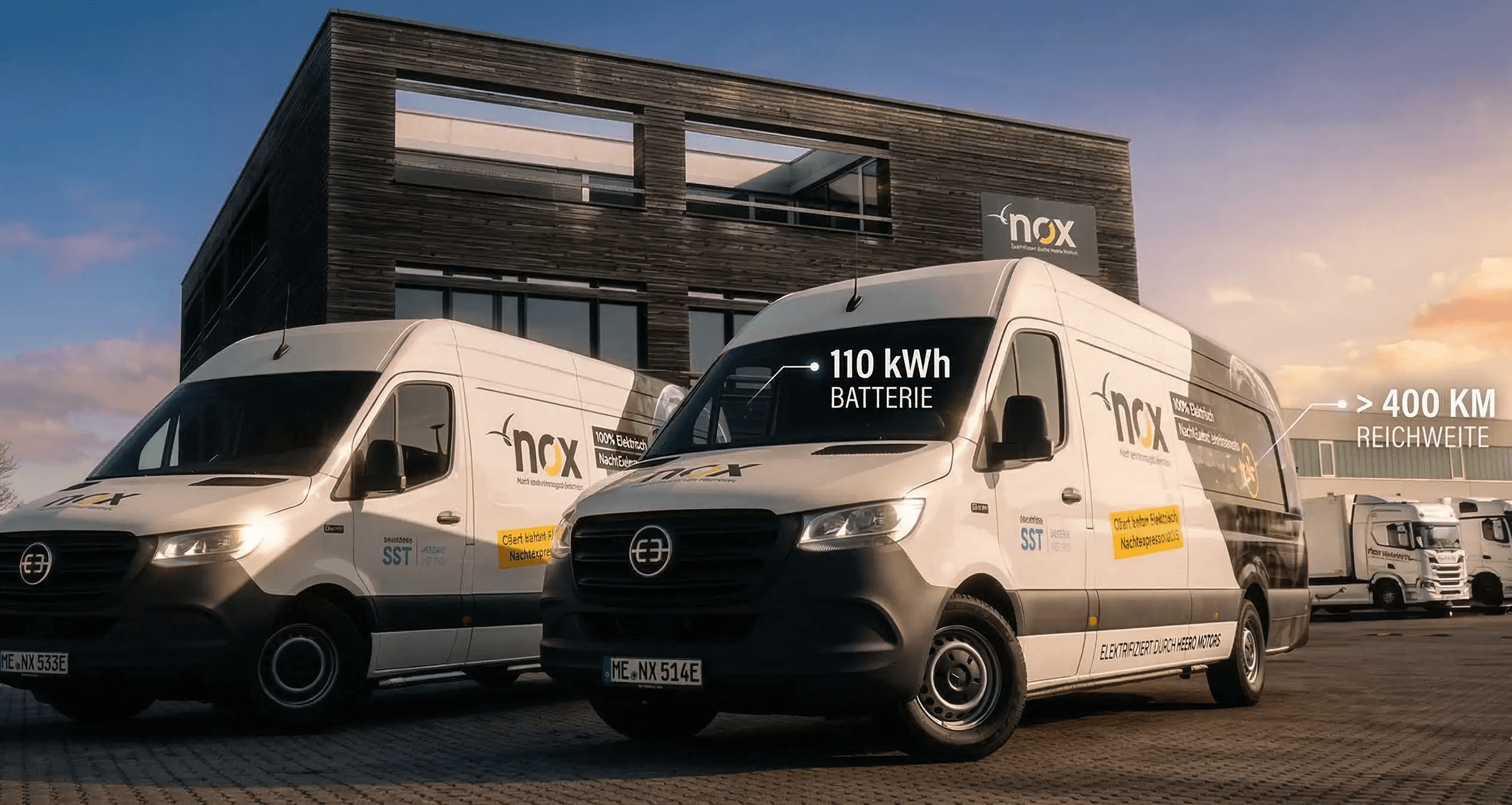
The patented HEERO conversion transforms your proven Mercedes-Benz Sprinter into a powerful electric vehicle. This process is based on the principle of the circular economy by preserving and modernizing high-quality vehicle components. Instead of scrapping a functioning vehicle, we significantly extend its life cycle. Our conversion process is designed for maximum efficiency and minimal downtime for your fleet. Within just 10 working days, the drivetrain is replaced by our high-performance electric drive. The result is a van with an output of 245 hp and a combined WLTP range of up to 425 km, ideal for the demanding delivery traffic in furniture transport. The process in detail:
Vehicle analysis and planning of the conversion.
Removal of the combustion engine and all associated components.
Installation of the HEERO electric drivetrain and the high-performance battery.
Integration of the control electronics and the charging system.
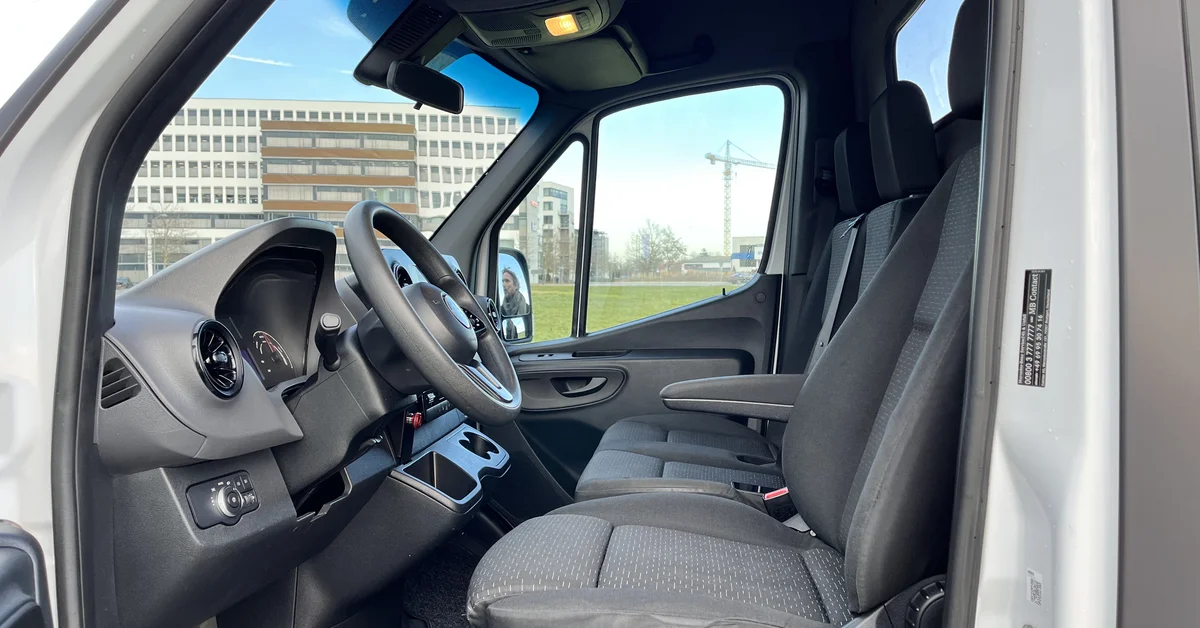
Adaptation of the cockpit with new displays for electric operation.
Comprehensive quality control and safety tests according to the highest standards.
TÜV approval and handover of the newly certified electric van.
Through this standardized process, you can bypass the long delivery times for new vehicles and quickly modernize your fleet. In this way, you secure the continuity of your logistics processes without compromising on performance.
Future security guaranteed: Unrestricted access to all city centers
The increasing number of environmental and zero-emission zones in German cities is becoming the greatest operational challenge for logistics companies. Cities such as Stuttgart, Hamburg, and Darmstadt have already imposed driving bans on older diesel vehicles, directly affecting delivery traffic. A violation can result in fines of over 100 euros. For a furniture transport company whose success depends on reliable delivery in urban centers, access security is crucial. A transporter converted to electric receives a green badge and is exempt from all existing and future driving bans. This gives you an unrestricted competitive advantage and absolute planning security for your tours. You no longer have to replan routes or reject orders because the destination lies within an environmental zone. The conversion of your diesel transporters is the most direct way to meet strict legal requirements and position your fleet for the future of city logistics. By doing so, you are not only reacting to current laws but acting proactively for the demands of tomorrow.
Sustainability as a Competitive Advantage: More than Just CO2 Reduction
The decision to have a diesel van with a box body converted to electric is a strong commitment to sustainability that goes far beyond pure emissions reduction. You are acting in accordance with the principles of the circular economy, a concept that is gaining increasing importance in the automotive industry. Instead of consuming resources for a completely new vehicle, you preserve the value and the grey energy embedded in your existing van and its specialized body. This significantly reduces waste and the demand for raw materials. In addition, you benefit from further emissions-related advantages:
Noise reduction: E-vans are virtually silent. This enables deliveries in residential areas during off-peak hours without disturbing residents, which is strictly regulated by law in cities like Berlin.
Improved air quality: You eliminate not only CO2, but also nitrogen oxides (NOx) and particulate matter, which directly contributes to improving air quality in city centers.
Positive brand image: More and more customers, in both the B2B and B2C sectors, demonstrably prefer companies that act sustainably.
By actively implementing your Nachhaltigkeitsziele im Fuhrpark, you strengthen your brand and position yourself as a responsible partner for municipalities and environmentally conscious customers. This is a clear advantage in a highly competitive market.
Conclusion: Your advantage with HEERO – economical, pragmatic, and future-proof
Converting your diesel box body vans for furniture transport is the smartest decision for the future of your company. You protect your valuable investments in specialized bodies, sustainably lower your total cost of ownership (TCO), and secure unrestricted access to all city centers. With the patented technology from HEERO, you rely on a proven, high-performance, and sustainable solution based on the principle of the circular economy. Avoid expensive new purchases and long waiting times. Instead, in just 10 days, you will receive a modernized, purely electric van that is perfectly tailored to the requirements of furniture logistics. HEERO is your innovative partner that combines cost-effectiveness with emission reduction. Take the decisive step and secure the competitiveness of your fleet. Request your personal consultation now or book an everyday test at no cost to experience the benefits for yourself.
More useful links
Statista offers comprehensive statistics and data on electromobility.
The Nationale Leitstelle Ladeinfrastruktur provides information on the topic of charging infrastructure for commercial vehicles.
The Bundesministerium für Verkehr provides information on commercial vehicles with alternative drives and climate protection in transport.
Logistra highlights the transformation in the commercial vehicle market and the growth of electric trucks and buses.
Eurotransport reports on an ICCT study showing the cost neutrality of electric trucks.
The Bundesamt für Logistik und Mobilität (BALM) provides information on the Climate Protection and Mobility (KSNI) funding program.
The Fraunhofer IML provides research results and information on the topic of e-mobility.
The Umweltbundesamt publishes publications on the analysis of the environmental balance of motor vehicles.