Charging time on the go: 20 to 80 per cent

Minimal downtime, maximum efficiency. A charging stop from 20 to 80 per cent is the key to the profitability of electric commercial vehicles. This is how fleet operators successfully plan their routes and significantly reduce operating costs.
The topic briefly and concisely
The charging window from 20 to 80% makes use of the highest DC charging power and can significantly reduce downtime compared with a full charge.
Charging the final 20% (from 80 to 100%) often takes just as long as charging from 20 to 80%, which is highly inefficient in fleet operations.
A consistent 20–80% charging strategy protects battery chemistry, slows ageing and thus helps secure a higher residual value for the vehicle.
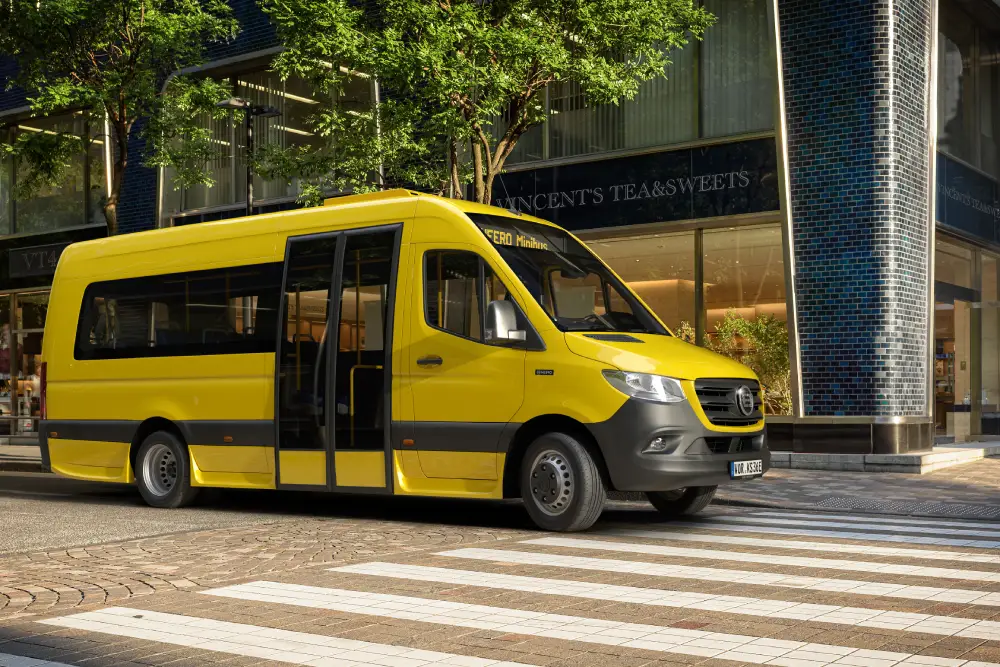
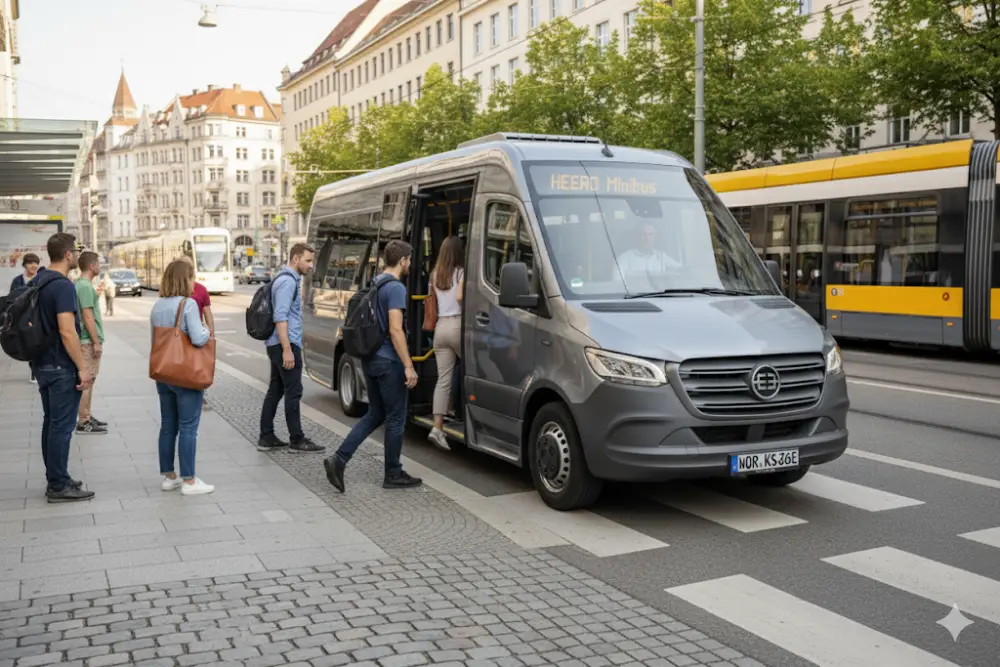
For fleet managers, time is a critical factor. Every minute a vehicle spends idle at a charging point has a direct impact on the total cost of ownership (TCO). Strategic planning of charging processes is therefore not an option, but a business necessity. In particular, focusing on charging time on the road from 20 to 80 per cent has proven to be the most efficient method. This strategy makes optimal use of the physical properties of lithium-ion batteries to significantly reduce downtime while maximising battery life. HEERO vehicles, such as the electric MidiBuses and eCommercial vehicles with their 165 kW DC charging power, are designed precisely for this scenario and help fleets achieve their efficiency targets.
Understanding the charging curve as the key to efficiency
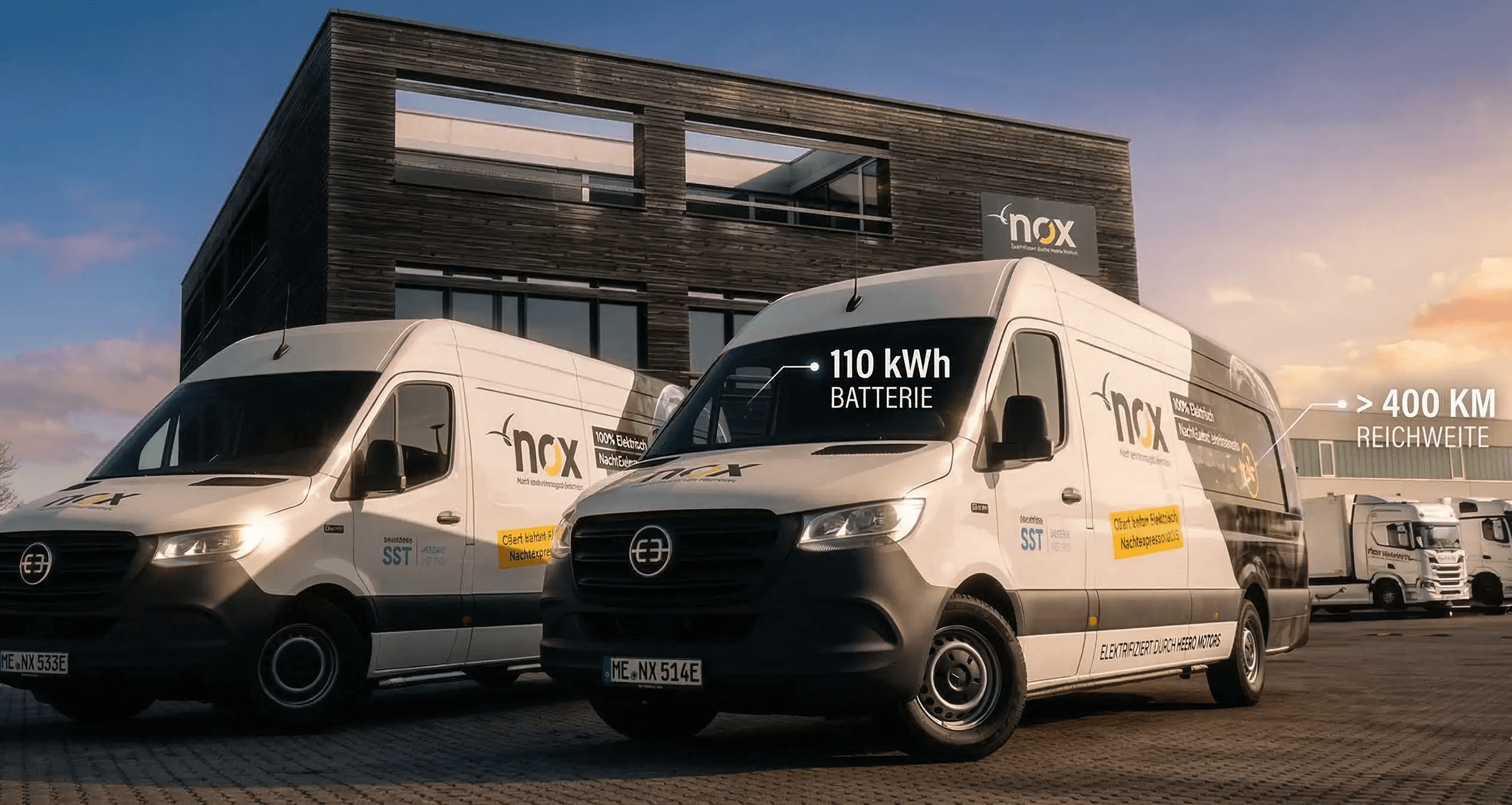
The charging power of an electric vehicle is not constant. It follows a so-called charging curve, which is highest at the start of the charging process when the battery level is low. Up to a state of charge (SoC) of around 80%, the battery, such as the 110 kWh battery in the HEERO eTransporter, can accept the maximum DC charging power. From 80%, the battery management system (BMS) drastically reduces the power. This process protects the battery cells from overheating and accelerated ageing. For route planning, this means that waiting for the last 20% is a costly loss of time. Understanding the difference between AC and DC charging is fundamental here. This physical reality is the basis for an optimised operating strategy in commercial use.
Actively reduce operating costs through optimised charging stops
Focusing on charging time on the road from 20 to 80 per cent is a direct lever for reducing TCO. An HEERO D2E Sprinter can use its 165 kW charging power to recharge enough energy for more than 200 km of range in around 45 minutes. For a full charge to 100%, however, it would need a further 30-40 minutes. The time saved of more than 30% per charging session quickly adds up. Less downtime means more productive time on the road and potentially an additional trip per day and vehicle. This not only optimises route planning, but also reduces personnel costs per kilometre. Knowing the exact State of Charge is crucial for efficiency. The benefits of this strategy are measurable:
Reducing average downtime per charging stop by at least 25%.
Significantly increasing daily vehicle availability.
Lowering driver-related operating costs by minimising unproductive waiting time.
Improving planning and meeting delivery windows through shorter, predictable charging breaks.
These operational advantages make the 20-80% rule a standard for economically minded fleet operators.
Managing external factors affecting charging performance
The actual charging performance does not depend solely on the vehicle. Particularly the battery temperature plays a decisive role. At cold temperatures below 10 °C, the chemical processes slow down, and the BMS reduces charging power to protect the cells. Modern electric commercial vehicles such as those from Heero feature thermal management that preconditions the battery to enable charging power of over 100 kW even in winter. The charging station's output is also a factor. A 350 kW charger brings no advantage if the vehicle, like all Heero Sprinter, is optimised for 165 kW. Fleet managers should therefore, when planning routes, specifically find suitable charging stations and ideally charge the vehicles directly after a journey when the battery is at operating temperature. This makes charging time on the road from 20 to 80 per cent predictable and reliable.
Maximise battery life and safeguard residual values
A well-considered charging strategy directly affects battery lifespan and thus the vehicle’s residual value. Constant charging to 100% and deep discharging below 20% place the battery cells under high stress and accelerate degradation. The battery’s health status, known as State of Health (SoH), therefore declines more quickly. A vehicle with a SoH of 90% after three years achieves a significantly higher resale value than one with only 80%. Adhering to the 20-80% range is the most effective measure for preserving value. A 5% improvement in battery health can increase the residual value by several thousand euros. The following practices have proven effective:
In normal operation, keep the charge level between 20% and 80%.
Only carry out full charges to 100% immediately before long journeys.
Do not leave the vehicle standing for extended periods after a full charge.
Use DC fast charging when on the road; prefer AC charging overnight at the depot.
This discipline pays off no later than at the end of the leasing cycle or when the vehicle is sold.
FAQ
Why should an electric commercial vehicle not usually be charged to 100% while on the road?
Charging from 80% to 100% takes disproportionately long, as the battery management system significantly reduces charging power to protect the cells. In commercial operation, this additional idle time is uneconomical and increases the TCO.
How much does the outside temperature affect the charging time from 20 to 80 per cent?
Very effective. In cold temperatures below 10 °C, charging time can increase significantly without battery preconditioning. HEERO vehicles use active thermal management to bring the battery to an optimal temperature and ensure fast charging times.
Does frequent DC rapid charging damage the battery?
Modern battery management systems are designed to protect the cells. As long as operation is kept predominantly within the ideal charging window of 20 to 80%, the impact on battery life is minimal. Overnight depot charging should nevertheless preferably be carried out using AC power.
How quickly does a HEERO charge from 20 to 80 per cent?
With a maximum DC charging output of 165 kW, the HEERO eDrive system typically charges its 110 kWh or 137 kWh battery from 20% to 80% in 30 to 40 minutes under optimum conditions. This corresponds to a range increase of over 250 km.
Is the charging power of the charging station or the vehicle the deciding factor?
As a rule, the lower value determines the charging speed. A HEERO vehicle with 165 kW charging power will also only charge at a maximum of 165 kW at a 350 kW charging station. Conversely, the vehicle will also only charge at 50 kW at a 50 kW charging station. Choosing the right charging station is therefore crucial.
What role does the overall concept play in charging efficiency?
The eDrive system from HEERO combines a modern electric drivetrain optimised for commercial applications with proven base vehicles such as the Sprinter 907 – all software and hardware components are developed at the HEERO R&D Centre as a coordinated system. It features advanced thermal management and a high DC charging power of 165 kW to help ensure minimal downtime and maximum efficiency.
More useful links
Statista provides a thematic overview of e-mobility with statistics and data.
Federal Network Agency provides information on e-mobility, possibly with a focus on regulatory aspects.
National Charging Infrastructure Coordination Centre provides a report offering insights into the expansion and development of charging infrastructure.
NOW GmbH publishes a study on charging infrastructure with forecasts for the years 2025 to 2030.
VDA (German Association of the Automotive Industry) provides an overview of the charging network ranking, which compares charging infrastructure across different regions.
Federal Motor Transport Authority (KBA) provides statistics on e-mobility in Germany.
Federal Ministry for Transport (BMV) publishes a press release on demand-oriented and attractive mobility of the future, probably with reference to e-mobility.
Fraunhofer ISI provides a press release on the topic of electric cars and charging infrastructure, possibly with a focus on multi-occupancy buildings.
Federal Ministry for Economic Affairs and Climate Action (BMWK) provides a dossier on e-mobility.