Long delivery times for e-transporters? Here's how to accelerate your fleet electrification through retrofitting.
Long delivery times for e-transporters? Here's how to accelerate your fleet electrification through retrofitting.

The demand for electric transporters far exceeds the supply, leading to extremely long delivery times. For fleet operators who must meet legal requirements and sustainability goals, this is a strategic blockade. Discover how you can overcome this hurdle by retrofitting your proven Mercedes-Benz Sprinter while protecting your investments.
The topic briefly and concisely
Avoid delivery times of up to 14 months for new e-transporters by retrofitting your existing fleet in just 10 days per vehicle.
Protect investments in expensive special setups and save up to 80% of the costs compared to a new purchase.
Reduce the total cost of ownership (TCO) of your fleet by up to 28% through lower energy and maintenance costs.
Switching to a locally emission-free fleet is no longer just an option for many municipalities, logistics companies, and craft businesses, but a necessity. Yet the reality is sobering: delivery times for new electric vans are often 8, 10, or even up to 14 months. These waiting times not only delay the achievement of your sustainability goals, but also jeopardize your competitiveness in low-emission zones. With our conversion, HEERO offers you an immediately available and economically superior alternative. Electrify your existing Mercedes-Benz Sprinter and make your fleet future-proof in record time.
Market analysis: High demand meets production bottlenecks
The market for new electric vans is characterized by a massive gap between demand and supply. While 41 percent of German fleet managers are planning a purchase, the market share of electric vans is only 5 percent. Manufacturers are struggling with production capacities, leading to average delivery times of 6 to 14 months for popular models such as the new VW Transporter or the Mercedes Crafter. For vehicles with special bodies, these periods are often extended by further months. This delay of over a year represents a significant risk for operational planning. These bottlenecks are forcing forward-looking companies and municipalities to seek alternative and faster ways to electrify. The conversion of the existing fleet is thus moving into focus as a strategic necessity.
Strategic acceleration: fleet modernization in 10 days instead of 14 months
Instead of waiting 14 months or longer for a new vehicle, the HEERO conversion enables the electrification of one of your existing vehicles in just 10 working days. This time advantage is crucial for the rapid implementation of sustainability strategies and compliance with access restrictions in cities. While waiting for a single new electric van, you could already have a significant number of your fleet vehicles converted. This allows you to scale your electric fleet up to 30 times faster than when buying new. This speed not only provides planning security, but also an immediate return on investment through falling operating costs. Learn more about the advantages of converting or buying new. Conversion is more than just a quick solution; it is also an economically smart decision that preserves existing assets.
Capital protection: Investments in expensive special structures are secured.
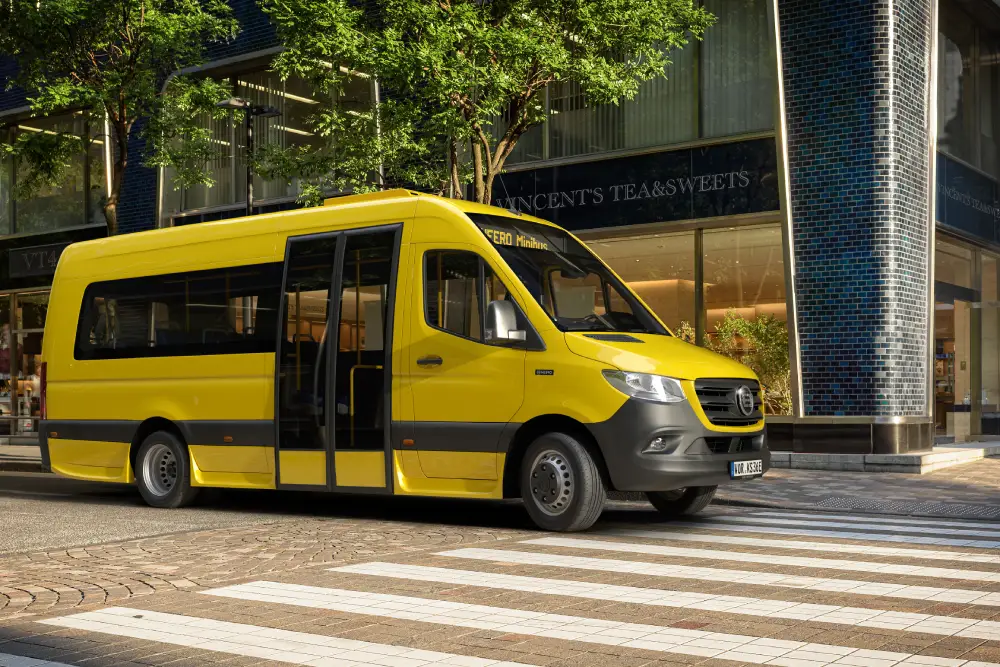
Many fleets, especially in municipalities or trades, consist of Mercedes-Benz Sprinters with expensive and highly customized bodies, whose value often exceeds €50,000. A new purchase would mean the complete depreciation of this investment. The HEERO conversion preserves the value of your vehicle, as the chassis and body remain untouched. You save up to 80% of the costs compared to a new purchase with a comparable body. The conversion is possible for almost all Sprinter models, regardless of wheelbase or roof height. Here are the direct economic benefits:
Preservation of the investment in the existing vehicle body.
Significantly lower capital costs compared to purchasing new.
Faster return on investment due to lower initial investment.
No additional costs for adapting and equipping a new vehicle.
Avoidance of depreciation loss on a fully functional body.
This financial efficiency becomes even clearer through the analysis of total operating costs, as the preservation of special bodies shows. Looking at the Total Cost of Ownership (TCO) reveals the full savings potential.
TCO analysis: reduce operating costs by up to 28 percent
Converting to an electric drive is not only cheaper to purchase, but also significantly reduces running costs. A study by Transport & Environment shows that electric vans in Germany are already 28 percent cheaper per kilometer than comparable diesel models. The savings result from several factors. Energy costs per 100 kilometers are significantly lower than for diesel. In addition, maintenance costs are up to 50% lower, as electric motors have fewer moving parts and do not require oil changes. Over a period of three years, companies can save up to 11,000 euros per vehicle in this way. Government funding programs for the purchase or conversion were able to further reduce investment costs and shorten the amortization period; the KsNI ran until 2024. With a detailed TCO analysis, the individual savings potential for your fleet can be calculated precisely. This economic advantage is directly linked to a strong emission-related benefit.
Circular economy as a future model: pragmatically implementing sustainability
Converting your existing fleet is a prime example of an active circular economy. Instead of scrapping a functioning vehicle and producing a new one, you extend its lifespan by many years. This approach significantly reduces the need for new raw materials such as steel and aluminum and lowers the CO2 emissions associated with production. The production of remanufactured parts has up to a 60% lower environmental impact than manufacturing new parts. By continuing to use the chassis and body, the ecological footprint of your fleet is drastically reduced. HEERO has perfected this process in order to combine sustainability and cost-effectiveness. The process of our conversion is clearly defined:
Analysis of your existing Mercedes-Benz Sprinter fleet.
Planning of the conversion based on your specific requirements.
Removal of the diesel drivetrain in our factory.
Installation of our patented electric drive and battery system.
Quality assurance and technical approval of the converted vehicle.
Handover and briefing on the new e-mobility.
This approach enables you to achieve your sustainability goals faster and is based on a certified and field-proven technology. Our patented solution guarantees the highest quality and reliability.
Certified performance: The patented HEERO D2E conversion
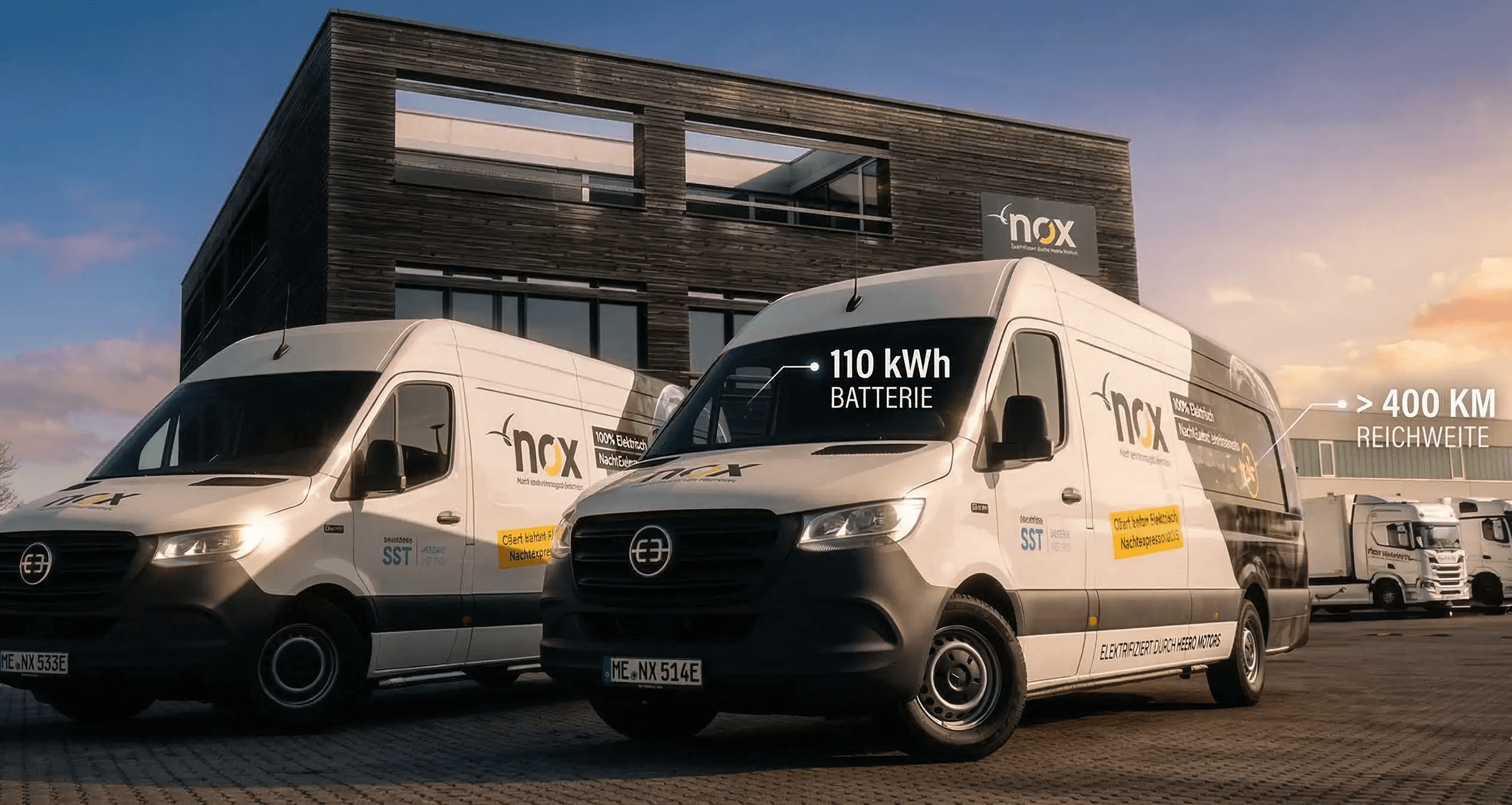
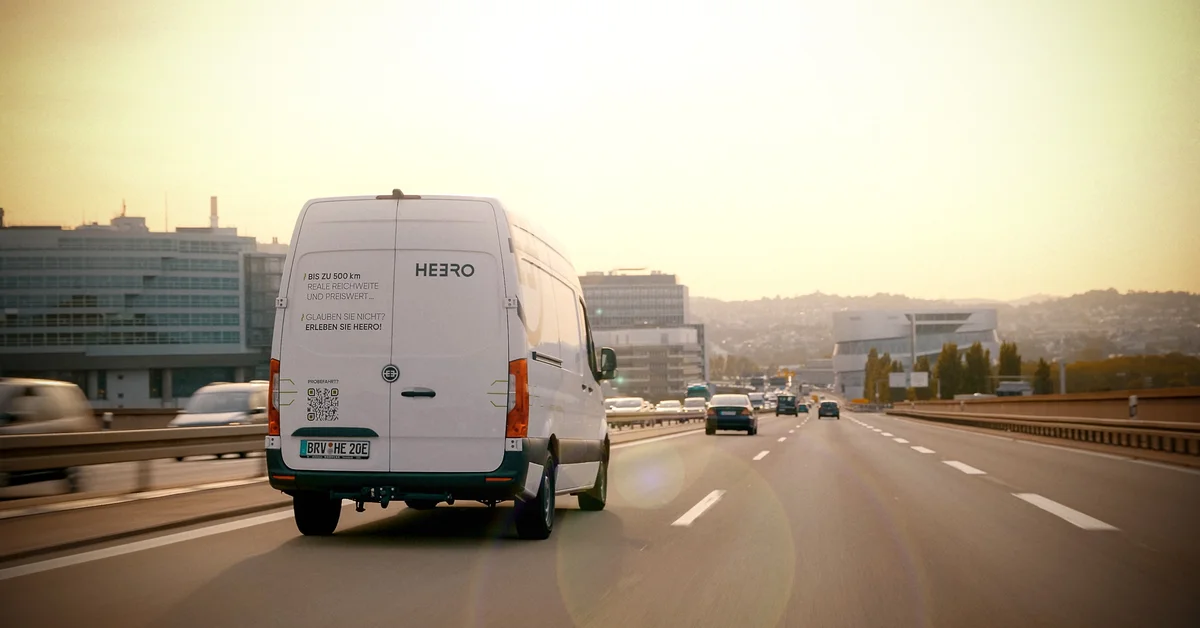
The heart of our solution is the patented conversion, which was specially developed for the Mercedes-Benz Sprinter platform. You receive a vehicle that convinces in performance and reliability. Our converted Sprinters offer a practical range of up to 425 km, which is more than sufficient for most daily operations in logistics, trade, or municipal services. The performance of the electric motor ensures a dynamic and quiet drive, which is particularly advantageous in city traffic. Since we build on the proven foundation of the Sprinter, vehicle safety and handling remain at the accustomed high level. Our conversion is a certified solution that meets all technical and legal requirements. Thus, you are not investing in an experiment, but in a proven technology from a certified provider. Take the opportunity to make your fleet future-proof without risk and long waiting times.
More useful links
Statista offers detailed statistics on the stock of trucks with alternative drivetrains in Germany.
Statista provides a forecast on the global electrification of trucks, broken down by region, here.
Bundesamt für Logistik und Mobilität (BALM) provides information about the KSNI funding program, which supports climate protection and sustainability in transport.
DEKRA offers information on retrofitting trucks to electric drive and associated technical aspects.
Europäische Kommission presents a regulation on vehicle recycling as part of the circular economy here.
International Council on Clean Transportation (ICCT) analyzes the total cost of ownership (TCO) of battery-electric trucks in Europe in this PDF.
Umweltbundesamt highlights the important topic of climate protection in the transport sector on this page.
Deutsche Post DHL provides information in this press release about the deployment of a new electric truck fleet in Berlin.