Brake energy recuperation: reduce TCO and significantly increase range

Every braking event holds untapped potential. Recuperation of braking energy converts kinetic energy directly into range, thereby significantly reducing the Total Cost of Ownership (TCO) of your fleet. Discover how HEERO uses this technology with its eDrive system to maximise fleet performance.
Topics on this page
The topic briefly and concisely
The 10–20% recuperation share already factored into the WLTP cycle can be exceeded in real-world operation by a further 5–15% through anticipatory driving.
By significantly reducing wear on mechanical brakes, regeneration lowers maintenance costs and therefore the TCO.
The efficiency of recuperation depends on driving style, topography and battery condition; a predictive driving style maximises the benefit.
The electrification of commercial vehicle fleets faces two key challenges: maximising range and minimising total cost of ownership (TCO). A key technology for addressing both is regenerative braking. This energy recovery process converts a vehicle's kinetic energy during deceleration directly into electrical energy, which is fed back into the battery. For fleet managers, this means a direct reduction in energy consumption of 5 to 15%, depending on the driving and route profile, as well as significant relief for the mechanical braking system. HEERO integrates this technology specifically into its in-house developed eDrive system to optimise efficiency and cost-effectiveness for demanding fleet operations.
Technical fundamentals: converting kinetic energy into range
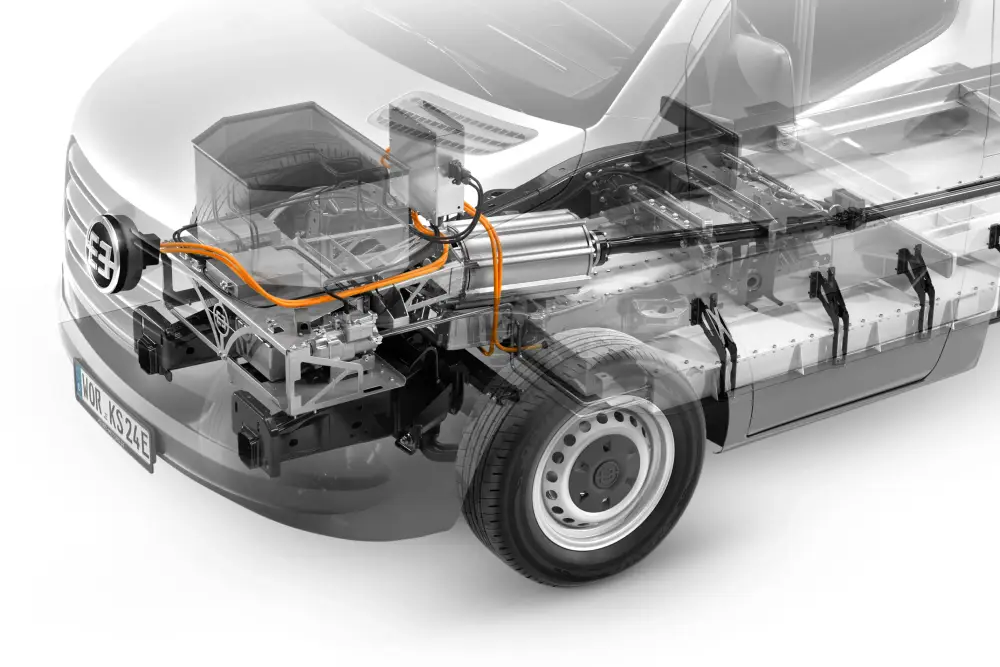
Regeneration, derived from the Latin „recuperare“ (to regain), is a fundamental process for the efficiency of electric vehicles. Instead of losing braking energy as heat at the brake discs, the electric motor reverses its function. On every deceleration, it becomes a generator, driven by the kinetic energy of the wheels. This conversion feeds electrical energy directly back into the vehicle's 137-kWh battery. This process not only reduces energy consumption, but also significantly protects the brake components. Modern systems also enable various regeneration levels that the driver can adapt to the driving situation. The physical principles behind this are crucial for optimising fleet efficiency.
TCO reduction: Direct cost benefits through reduced wear and tear
Total Cost of Ownership (TCO) is the key metric for fleet operators. Recuperating braking energy positively influences TCO through two levers. First, energy consumption falls, as part of the energy required is recovered during driving, reducing charging costs per 100 kilometres. Second, the electric motor handles a significant share of braking manoeuvres in city traffic. This leads to a dramatic reduction in wear on brake pads and discs. As a result, maintenance intervals for the braking system can be extended by more than 50%. For a fleet of 20 vehicles, this typically means four-figure annual savings on maintenance costs alone. The longevity of these components is a core advantage of electric minibuses and commercial vehicles, and of every HEERO.
Driving styles to maximise recuperation
An optimised driving style can increase the energy recovered through recuperation by a further 10%. The following approaches have proven effective in practice:
Anticipatory driving: Lifting off the accelerator early before traffic lights or junctions makes maximum use of the motor's generator function.
Use of recuperation levels: Adjusting the strength to the route profile, e.g. a higher level in city traffic.
One-pedal driving: In urban areas, driving almost exclusively via the accelerator pedal can maximise efficiency, as enabled by one-pedal driving.
Avoiding harsh braking manoeuvres: Gentle and even deceleration allows the system to recover more energy than abrupt stops.
Training drivers in these techniques can noticeably increase the vehicles' real-world range in day-to-day fleet operations.
Range maximisation: over 300 km through intelligent energy use
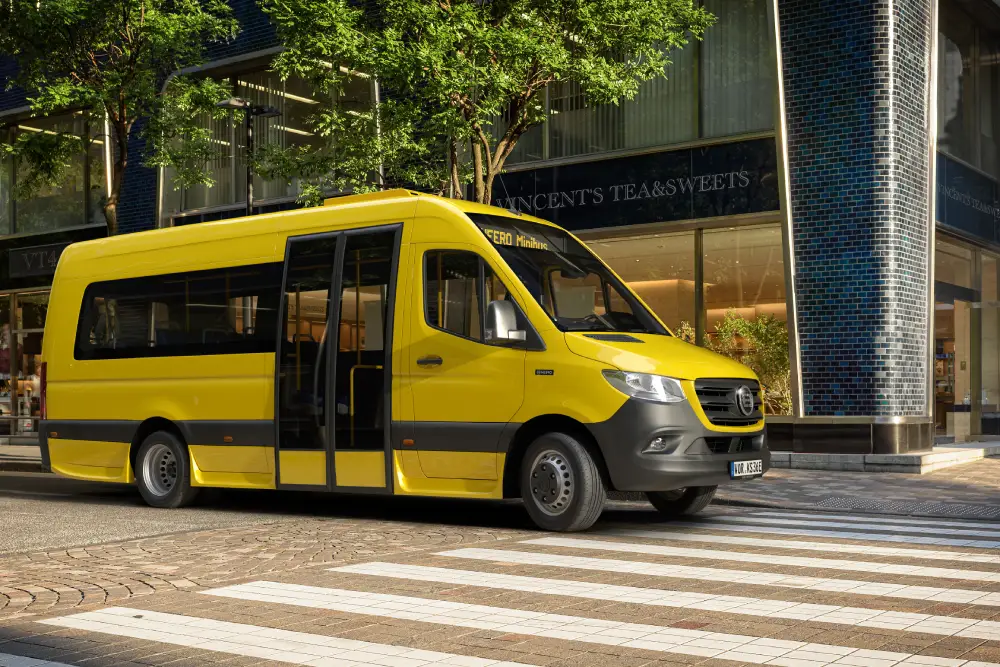
For logistics and transport companies, range is a critical factor for operational planning. Current electric vehicles recover an average of 10-20 % of energy in the WLTP cycle. With a HEERO Minibus with a range of approx. 300 km, this corresponds to an energy gain of around 60 additional kilometres. This value increases particularly in stop-and-go traffic or on topographically demanding routes. Some vehicle models achieve significant recuperation rates in this context. This recovered energy is used directly for propulsion and extends the vehicle's operating time before a charging session at the depot is required. The exact WLTP range is an important planning basis. Deliberate recuperation on the part of drivers makes it even more robust in real-world operation.
System boundaries and HEERO optimisation for fleet deployment
The effectiveness of regenerative braking is subject to physical limits. At a battery state of charge (SoC) of 100%, no further energy can be absorbed. The vehicle then uses the mechanical brakes exclusively. Likewise, regenerative braking performance is reduced at very low battery temperatures, as the cells’ charging capability is temporarily limited. HEERO takes these factors into account when configuring the eDrive system. The battery management system (HEERO-BMS) is designed to bring the cells quickly to an optimal operating temperature. In addition, regenerative braking performance is intelligently controlled to ensure the longevity of the 137 kWh battery while securing maximum efficiency at the same time. Battery safety is always the top priority. In this way, the technology is optimally made usable for continuous commercial operation.
FAQ: Frequently Asked Questions about Regenerative Braking
More useful links
The NOW GmbH provides a comprehensive handbook on electric vehicles, which examines technical fundamentals and areas of application in detail.
The Fraunhofer ISI publishes a feasibility study on the use of battery lorries in delivery transport, which provides important insights into efficiency and cost-effectiveness.
The German Environment Agency provides an analysis of the environmental footprint of motor vehicles, comparing the ecological aspects of different drive technologies.
The Öko-Institut presents the final report of the StratON-O truck study, which examines strategies for optimising truck deployment in the context of e-mobility.
The Federal Ministry for Economic Affairs and Climate Action offers a detailed dossier on e-mobility, outlining policy initiatives and market development.
A blog post by Webfleet gives practical tips for increasing the range of electric vehicles in fleet management.
FAQ
How strong is the braking effect during recuperation?
The braking effect can be selected in several stages. In the highest setting, deceleration is so strong that in urban traffic the mechanical brake often does not need to be used at all. This “one-pedal driving” maximises energy recuperation and increases driving comfort. The HEERO D2E conversion is designed for practical and efficient use of this function.
Does regenerative braking also work when the battery is full?
No, once the battery has reached a charge level of 100%, no further energy can be fed back. In this case, the vehicle automatically uses the conventional mechanical braking system to slow down. The battery management system ensures a seamless transition and protects the battery from overcharging.
Does regenerative braking really reduce brake wear?
Yes, significantly. As the electric motor handles a large proportion of the braking work, the mechanical brake pads and discs are used much less frequently and less intensively. This extends their service life by more than 50% and leads to noticeably lower maintenance costs, which is a major advantage for the TCO of your fleet.
How does the outside temperature affect regenerative braking?
Very low temperatures can temporarily limit the battery’s ability to absorb energy quickly. As a result, regenerative braking performance may be reduced during a cold start in winter. The thermal management of the HEERO systems is designed to bring the battery quickly to an optimal operating temperature in order to minimise this effect.
Can I adjust the regenerative braking on a HEERO eDrive system myself?
Yes, mainly via One-Pedal Drive. The system in HEERO vehicles therefore offers different levels of regenerative braking. The driver can adjust the strength of energy recovery to the respective driving situation – from a coasting feel to strong deceleration. This enables optimal adaptation to urban or rural route profiles.
Is regenerative braking equally effective at all speeds?
Regenerative braking is most effective in city traffic at low to medium speeds, where there are frequent braking and acceleration phases. At high, constant motorway speeds, there are fewer braking events, which reduces the proportion of energy recovered in the overall energy balance. Nevertheless, it still contributes to efficiency whenever speed is reduced.