One-pedal driving: reduce TCO and maximise efficiency in your fleet

Constantly switching between the accelerator and brake pedals in city traffic consumes energy and puts strain on your drivers. One-pedal driving in HEERO electric commercial vehicles converts braking into range and reduces maintenance requirements. Discover a technology that redefines efficiency and driving comfort for your fleet.
The topic briefly and concisely
One-pedal driving reduces TCO through significantly less brake wear and substantially extends maintenance intervals.
Through regenerative braking, energy that would normally be lost during braking is recovered, helping to maximise range in urban driving.
The technology increases driving comfort and safety, as the brake lights are automatically activated during heavy deceleration.
Fleet managers are under constant pressure to optimise the total cost of ownership (TCO) while also meeting the legal requirements of the Clean Vehicles Directive. One technological solution that is often underestimated is one-pedal driving. This method not only significantly simplifies driving in urban environments, but also uses physical principles to improve efficiency. By maximising energy recovery, wear on mechanical brakes is drastically reduced and range per charge is increased. For fleets, this means a direct reduction in maintenance and energy costs.
How it works: More than just a pedal
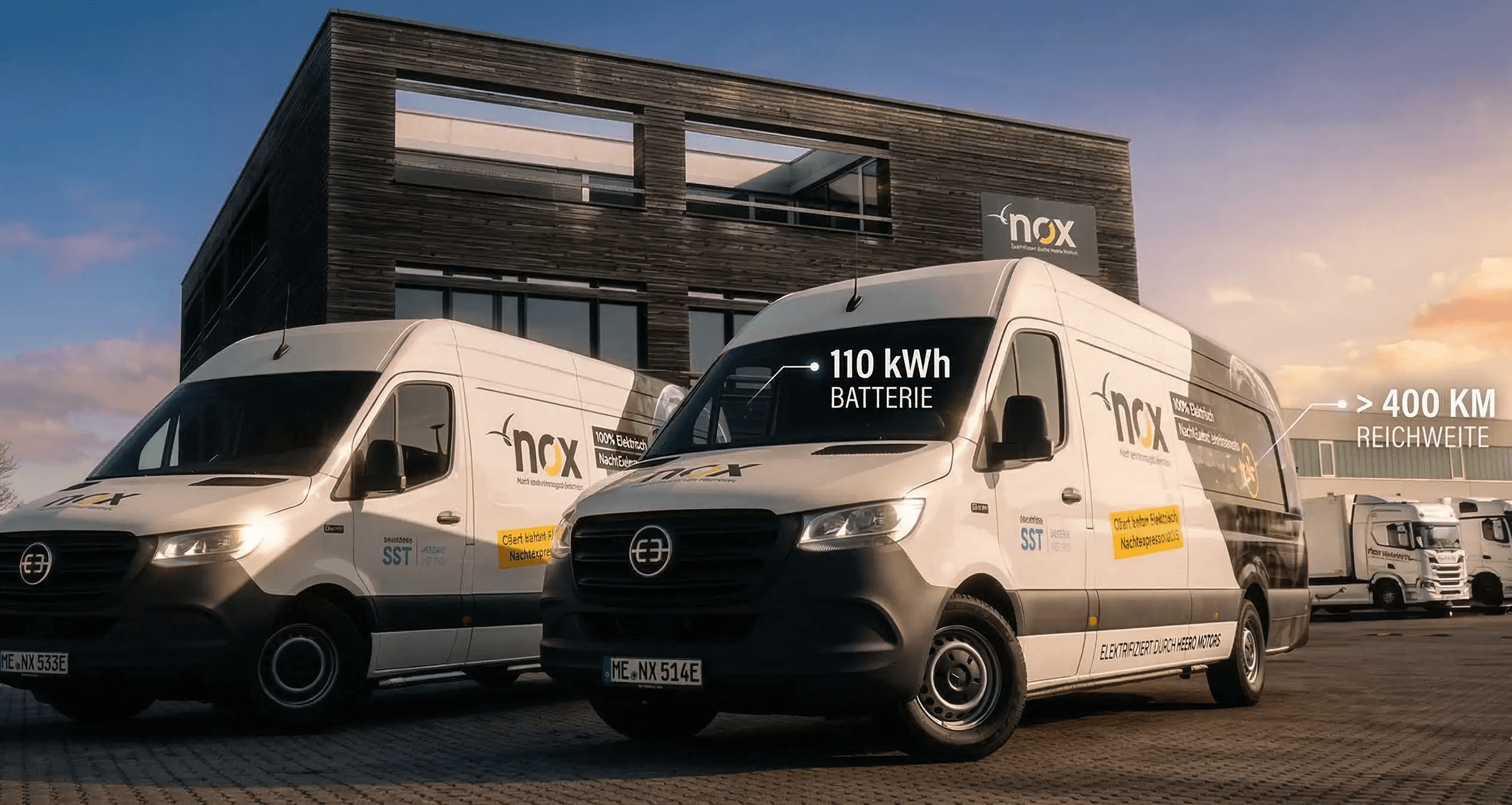
One-pedal driving controls both acceleration and deceleration with a single pedal. The driver accelerates by pressing the pedal down. When they take their foot off the pedal, the system initiates strong braking. This deceleration is not primarily achieved via the mechanical brake. Instead, the electric motor switches to generator mode. The vehicle's kinetic energy is thus converted into electrical energy. This energy flows directly back into the vehicle's 137 kWh battery. This process is known as regenerative braking. It is the technological basis for one-pedal driving. Intelligent control maximises efficiency with every deceleration event. This not only protects materials, but also extends the range of your vehicles.
TCO reduction through minimised brake wear
Total cost of ownership is a key metric for every fleet manager. One-pedal driving significantly reduces wear on the mechanical braking system. Experts report significantly fewer brake applications in electric vehicles. In urban traffic, where braking is frequent, this effect is particularly pronounced. Less use means a longer service life for brake discs and pads. This leads to significantly longer service intervals and lower costs for spare parts. Downtime due to brake system servicing is therefore minimised. For your fleet, this means higher vehicle availability and tangible financial relief. The investment in a genuine HEERO pays for itself faster as a result. Reducing material wear is a direct gain for your balance sheet.
Extended service life of mechanical brake components.
Reduced service and maintenance costs over the vehicle lifecycle.
Higher vehicle availability through fewer workshop visits.
Lower environmental impact thanks to massively reduced brake dust.
Improved planning of maintenance work for your fleet.
These savings make a major contribution to optimising total cost of ownership.
Efficiency gains through maximum energy recovery
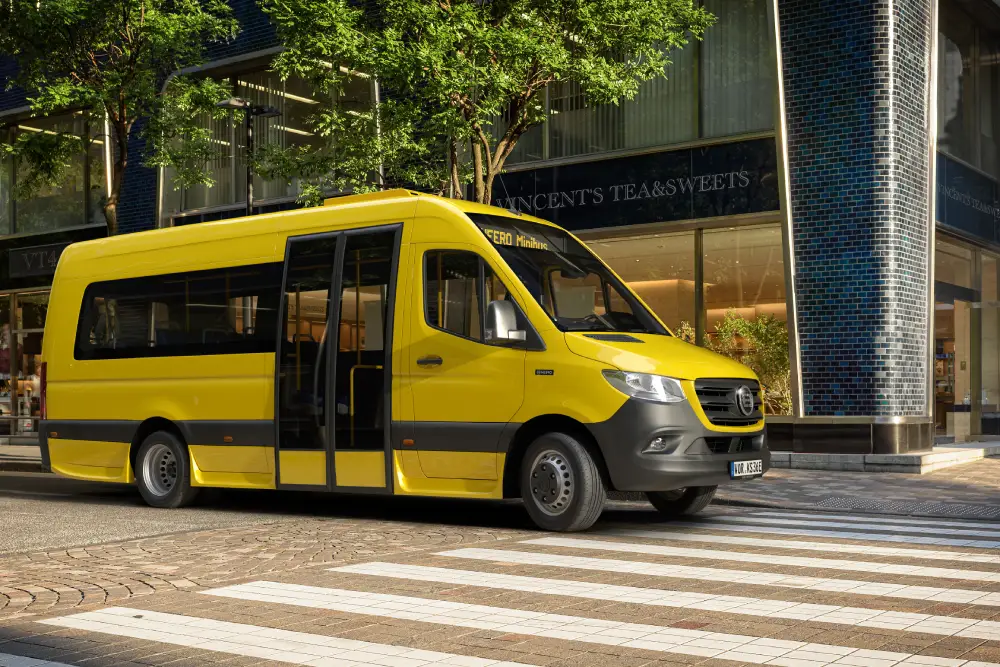
Every braking event is an energy loss - but not with regenerative braking. Modern systems can recover significant amounts of braking energy. This energy is used to recharge the battery while driving. This increases the effective range of your HEERO. Particularly in stop-and-go traffic, one-pedal driving maximises the braking energy recovery. A HEERO minibus for public transport thus achieves a range of over 300 km. Without regenerative braking, the range on journeys with many stops would be significantly lower. The technology therefore directly helps to address range anxiety. It enables longer operating times and reduces the need for intermediate charging. This increases the productivity of your fleet in daily operation.
Driving comfort and safety in everyday fleet operations
Switching to one-pedal driving requires a short period of familiarisation. Afterwards, drivers report a noticeably more relaxed driving experience. The constant switching between two pedals is eliminated. This reduces physical strain and fatigue, especially during long shifts in delivery operations. Vehicle control is perceived as more intuitive. However, safety is not compromised. The conventional brake pedal remains fully functional for emergency braking. In addition, the brake light is automatically activated during strong regenerative deceleration. This is required by law under UN Regulation 13-H. An acceleration sensor measures the deceleration and triggers the signal from 1.3 m/s². Following traffic is therefore warned reliably. Safety is ensured at all times.
Reduced driver fatigue: Fewer pedal changes make for more relaxed driving.
Intuitive speed control: Sensitive control in heavy traffic.
Full braking performance: The brake pedal remains available for emergency situations.
Automatic warning signals: Brake lights activate during heavy deceleration.
Predictive driving: The technology promotes a calmer and safer driving style.
This combination of comfort and safety makes the technology ideal for professional use.
Implementation in the HEERO eDrive system
One-pedal driving is an integral part of HEERO drive technology. The system is precisely calibrated. It is optimised for the typical operating scenarios of public transport, municipal and logistics fleets. Strong regenerative braking is crucial to achieve a range of approx. 300 km. Our engineers fine-tune the software perfectly to the weight and characteristics of the base vehicles. They meet the quotas of the Clean Vehicles Directive (CVD) and at the same time increase efficiency. HEERO offers a pragmatic solution for the rapid electrification of your fleet. Arrange a consultation, to analyse the potential for your fleet.
More useful links
Wikipedia provides a comprehensive overview of the 'one-pedal driving' concept, in which the vehicle slows down significantly when the accelerator pedal is released (regenerative braking).
NOW GmbH provides a factsheet comparing different drive systems for passenger cars.
The Federal Ministry for Economic Affairs has published an efficiency study for passenger cars that provides important insights.
The National Centre for Charging Infrastructure offers comprehensive information on commercial vehicles and their charging infrastructure.
The Federal Ministry for Digital and Transport provides information on commercial vehicles with alternative drives and their contribution to climate protection in transport.
The Federal Statistical Office (Destatis) is expected to publish a press release with relevant data on transport or vehicles in August 2025.
Fraunhofer ISI will release a press statement in August 2025 on deployment planning for electric trucks, their potential and costs.
FAQ
Is one-pedal driving safe, and how do the brake lights work?
Yes, safety is fully ensured. The conventional brake pedal generally remains active for emergency braking. The brake lights are automatically activated by a sensor during strong deceleration through regeneration, as required by UN Regulation 13-H. Traffic behind is therefore generally warned.
How much does the technology really reduce brake wear?
The reduction is considerable, especially in city traffic. Because most deceleration is achieved by the electric motor (regenerative braking), the mechanical brake is typically used less frequently. Experts report significantly fewer brake applications, which noticeably extends the service life of pads and discs and reduces maintenance costs.
Is the transition complicated for drivers?
No, the switch is usually very intuitive and quick. After a short familiarisation period, most drivers find one-pedal driving more comfortable and less tiring, as the constant switching between pedals is no longer necessary. This is a major advantage during long shifts in urban environments.
Does one-pedal driving also work on the motorway?
One-pedal driving delivers its greatest benefits in urban and regional traffic with frequent changes in speed. On the motorway, where driving is constant, the effect is less pronounced. Nevertheless, energy is still recovered here too during every deceleration process, such as when exiting the motorway or in heavy traffic.
Can the level of regenerative braking be adjusted in one-pedal driving?
On many electric vehicles, the strength of regenerative braking can be adjusted. HEERO’s eDrive system is optimally pre-configured for fleet use in our new electric vehicles to ensure an ideal balance of efficiency, range and a comfortable driving experience for professional use.
What happens when the battery is charged to 100%?
When the battery is fully charged, it can no longer absorb any additional energy. In this case, the regenerative braking effect is reduced and the vehicle primarily decelerates via the mechanical brake. The vehicle management system ensures a seamless transition, so the driver always experiences consistent and safe braking performance.