Battery charging in electric vehicles: reducing TCO and maximising fleet performance

Correctly charging electric vehicles is not a side issue for fleet operators, but a key lever for optimising TCO. A well-designed charging strategy not only ensures your fleet remains ready for operation, but also maximises the service life of the most valuable component: the battery.
Topics on this page
The topic briefly and concisely
Strategic depot charging overnight with 22 kW AC is the most cost-effective method and helps protect the battery, directly reducing TCO.
Maintaining the state of charge (SoC) between 20% and 80% maximises battery lifespan and helps safeguard the vehicle’s residual value.
Intelligent load management avoids costly power peaks and often enables the operation of an e-fleet without expensive grid expansion.
For fleet managers, the topic of "charging batteries in electric vehicles" is far more than simply plugging in a cable. It is a strategic process that determines efficiency, operating costs and the longevity of the entire fleet. In light of the Clean Vehicles Directive (CVD) and rising operating costs, intelligent charging management is becoming a competitive advantage. An optimised charging strategy not only reduces electricity costs significantly, but also protects battery health, helping to safeguard residual value. HEERO offers an integrated solution combining vehicle technology and depot charging consultancy.
Define AC and DC charging as the foundation of your fleet strategy
The choice of charging technology is the basis for efficient fleet electrification. AC charging (alternating current) at typically 22 kW is the most economical method for depot charging overnight. Heero vehicles use this option to make optimal use of dwell times of over 8 hours for a gentle full charge. DC charging (direct current) at 165 kW, by contrast, enables a rapid charge to 80% in 30-40 minutes and ensures flexibility for unforeseen deployments. The combination of both technologies is ideal for 95% of all fleet profiles. An analysis by Fraunhofer ISI shows that battery-electric trucks are the most cost-efficient technology in most use cases. The right mix of AC and DC charging options is crucial for operational efficiency. This strategic planning of charging infrastructure is the first step towards TCO reduction.
Actively manage battery health through optimised charging cycles
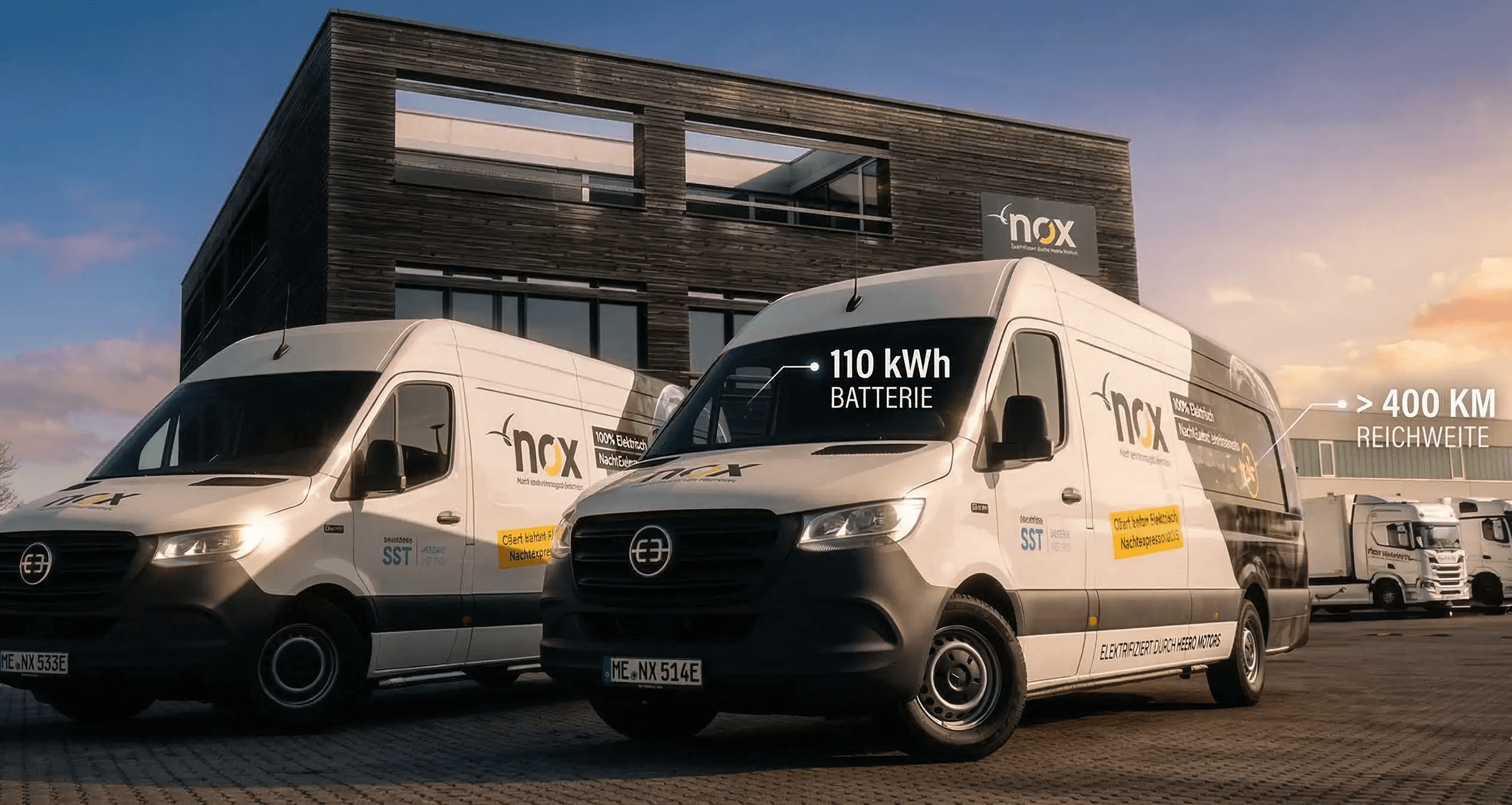
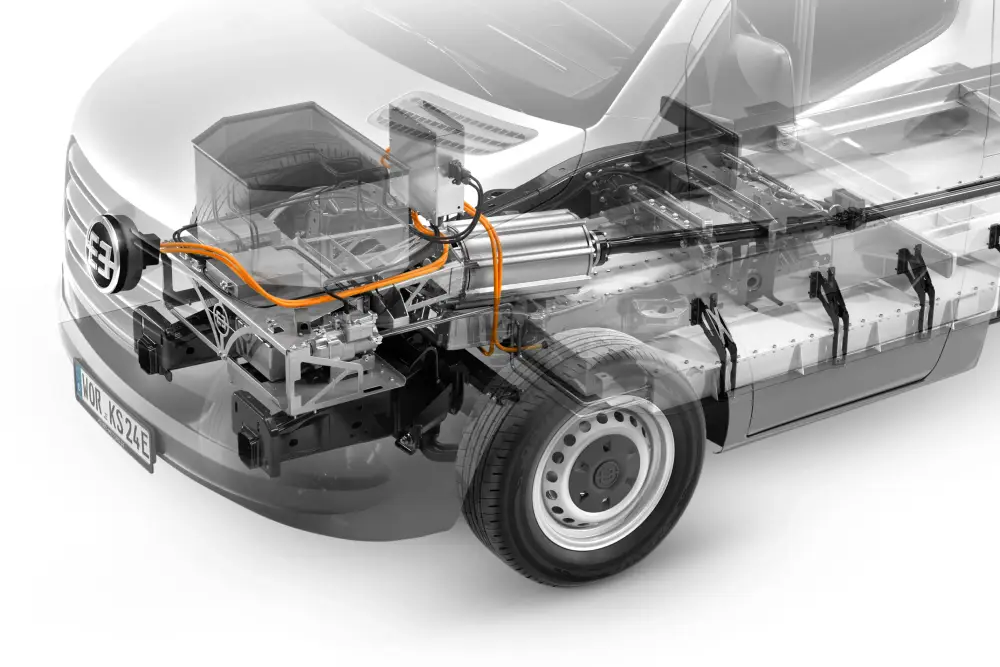
The service life of a vehicle battery is significantly influenced by charging behaviour. A battery health (State of Health, SoH) of over 80 % after 8 years is realistic with proper care. Experts recommend keeping the state of charge (State of Charge, SoC) in normal operation between 20 % and 80 %. Constant charging to 100 % or deep discharges below 10 % considerably accelerate the chemical ageing of the cells. HEERO eDrive systems are equipped with an advanced, self-developed battery management system (BMS) that monitors these processes. Gentle AC charging overnight is considerably more beneficial for maintaining the State of Health than daily DC fast charging. The average degradation is only 2.3 % per year, which underlines the durability of modern batteries. Proper treatment of the battery secures not only range, but also the vehicle's residual value. Intelligent charging is therefore a direct investment in the future of your fleet.
Implement load management to avoid costly peak electricity demand
The simultaneous charging of multiple electric vehicles can quickly overload the connection capacity of a depot. This leads to expensive peak loads that can increase the electricity bill by 20-40%. Intelligent load management dynamically distributes the available power across the charging vehicles. This ensures that all vehicles are ready for use in the morning without overloading the grid connection. HEERO advises fleet operators, together with its cooperation partners from the expert pool, on the implementation of such systems. A central system can prioritise charging processes based on the planned departure time and the required State of Charge. significant savings on network charges can be realised through load management. The implementation typically follows these steps:
Analysis of the existing electrical infrastructure and the grid connection point.
Recording the driving profiles and downtimes of the fleet vehicles (typically 10+ hours overnight).
Defining priorities: Which vehicle needs to be charged to what state of charge by when?
Selection and installation of an intelligent charging and energy management system (LEMS).
Setting charging time windows in order to benefit from favourable night-time electricity tariffs (often after 22:00).
Continuous monitoring and adjustment of the charging strategy for further optimisation.
This process makes optimal use of the existing infrastructure and often avoids costly grid expansion. This turns the charging infrastructure into a predictable and optimisable cost factor.
Understanding and using the charging curve as the key to efficiency
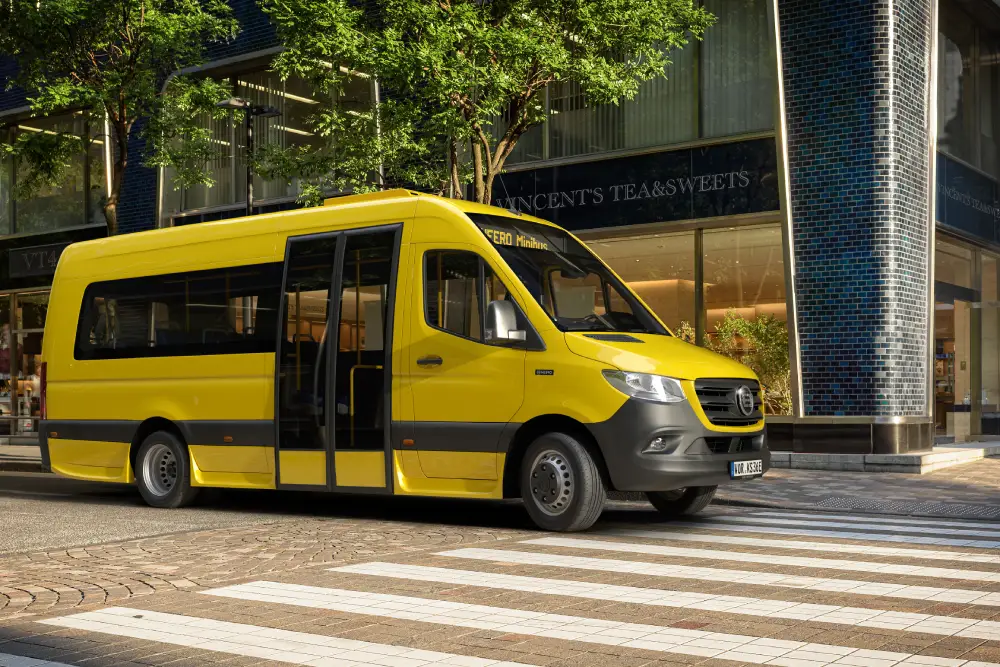
Maximum charging power is only half the story. What matters is the charging curve. It describes how long a high charging power can be maintained before it is reduced to protect the battery. Typically, the highest power is achieved up to a SoC of around 50-60%, after which the curve flattens off. Above 80%, the charging speed drops significantly to protect the battery cells. Understanding the charging curve makes it possible to plan charging stops en route efficiently, as charging from 20% to 80% is often faster than from 80% to 100%. HEERO vehicles such as the Electric MiniBuses, are optimised for a practical charging curve that sustains high power for longer. The following factors have a significant influence on the charging curve:
Battery temperature: An optimal window lies between 20 and 40 °C. The HEERO-BMS heats or cools the battery accordingly.
State of charge (SoC): At low SoC, charging power is at its highest.
Charging infrastructure: The power of the charging station (e.g. 150 kW or 350 kW) is the limiting factor.
Vehicle technology: The vehicle's maximum charging power (e.g. 165 kW at HEERO) determines the charging capacity.
An understanding of the optimal charging speed helps to minimise downtime and maximise vehicle availability.
Realise TCO benefits through strategic depot charging
The biggest TCO advantages of e-mobility are realised through optimised depot charging. Charging overnight at your own depot is significantly cheaper, at an average of 25-30 ct/kWh (reductions to as little as 6 cents are possible), than public rapid charging at 60-80 ct/kWh. For a fleet of 10 vehicles with an annual mileage of 40,000 km per vehicle, the energy cost savings can add up to over €20,000 per year. Strategic charging reduces energy costs per 100 km for an ELCV to under €7, compared with over €14 for a diesel vehicle. In particular, the HEERO D2E conversion (Diesel-to-Electric) enables companies to retain their existing special-purpose bodies while also benefiting from these cost advantages. Compliance with the Clean Vehicles Directive thus becomes not a burden, but an economic opportunity. Planning charging operations at the depot is the decisive factor for profitable fleet electrification. HEERO supports you with a comprehensive fleet analysis and consultancy to fully unlock these potentials.
FAQ
How does frequent DC fast charging affect battery lifespan?
Regular DC fast charging leads to higher battery temperatures and greater stress on cell chemistry. This can accelerate ageing and significantly reduce service life compared with gentle AC charging. For fleet operations, a strategy is therefore recommended that primarily relies on AC depot charging and uses DC charging for unscheduled, time-critical deployments.
What is the difference between gross and net battery capacity?
Gross capacity refers to the total physically installed amount of energy in the battery. Net capacity is the portion that can actually be used. Manufacturers reserve a buffer (typically 5–10%) to protect the battery from harmful deep discharge and overcharging. This helps ensure a long service life and is a quality characteristic of the battery management system.
Can our existing electrical infrastructure support a charging infrastructure for the fleet?
That depends on the available grid connection capacity and the number of vehicles. A detailed site analysis is essential. Often, an expensive upgrade to the grid connection can be avoided through intelligent, sequential load management, which charges the vehicles one after another overnight. HEERO offers specialised depot charging consultancy for this purpose, working with partners from its pool of experts.
How does the outside temperature affect the charging of electric vehicles?
Very low temperatures (below 0 °C) slow the chemical processes in the battery, reducing charging performance. Modern electric vehicles such as those from HEERO have thermal management that preheats the battery to an optimum temperature (approx. 20–25 °C) before charging, in order to ensure high and stable charging performance even in winter.
What role does the battery management system (BMS) play during charging?
The BMS is the battery's control centre. It continuously monitors the voltage, current and temperature of each individual cell. During charging, it ensures an even distribution of charge (balancing), protects against overheating, overcharging and deep discharge, and optimises the charging curve. A high-quality BMS is crucial for safety and for maximising battery service life.
How do I plan charging for a fleet with unpredictable routes?
For fleets with dynamic routes, a combined strategy is crucial. The foundation is overnight depot charging, allowing the vehicles to start at 80% SoC. For longer journeys, strategic DC fast-charging points are identified along the routes. Telematics systems can transmit the current SoC and proactively suggest charging stops for drivers, which can be ideally integrated into the statutory 45-minute rest breaks.
More useful links
The Federal Ministry for Economic Affairs and Climate Action offers a comprehensive dossier on the topic of electric mobility.
The Federal Ministry for Economic Affairs and Climate Action provides information on the framework conditions and incentives for electric vehicles.
The Federal Ministry for Digital and Transport provides the Federal Government’s Master Plan for Charging Infrastructure 2.
The Federal Network Agency offers detailed information on the topic of e-mobility.
The Federal funding database (BMWi) lists funding programmes for research and development in the field of electric mobility.
Ayvens highlights international total cost of ownership (TCO) for vehicles.
Firmenauto presents a TCO comparison for electric cars in Europe (Car Cost Index).
Autoflotte offers a TCO analysis for company cars, comparing electricity and fuel.
Vision Mobility reports on the Car Cost Index 2025 and the development of e-mobility in Germany.