On-the-go charging: How fleet operators strategically plan electric deployments and reduce TCO
On-the-go charging: How fleet operators strategically plan electric deployments and reduce TCO

Transitioning to electric commercial vehicles presents fleet managers with new challenges, particularly when planning long-distance operations.
The topic briefly and concisely
A data-based analysis of the real-world range using telematics is the foundation for any reliable charging and route planning.
Strategic route planners that take charging power (e.g., 165 kW DC) and real-time charger availability into account minimize downtime.
The combination of cost-effective depot charging (AC) and targeted fast charging (DC) on the road significantly reduces the total cost of ownership (TCO).
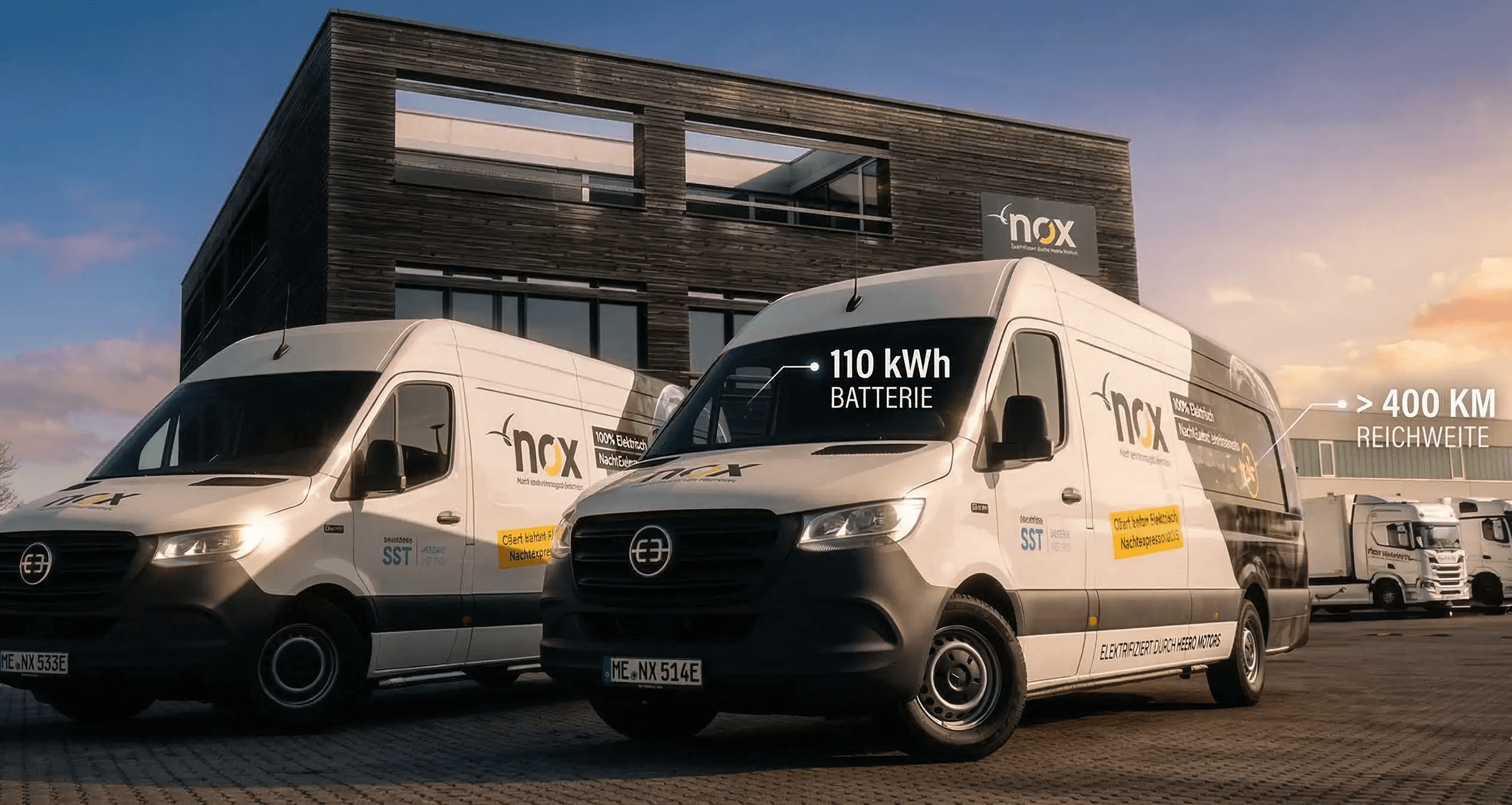
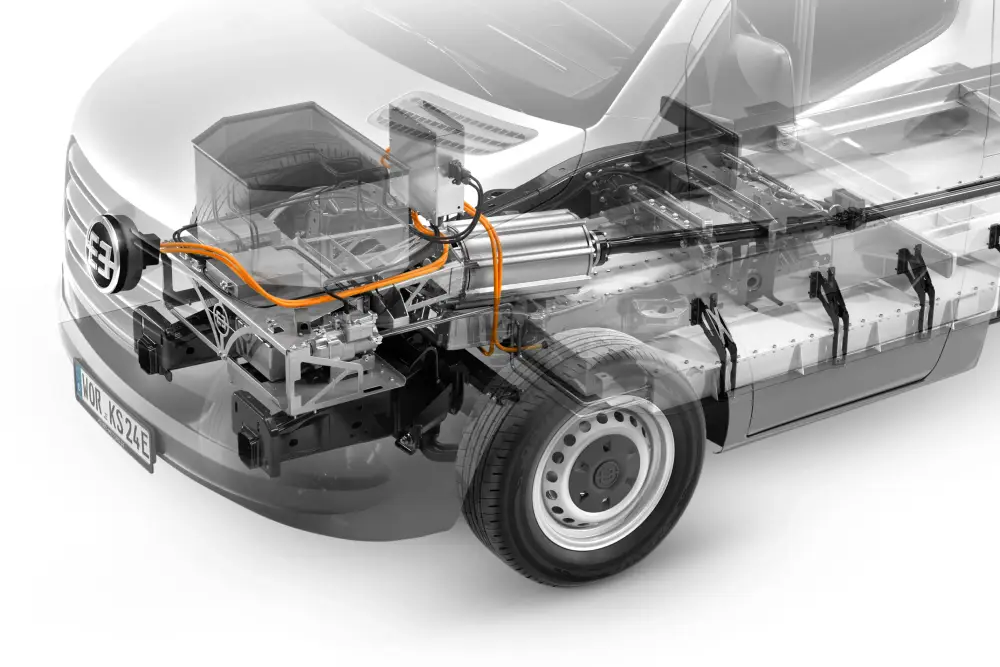
The electrification of commercial vehicle fleets is essential for municipalities and companies, not least due to the requirements of the Clean Vehicles Directive . However, the success of the transition depends significantly on a single operational challenge: the efficient planning of charging on the go. Without a precise strategy, long downtimes and declining productivity loom. Data-driven charging planning transforms this hurdle into a competitive advantage. It not only secures the operational readiness of the vehicles, such as the HEERO D2E (Diesel-to-Electric) Sprinter with a range of up to 300 km, but also optimizes TCO through the intelligent use of charging infrastructure and vehicle data. Learn how to professionalize your route planning.
The foundation of planning: Determining the real-world range of your e-fleet
The WLTP range is a laboratory value; in daily fleet operations, facts are what matter. For a HEERO D2E (Diesel-to-Electric) conversion based on a Sprinter 907, the range is up to 300 km. However, factors such as payload, ambient temperature, and topography significantly influence this value. In winter, the energy required to heat the battery and passenger cabin can reduce the range by 15 to 20 percent. A precise analysis of your vehicles' telematics data is therefore the first step toward valid route planning.
Modern telematics systems provide real-time information on energy consumption under real-world conditions. They capture data on speed, payload, and driver behavior. This data enables the creation of precise consumption profiles for typical routes. This allows you to reliably predict the State of Charge (SoC) upon arrival at the destination. This data-driven understanding of vehicle range forms the basis for any efficient tour planning and prevents unplanned stops. Precise knowledge of these parameters is crucial for tackling the next phase, strategic route planning.
Strategic Route Planning: More than just finding the next charging station
Efficient charging on the road begins long before the journey starts. It requires the use of intelligent route planners specifically designed for e-vehicles. These tools consider not only the distance but also the projected energy consumption and the availability of suitable charging infrastructure. In Germany, fleet operators already have 479 public charging stations suitable for heavy commercial vehicles at their disposal. The challenge lies in choosing the right ones.
Optimal planning integrates charging stops seamlessly into operations, ideally during legally mandated driver breaks. A HEERO D2E Sprinter charges with 165 kW direct current (DC). This means a charging stop from 20 to 80 percent SoC typically takes only 60 to 90 minutes. Modern planning software can account for these charging times and optimize the route accordingly. The following aspects are crucial when selecting the software:
Dynamic route adjustment based on real-time traffic data.
Filtering of charging stations by connector type (e.g., CCS) and charging power (e.g., >100 kW).
Display of real-time availability of charging stations to avoid waiting times.
Integration of charging cards and roaming networks to ensure payment compatibility.
By linking vehicle telematics with intelligent route planning, operational efficiency becomes predictable. This lays the foundation for optimizing the actual charging process.
The charging stop: Maximum efficiency in minimum time
The charging process itself is a critical factor for productivity. The goal is to charge the maximum required amount of energy in the shortest possible time. Understanding the charging curve is crucial here. The highest charging capacity is usually achieved in the SoC window between 20 and 80 percent. Charging a vehicle like the HEERO eTransporter with its 110 kWh battery beyond this point disproportionately extends downtime. It is often more time-efficient to plan another short stop than to wait for 100 percent.
Choosing the right charging station is equally important. A 150 kW or 300 kW HPC (High-Power Charging) station is ideal for commercial vehicles. Using such a station can significantly reduce charging times compared to a 50 kW station. Fleet managers should train their drivers on how to start the charging process correctly and the differences between AC and DC charging. Good preparation includes:
Checking the compatibility of the charging card or app before arrival.
Knowing the position of the charging port on your own vehicle.
Understanding that the charging capacity is determined by both the station and the vehicle.
Bringing the battery up to operating temperature before fast charging by driving, especially in winter.
An optimized charging stop is short and effective, ensuring the vehicle is quickly ready for use again. This operational excellence on the road is complemented by a smart strategy at the home depot.
Depot and Opportunity Charging: The TCO-Optimized Combination
The most economical charging strategy combines cost-effective depot charging with targeted fast charging on the go. Charging overnight at the company depot (depot charging) with 22 kW alternating current (AC) is the most cost-effective method to start the day with vehicles at 100 percent energy. This already fully covers a major part of the daily routes, often up to 150 km and more. Electricity costs in your own depot are typically 30-50% lower than at public fast-charging stations.
Fast charging on the go should be used strategically for trips that exceed the depot charge. It serves to extend the daily range, not to fully recharge the battery. This mix minimizes dependency on expensive public charging infrastructure and reduces TCO. A fleet analysis helps to find the optimal ratio. It answers how many vehicles can primarily be charged in the depot and which ones require regular fast-charging planning. Gentle charging of the battery is also taken into account. This economic consideration becomes additionally relevant due to statutory frameworks.
Regulatory Framework: How the CVD is Driving Charging Planning
The EU's Clean Vehicles Directive (CVD) is more than just a recommendation; it is a legal obligation. Implemented in Germany through the Clean Vehicles Procurement Act (Saubere-Fahrzeuge-Beschaffungs-Gesetz), it mandates binding minimum quotas for low-emission vehicles in public procurement. By 2025, for example, 38.5% of newly procured light commercial vehicles must be "clean." For buses, the quota is as high as 45%. This creates an immense pressure to act for municipalities and their service providers.
A professional strategy for charging on the go is therefore no longer an option, but a necessity to meet legal requirements. Fleets that do not have their charging and route planning under control risk operational inefficiency and fail to achieve the required operational readiness. The D2E conversion of existing special-purpose vehicles, as carried out by HEERO for the Sprinter 907 in a maximum of 10 working days (model series 907 only), is a fast way to meet CVD quotas. Well-thought-out charging planning ensures that these converted vehicles reach their full potential and that the TCO benefits of e-mobility are realized. Proper planning is the key to success.
FAQ
How significantly does the payload impact the range and charging planning?
Payload is a critical factor. A high payload increases rolling resistance and therefore energy consumption per kilometer. For route planning, fleets should calculate with a 10-20% increase in consumption when fully loaded. Telematics data helps to precisely quantify this effect for specific vehicles and routes, allowing charging stops to be planned earlier accordingly.
What role does battery preconditioning play when charging on the go?
Pre-conditioning is crucial for charging efficiency, especially in winter. A battery pre-heated to operating temperature (approx. 20-40°C) can immediately accept the full DC charging capacity. Many electric commercial vehicles start this process automatically when a fast-charging station is set as the destination in the navigation system. This can significantly reduce charging times.
What is more important: the charging capacity of the vehicle or the charging station?
Both values are important, but the weakest link determines the charging speed. A HEERO D2E Sprinter with 165 kW charging capacity will charge at a maximum of 165 kW on a 300 kW charging station. Conversely, the same vehicle will only charge at 50 kW on a 50 kW charging station. For efficient planning, the vehicle's capabilities must be matched with a charging station that offers at least the same power output.
How do I find reliably functioning and available charging stations?
Specialized e-route planners and charging apps such as 'A Better Routeplanner' or 'Chargemap' are indispensable for this. They do not only display locations, but often also the real-time status (available/occupied/out of service) reported by other users. For fleets, we recommend professional solutions with connectivity to roaming providers like Hubject or Gireve, ensuring high data quality.
Does it make sense to generally charge to 100% while on the road?
No, this is generally inefficient. For most electric vehicles, the charging speed drops rapidly once the SoC exceeds 80%. Charging from 80% to 100% can take almost as long as charging from 20% to 80%. For efficient tour planning, it is usually more time-effective to charge only up to 80% and schedule an additional short charging stop if needed. This also helps preserve the battery.
How can I monitor and control charging costs while on the road?
Costs at public charging stations vary significantly. The best way to maintain control is by using fleet charging cards, which offer fixed rates or transparent billing models across various providers. These systems, often integrated into telematics solutions, allow for centralized billing and cost analysis. This is how you avoid unpleasant surprises from high ad-hoc charging prices.
More useful links
Federal Environment Agency offers detailed information on electric commercial vehicles.
Fraunhofer ISI publishes a press release on electromobility in Germany in 2023.