Electric BoxVan Retrofit: Reduce TCO & Retain Custom Bodies

Rising diesel costs and looming access restrictions threaten the profitability of your furniture delivery vehicles. A D2E (Diesel-to-Electric) conversion protects your investments in expensive custom bodies and significantly reduces your Total Cost of Ownership (TCO).
Topics on this page
The topic briefly and concisely
Protect investments of over €50,000 in box bodies through a D2E conversion instead of an expensive new purchase with repeated custom outfitting.
Significantly reduce your fleet's Total Cost of Ownership (TCO) through substantially lower energy, maintenance, and tax burdens.
Meet the requirements of the Clean Vehicles Directive (CVD) promptly and efficiently by converting your existing fleet in just 10 days (907 model series only)...
For furniture removal companies and logistics companies, specialized vans, especially those with expensive box bodies, represent significant capital value. The need to decarbonize fleets and meet statutory requirements such as the Clean Vehicles Directive (CVD) often leads to an economic dilemma. Purchasing new electric vans not only means high acquisition costs, but also the renewed, expensive manufacture of proven bodies, which can quickly cost over €50,000 per vehicle. The HEERO conversion for Mercedes-Benz Sprinters (Model 907) offers a pragmatic solution that avoids this loss of capital, optimizes TCO, and secures the operational readiness of your fleet.
TCO Optimization: Significantly reduce operating costs
The total cost of ownership (TCO) is the decisive key figure for fleet managers. An electric conversion of a furniture van significantly reduces these costs. Studies show that the operating costs for electric vans can be considerably lower than those of diesel vehicles. This is the result of several factors:
Energy costs: Electricity costs per 100 kilometers are typically 40-60% lower than the corresponding diesel costs.
Maintenance and repair: An electric motor has significantly fewer moving parts than an internal combustion engine. This eliminates oil changes and the replacement of wear parts such as exhaust systems, which can significantly reduce maintenance costs.
Taxes and duties: Electric vehicles benefit from tax advantages and are not affected by rising CO₂ prices.
By electrifying an existing diesel van instead of buying a new one, capital costs are kept low, which maximizes the TCO advantages. Amortization of the conversion costs is thus typically achieved within 4 to 6 years. This purely economic perspective shows how the conversion increases profitability per vehicle.
Preserving Value: Protect your investment in specialized bodies
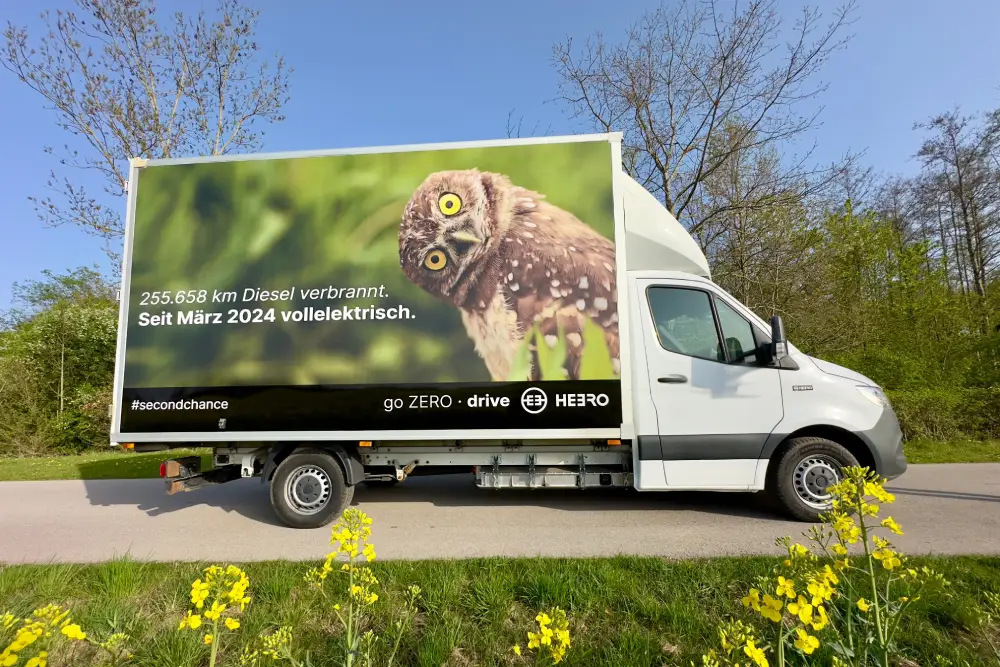
A furniture transporter is more than just a base vehicle; its value is significantly determined by the box body and special interior fittings. These bodies, which often cost between €30,000 and €50,000, are perfectly tailored to logistical processes. Purchasing a new e-transporter would destroy this investment and require another, costly custom fabrication. The HEERO conversion for models like the Sprinter 313, 316, or 319 fully preserves this capital. The entire body remains untouched, while only the drivetrain is replaced. This circular economy approach extends the lifespan of the entire vehicle by many years.
The process is designed for maximum efficiency:
Analysis of the base vehicle (Model 907).
Removal of the diesel drivetrain.
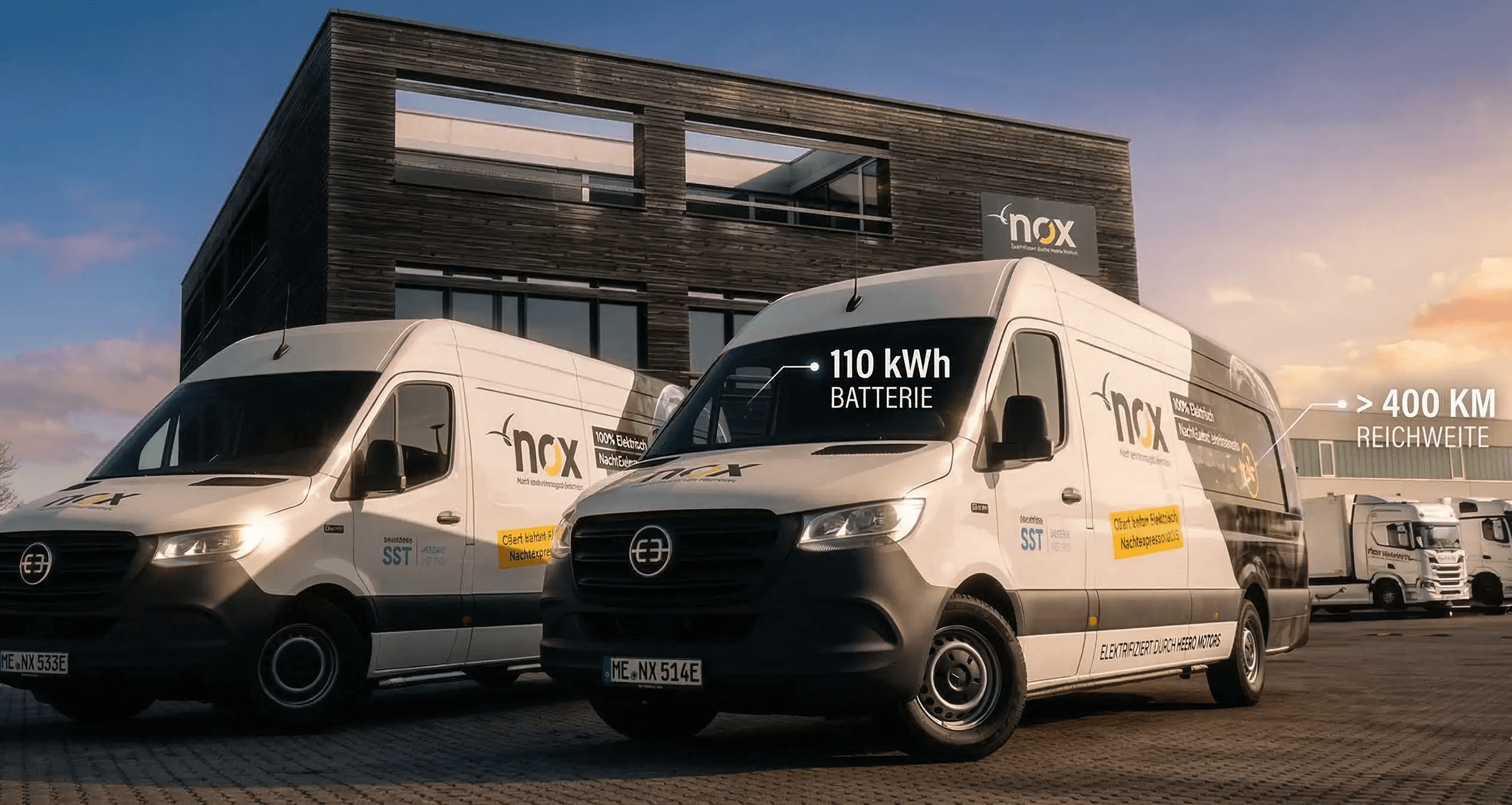
Integration of the HEERO e-drive with a 110 kWh battery.
System integration and quality testing.
For a Mercedes-Benz Sprinter of the 907 model, this entire process takes a maximum of 10 working days (only model series 907). This minimizes downtime, and the vehicle is quickly back in productive use. You can find more information about the possibilities under conversion solutions for special vehicles. The continued use of proven bodies secures not only capital but also well-established workflows.
Legal Compliance: Safely Meeting the Clean Vehicles Directive
The Clean Vehicles Directive (CVD), implemented in Germany by the Clean Vehicles Procurement Act (SaubFahrzeugBeschG), creates significant pressure to act on public and private fleet operators. Until the end of 2025, 38.5% of vehicles procured as light commercial vehicles had to be classified as "clean". From 2026, this 38.5% must even be completely emission-free. A Möbeltransporter Elektro Umrüstung is the fastest and most capital-efficient way to meet these quotas. Instead of waiting for long delivery times for new electric vehicles, existing vehicles can be converted within days. This enables timely compliance with legal requirements without disrupting operations.
The conversion of an existing vehicle counts as the procurement of a clean vehicle and helps to avoid penalties or exclusion from public tenders. Especially for furniture moving companies, which often work for municipalities or public institutions, CVD compliance is a critical competitive factor. The electrification of existing fleets is therefore a strategic decision to secure future contracts. The conversion sets the course for a legally compliant and sustainable future.
Practical Suitability: Range and Charging in Daily Fleet and Logistics Operations
Concerns about insufficient range are a common worry when it comes to electrification. The HEERO Sprinter, with its 110 kWh battery, offers a practical range of up to 425 km (WLTP). For the typical use of a furniture transport vehicle, which often consists of a longer journey and many short stops in urban areas, this is more than sufficient for a full working day. The real WLTP range of commercial vehicles easily covers daily distances of 150-250 km.
The charging concept is designed for the operational processes of freight forwarders:
Depot Charging (AC): Overnight, the vehicle is charged at the depot with 22 kW and starts every morning with 100% battery capacity.
DC Fast Charging: During legally prescribed driver breaks, the battery can be charged to 80% at a DC station with up to 165 kW in 60-90 minutes.
This charging capacity ensures maximum flexibility even during unforeseen longer trips. The combination of high range and fast charging makes the converted electric transporter a reliable tool in demanding daily logistics. Service is secured by the mobile "Flying HEEROs," who perform maintenance work directly on site and minimize downtime. This ensures operational efficiency at all times.
FAQ
Which Sprinter models can be used for a BoxVan Diesel-to-Electric conversion?
The HEERO D2E (Diesel-to-Electric) conversion specializes in the Mercedes-Benz Sprinter 907 series. Specifically, we support the 313, 316, 319, and 324 base vehicles. This focus enables a highly efficient and standardized conversion process that is completed in a maximum of 10 working days (907 series only), ensuring the highest quality standards.
Is the 300 km range sufficient for the daily operations of a furniture removal company?
Yes, a range of up to 300 km (WLTP) is highly suitable for typical daily logistics operations. Most daily routes average between 150 and 250 km, providing a substantial buffer for unexpected trips or traffic-related detours. With overnight depot charging, the vehicle starts every day fully operational.
What happens to my expensive box body during the Diesel-to-Electric conversion?
Your box body and the entire interior fitting remain completely intact and untouched during the D2E conversion. Our process focuses exclusively on replacing the drivetrain. Your valuable investment in the special body is 100% protected and can be used seamlessly in the electrified vehicle.
How does the conversion affect the payload of the BoxVan?
The vehicle's payload is affected by the conversion, but remains absolutely practical for most furniture transport applications. Prior to every Diesel-to-Electric (D2E) conversion, we conduct a detailed analysis of your specific requirements to ensure that the remaining payload after the integration of the battery and eDrive is sufficient for your transported goods. An individual fleet analysis will clarify this point with binding certainty.
What warranty does HEERO offer on the electric conversion?
HEERO offers a comprehensive warranty on all components installed as part of the D2E conversion, including the battery and electric drivetrain. This secures your investment and typically ensures the reliability and longevity of the converted vehicle. For details on the warranty conditions, please schedule a personal consultation.
How long does the Diesel-to-Electric conversion of a Sprinter BoxVan take?
The efficiency of our process is a core advantage. The D2E conversion of a Mercedes-Benz Sprinter (model series 907) is typically completed within a maximum of 10 working days. This short downtime minimizes operational disruptions, ensuring your vehicle is quickly back on the road and generating revenue for your business.
More useful links
NOW GmbH offers a database for TCO (Total Cost of Ownership) cost analyses for various vehicle types, including electric vehicles.
The Verbraucherzentrale Bundesverband (vzbv) provides a summary of a TCO study that examines the total costs of electric cars in comparison to combustion engine vehicles.
The Öko-Institut offers a comprehensive report on the economic efficiency of electromobility.
The Bundesamt für Logistik und Mobilität (BALM) provides information on the Climate Protection and Mobility (KSNI) funding program.
Statista provides statistics on the stock of trucks with alternative drivetrains in Germany.
The Kraftfahrt-Bundesamt (KBA) provides tables with general data on the vehicle stock in Germany.
The Umweltbundesamt publishes an analysis of the environmental balance of motor vehicles.
Kreislaufwirtschaft-Deutschland provides information on the circular economy strategy in the field of vehicles, batteries, and mobility.