Depot charging for the electric fleet: reducing TCO and meeting CVD quotas

The Clean Vehicles Directive requires significantly cleaner vehicles in fleets. Strategic depot charging is no longer an option, but an economic necessity in order to reduce total cost of ownership (TCO) and secure the operational readiness of your electric fleet.
Topics on this page
The topic briefly and concisely
The Clean Vehicles Directive (CVD) will require ever-higher quotas for clean light commercial vehicles from 2025 onwards. A similarly close look at depot charging is also necessary.
Intelligent depot charging can significantly reduce energy costs per kilometre and is a key factor in optimising TCO.
Dynamic load management avoids costly grid upgrades and reduces the capital expenditure for charging infrastructure by over 35%.
The electrification of commercial vehicle fleets is becoming unavoidable for municipalities and businesses. Legal requirements such as the Clean Vehicles Directive (CVD) are creating significant pressure to act and, from 2025 onwards, will require increasing quotas for light commercial vehicles. However, simply replacing vehicles is not enough. The key to success lies in well-designed charging infrastructure directly at the depot. A professionally planned depot-charging system for your electric fleet not only secures vehicle availability, but also becomes the decisive lever for optimising total cost of ownership (TCO). It turns a regulatory obligation into a measurable competitive advantage.
The legal framework: Why the CVD now compels action
The Clean Vehicles Directive (CVD) is the key driver behind the electrification of public and private fleets in Germany. The associated Clean Vehicles Procurement Act (SaubFahrzeugBeschG) defines binding minimum quotas for new procurement. As early as 2025, for example, 45% of all new buses and 38.5% of light commercial vehicles had to be classified as “clean”. And the quotas keep rising. These requirements apply not only to local authorities, but also to sectoral contracting entities such as postal and parcel delivery operators or waste collection companies.
Failure to meet these quotas entails considerable risks for the organisations concerned. The purchase of new electric vehicles, including in the commercial vehicle fleet, is therefore essential if these targets are to be achieved. Strategic planning of fleet electrification is therefore crucial.
However, these legal requirements also make it essential to address the right charging infrastructure. Without a functioning charging concept, any electrification strategy may still not be ineffective, but it will not be comprehensively efficient.
Cost-effectiveness in focus: reduce TCO through intelligent depot charging
Total Cost of Ownership (TCO) is the decisive key figure for fleet managers. While the acquisition costs for electric vehicles can often still be higher, the savings undisputed lie in ongoing operations. Depot charging of the electric fleet overnight is the greatest leverage here. Electricity costs per kilometer can be significantly reduced when using cheap nighttime electricity. Studies show that costs per kilometer with intelligent depot charging can be as low as around 16 cents.
Compared to diesel vehicles, many variable costs are also eliminated. Maintenance costs for commercial electric vehicles and electric buses are typically significantly lower, as components such as exhaust systems, oil filters, or clutches are not present. The CO₂-based truck toll, which has been in effect since December 2023, is also waived for locally emission-free vehicles, further reducing operating costs. Significant savings in energy costs per kilometer are realistic with optimized depot charging. These TCO advantages make electrification an economically sustainable decision. Planning the right depot charging planning is the foundation for this.
The basis for these savings is a carefully planned charging infrastructure that avoids expensive peak loads.
The technical basis: grid connection, charging power and load management
A high-performance charging infrastructure at the depot is more than the sum of its parts. It begins with an analysis of the grid connection. A single 22 kW AC wallbox places the same strain on the grid as six electric ovens. When an entire fleet is involved, it quickly becomes clear that the available capacity is often not sufficient. Increasing the grid connection capacity is, however, expensive and time-consuming. This is where intelligent load management comes in, optimally distributing the available power and often making costly grid expansion unnecessary.
Dynamic load management can significantly reduce infrastructure investment costs by avoiding expensive transformer upgrades. It measures the building’s total power consumption in real time and only releases surplus power for charging processes. This avoids expensive load peaks that drive up electricity costs for businesses. The right charging hardware is just as decisive. A well-conceived charging infrastructure takes the following aspects into account:
AC charging points (22 kW): Ideal for overnight charging of most vans within 5-7 hours.
DC charging points (up to 165 kW): Necessary for rapid interim charging, to bring vehicles back to 80% within 30-40 minutes.
Scalability: The infrastructure must be able to grow with the fleet without needing to be redesigned every time.
Software integration: A central system for controlling and monitoring all charging processes is essential for efficiency.
The HEERO experts, in combination with our external expert pool, advise fleet operators on the design of such a bespoke charging infrastructure for electric buses, provided HEEROs become part of the fleet. This technical foundation makes it possible to operate, alongside the HEEROs, the other electric fleet vehicles reliably and cost-effectively as well.
The HEERO approach: maximum performance and holistic charging concepts
HEERO relies on complete in-house development of the eDrive system, which is designed for a range of over 300 km with its 137 kWh battery. This approach guarantees expertise from a single source.
However, our range of services goes beyond the vehicle. We understand that successful electrification requires a well-thought-out strategy for fleet depot charging. That is why, together with our partners, we offer a paid depot charging consultation upon request. Our experts analyze your location, driving profiles, and energy requirements to develop a tailored charging concept. This includes the planning of the appropriate AC and DC charging infrastructure as well as the implementation of intelligent load management.
We offer a complete solution from a single source:
Fleet analysis: Evaluation of the electrification potential of your existing fleet.
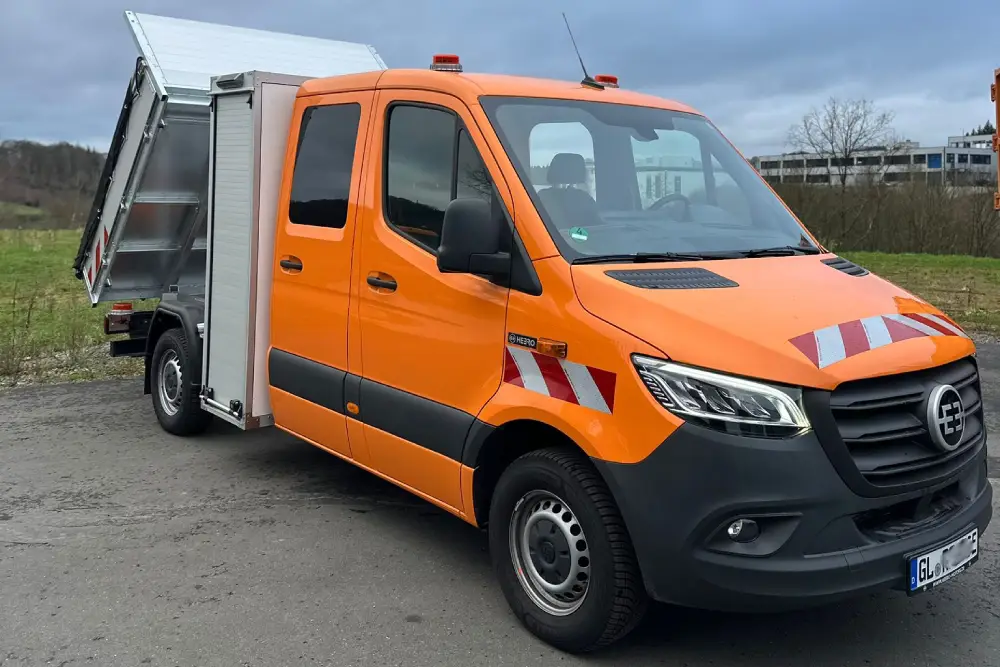
Conversion: Fast and efficient conversion of your Sprinter (minibuses based on model 907).
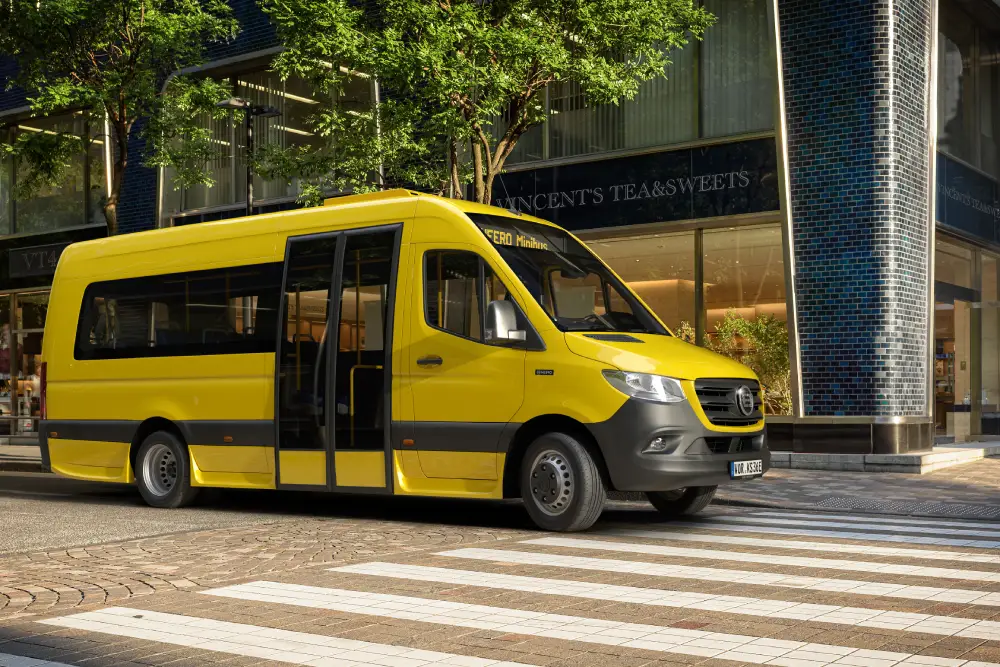
New vehicles: Supplementing the fleet with HEERO buses (e.g. mid-low floor with a range of over 300 km).
Charging infrastructure planning: Conception and design of the entire wallboxes in the depot.
Load management implementation: Installation of software to avoid peak loads and control costs.
This holistic approach ensures that your electric fleet is operated not only in compliance with the law, but also with maximum economic efficiency.
FAQ
What is the biggest mistake when setting up charging infrastructure in the depot?
The most common mistake is underestimating the total energy demand and failing to implement dynamic load management. Many fleet operators install wallboxes only, without taking the grid connection and peak loads into account. This often leads to extremely high electricity costs or even an overloaded grid connection, which disrupts operations. A professional analysis of the connection capacity and the driving profile is therefore essential before any installation.
How long does it take to charge a HEERO at the depot?
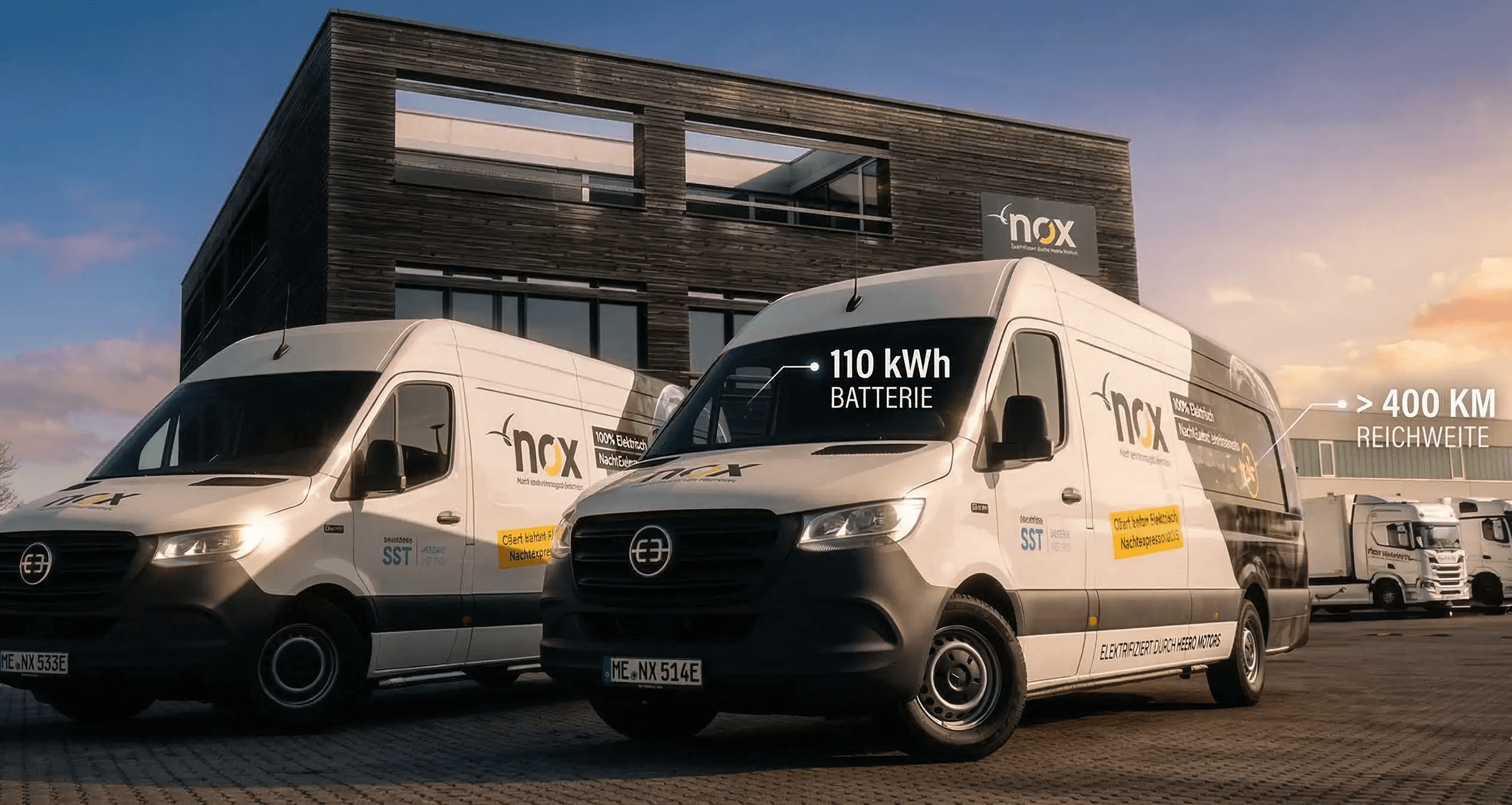
Charging time depends on the charging technology. At a typical 22 kW AC wallbox, which is ideal for overnight charging, a HEERO D2E Sprinter with a 110 kWh battery needs around 5-6 hours from 0 to 100%. At a 165 kW DC fast charger, the same vehicle can usually be charged to 80% in 60 to 90 minutes, which is ideal for rapid deployments during the working day.
What happens if the depot's electricity demand exceeds the grid connection capacity?
Without a load management system, this would trigger the fuses and, in the worst case, lead to a power outage. A dynamic load management system actively prevents this. It automatically reduces the charging power of the vehicles when the building’s overall consumption increases, and raises it again when capacity becomes available. This ensures the grid connection is never overloaded and operations continue to run stably.
What range can I expect from a HEERO?
A HEERO eDrive system with the 137 kWh battery achieves a range of over 300 km (WLTP). This range is more than sufficient for most use cases in regional distribution transport, public transport or municipal services. Studies show that around 40–50% of lorries travel less than 300 km a day, meaning the vehicle can be conveniently charged at the depot at the end of the day.
More useful links
The European Commission provides comprehensive information on the Clean Vehicles Directive (CVD), which promotes the market for clean and energy-efficient vehicles.
The Federal Ministry for Digital and Transport provides information on climate-friendly mobility within the framework of EU transport policy from a German perspective.
The NOW GmbH provides a factsheet comparing different drive systems for passenger cars.
The National Centre for Charging Infrastructure coordinates the expansion of the charging infrastructure in Germany and provides comprehensive information on this topic.
The Federal Network Agency provides information on electromobility, particularly with regard to the grid infrastructure and its requirements.
The Federal Motor Transport Authority (KBA) publishes statistics on electromobility in Germany.
The Federal Environment Agency (UBA) offers a wide range of information and articles on the subject of electromobility.
The KfW Group provides information on funding programmes for the charging infrastructure of companies.
The BDEW (German Association of Energy and Water Industries) provides the electromobility monitor with current data and facts on electromobility in Germany.