Electric Tipper: Lower TCO and meet 2025 CVD quotas through D2E conversion

Rising operating costs and the Clean Vehicles Directive (CVD) are putting fleet operators under pressure.
The topic briefly and concisely
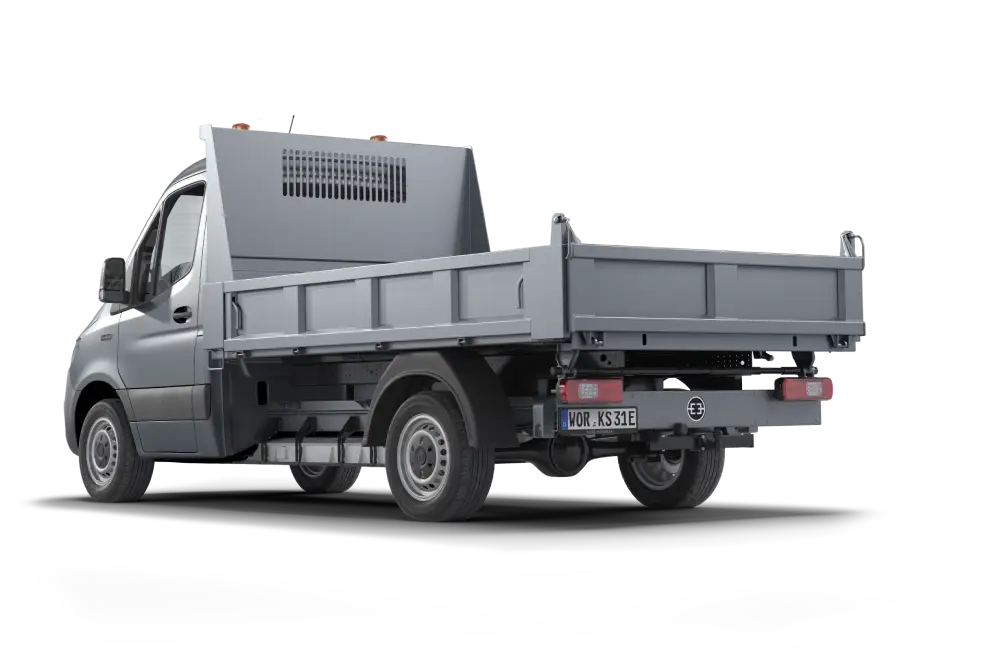
The D2E conversion of a Sprinter Tipper preserves the value of the expensive custom body and is significantly more cost-effective than purchasing a new vehicle.
An electric tipper significantly reduces operating costs (TCO) through considerably lower maintenance and energy costs.
By converting, municipalities and public enterprises can quickly and economically meet the CVD procurement quota of 38.5% for 2025.
For fleet managers in municipalities and the construction industry, the Mercedes-Benz Sprinter as a tipper is an indispensable tool. However, high diesel prices and the procurement quotas of the Clean Vehicles Directive (CVD) coming into force from 2025 require a rethink. Purchasing a new electric vehicle often means losing the expensive, specialized tipper body. With the D2E (Diesel-to-Electric) conversion (Diesel-to-Electric), HEERO offers a pragmatic solution: We electrify your existing Sprinter 907 in a maximum of 10 working days (model series 907 only), preserve the full value of your body, and make your fleet future-proof.
The Double Pressure: Rising Operating Costs and the Clean Vehicles Directive
Fleet operators of diesel tippers are faced with two central challenges that are increasingly making operations uneconomical. Operating costs are rising continuously, while the regulatory framework is tightening. Energy costs alone are a significant factor, as electricity per kilometer is typically cheaper than diesel.
At the same time, the Clean Vehicles Directive (CVD), implemented in Germany through the Clean Vehicles Procurement Act (SaubFahrzeugBeschG), obligates public authorities to meet fixed quotas. By the end of 2025, 38.5% of all newly procured light commercial vehicles must be classified as "clean". This quota poses a major hurdle for many municipalities, as budgets are limited and replacing proven special-purpose vehicles means a high capital commitment. Non-compliance with this quota is no longer an option. Time is running out for pragmatic and economical solutions to keep fleets legally compliant and profitable. These regulatory requirements are significantly accelerating the transition towards alternative drives.
Preserving Value Over New Purchases: D2E Conversion as a Strategic Advantage
The biggest hurdle in electrifying special-purpose vehicles like an electric tipper is the loss of the body structure. A D2E conversion bypasses this problem completely. Instead of writing off a proven vehicle with a body structure often valued at over €50,000, only the drive unit is replaced. This circular economy approach conserves resources and protects your budget.
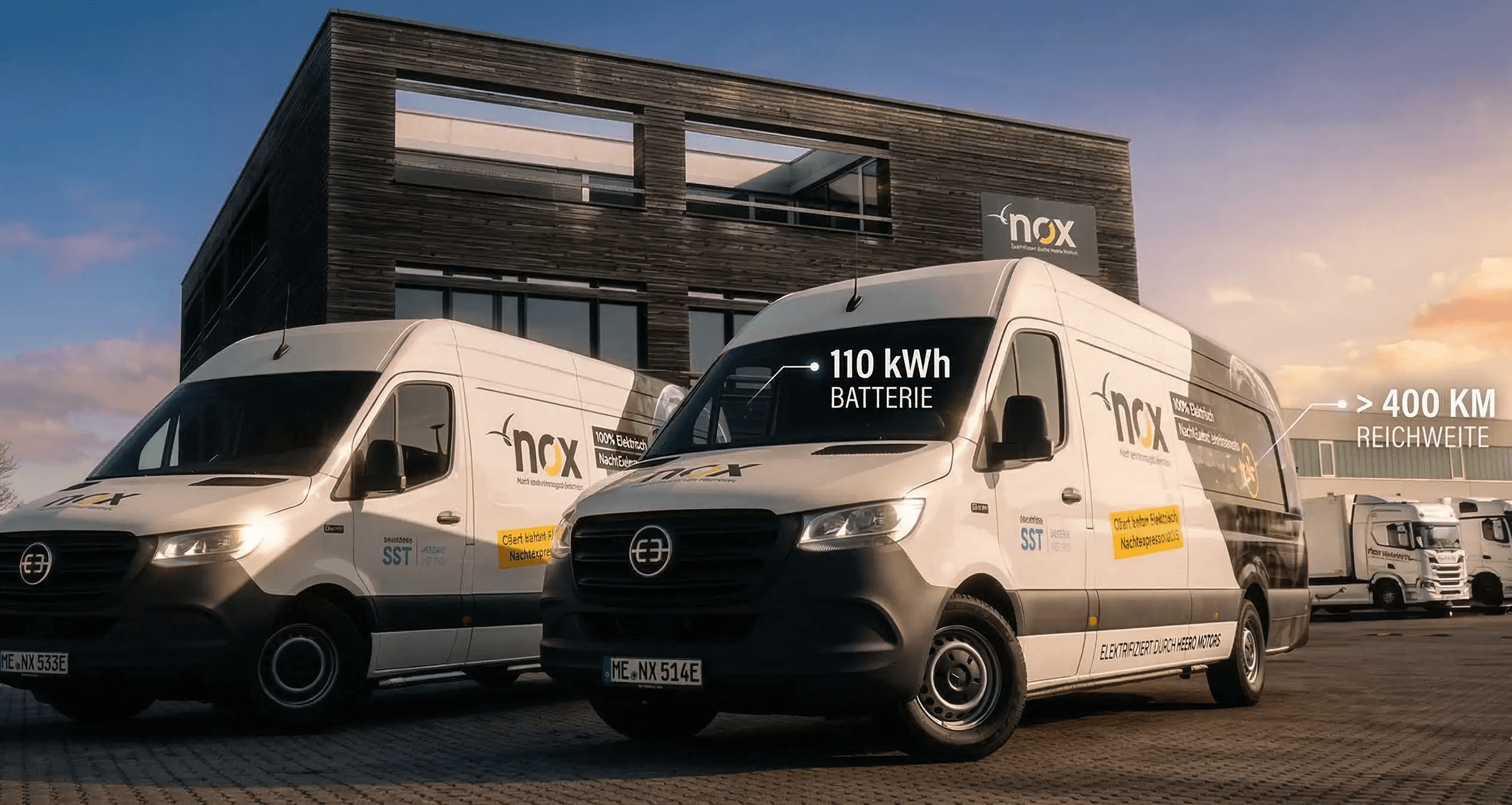
The process at HEERO is designed for maximum efficiency and takes only about 10 working days for a Sprinter model 907 (only model series 907). The vehicle is equipped with a 110 kWh battery pack and a powerful eDrive. The result is a fully Electric FlatBed with a realistic range of up to 300 km. The advantages of this method are clear:
Value Retention: The expensive and often custom-built tipper body is 100% preserved.
Cost Savings: The conversion costs are significantly lower than purchasing a new vehicle with a comparable body.
Time Savings: Instead of months of delivery time for new vehicles, your converted Electric Sprinter is quickly ready for use again.
Proven Base: You continue to use the familiar and reliable chassis of the Mercedes-Benz Sprinter.
This method offers a certified and proven technology. You are not investing in an experiment, but in a sustainable solution that has already proven itself in many fleets. This makes the conversion a smart alternative that combines economic and ecological goals.
TCO Analysis: How the Electric FlatBed lowers operating costs
The Total Cost of Ownership (TCO) is the decisive key figure for the economic viability of a fleet. A converted electric flatbed/tipper offers significant advantages compared to its diesel counterpart. The higher acquisition or conversion costs are often quickly compensated for by lower operating costs.
Maintenance costs for electric vehicles are significantly lower. An electric motor has far fewer moving parts than an internal combustion engine. Costly items such as oil changes, replacing exhaust systems, or clutch repairs are eliminated entirely. In addition, recuperation (energy recovery during braking) significantly reduces wear on mechanical brakes. In practice, this can significantly reduce maintenance costs.
Other TCO factors in favor of the Electric FlatBed are:
Energy costs: The costs for charging electricity are generally significantly lower than for diesel.
Vehicle tax: Electric vehicles are exempt from vehicle tax in Germany for up to 10 years.
GHG quota: Operators of electric vehicles can generate annual revenue from the sale of greenhouse gas reduction quotas.
Reduced downtime: Less maintenance required means the vehicle spends more time in productive operation.
An individual TCO analysis reveals the concrete savings potential. Through conversion (Diesel-to-Electric/D2E), your Electric FlatBed/special-purpose vehicle becomes an economically superior asset. This turns electrification not into a burden, but into a driver for greater efficiency.
Focusing on practical everyday use: range and charging concepts for daily operations
Concerns about insufficient range are often present when electrifying commercial vehicles. With a range of up to 425 km, a HEERO D2E Sprinter offers sufficient capacity for typical daily operations in municipal services or on construction sites. This range far exceeds the daily mileage of most fleets.
Charging can be seamlessly integrated into operational workflows. Overnight, the Electric FlatBed can be fully charged cost-effectively and gently on the battery at the depot using a 22 kW AC charging point. For unforeseen operations or quick charging in between, a DC fast charging capacity of 165 kW is available. This allows the battery to be charged to 80% in about 60-90 minutes. This charging performance ensures maximum flexibility in everyday work.
A well-thought-out charging concept is the key to success. HEERO supports fleet operators in planning and implementing the appropriate charging infrastructure at the depot. This includes analyzing the required charging capacity and integrating intelligent load management to avoid costly peak loads. This ensures that the vehicles are ready for use with a full battery every morning.
Act in compliance with the law: safely achieve CVD targets with D2E conversion
The Clean Vehicles Directive is not a recommendation, but a legal obligation for public contracting authorities. Converting existing vehicles is the fastest and most economical way to meet the required procurement quotas. Instead of waiting for new electric vehicles with long delivery times, municipalities can act proactively by electrifying their existing fleet.
Every flatbed truck converted to electric drive counts as a zero-emission vehicle and thus contributes directly to meeting the 38.5% quota. This not only reduces the administrative burden in tenders, but also sends a strong signal for sustainable action. Conversion is a strategic tool for rapid CVD compliance.
The HEERO approach offers full security here. Our D2E conversion is a certified solution that meets all legal requirements. With our mobile service, the "Flying HEEROs," we also ensure high availability and minimize downtime. This combines compliance with legal requirements with maximum operational safety.
More useful links
The Federal Ministry for the Environment provides information on EU regulations to reduce CO2 emissions from road vehicles.
EUR-Lex provides a PDF document of Regulation (EU) 2019/631 of the European Parliament and of the Council setting CO2 emission performance standards for new passenger cars and for new light commercial vehicles.
The Federal Environment Agency provides information on emission standards for passenger cars and light commercial vehicles.
Further information on climate protection in transport can be found at the Federal Environment Agency.
The Federal Ministry of Transport offers an overview on the topic of climate protection in transport.
The NOW GmbH provides a study overview on the total cost of ownership (TCO) of climate-friendly commercial vehicles.
A factsheet by the ICCT (International Council on Clean Transportation) highlights the total cost of ownership (TCO) of battery electric vehicles (BEVs) in Europe.
The Öko-Institut publishes a paper on the cost-effectiveness of electromobility in commercial applications.
The BALM (Federal Office for Logistics and Mobility) provides information on the funding program Climate Protection and Sustainability in Transport (KSNI).
FAQ
Which Mercedes-Benz Sprinter models are eligible for our Diesel-to-Electric conversion?
Our focus is clearly on the Mercedes-Benz Sprinter 907 series. We can use various variants such as the 313, 316, 319, and 324 models as the basis for the D2E (Diesel-to-Electric) conversion. This makes it possible to efficiently electrify a large portion of existing fleets.
How does the Diesel-to-Electric conversion affect the payload of the Electric FlatBed?
We design our D2E conversion to minimize the impact on payload. Thanks to the intelligent placement of the 110 kWh battery and the lightweight eDrive motor, the tipper's functionality remains fully intact for most daily tasks. The exact specification depends on the specific base vehicle.
How long does the D2E conversion of a FlatBed take?
The Diesel-to-Electric (D2E) conversion of a Sprinter 907 model is a standardized process that typically takes a maximum of 10 working days (907 series only). This includes the removal of the diesel drivetrain, the integration of the eDrive components, and all necessary quality inspections to ensure your vehicle is back in operation as quickly as possible.
What happens to the vehicle's warranty?
HEERO Motors assumes the warranty for the entire electric drivetrain and all components installed by us. The warranty for the untouched parts of the original vehicle, such as the chassis and the tipper body, remains unaffected. This provides you with comprehensive security.
What is the real-world range of a converted electric flatbed truck?
A Sprinter FlatBed (tipper) converted with our 110 kWh battery pack achieves a range of up to 425 kilometers. For the vast majority of operational profiles in municipal services, landscaping, or the construction industry, this range is more than sufficient for a full working day without the need for intermediate charging.
Does HEERO also offer support with planning the charging infrastructure?
Yes, we offer comprehensive consulting for depot charging infrastructure. Our team of experts analyzes your requirements, plans the optimal number and capacity of charging points at your depot, and supports you in integrating an intelligent load management system. This ensures smooth and cost-efficient charging operations.